

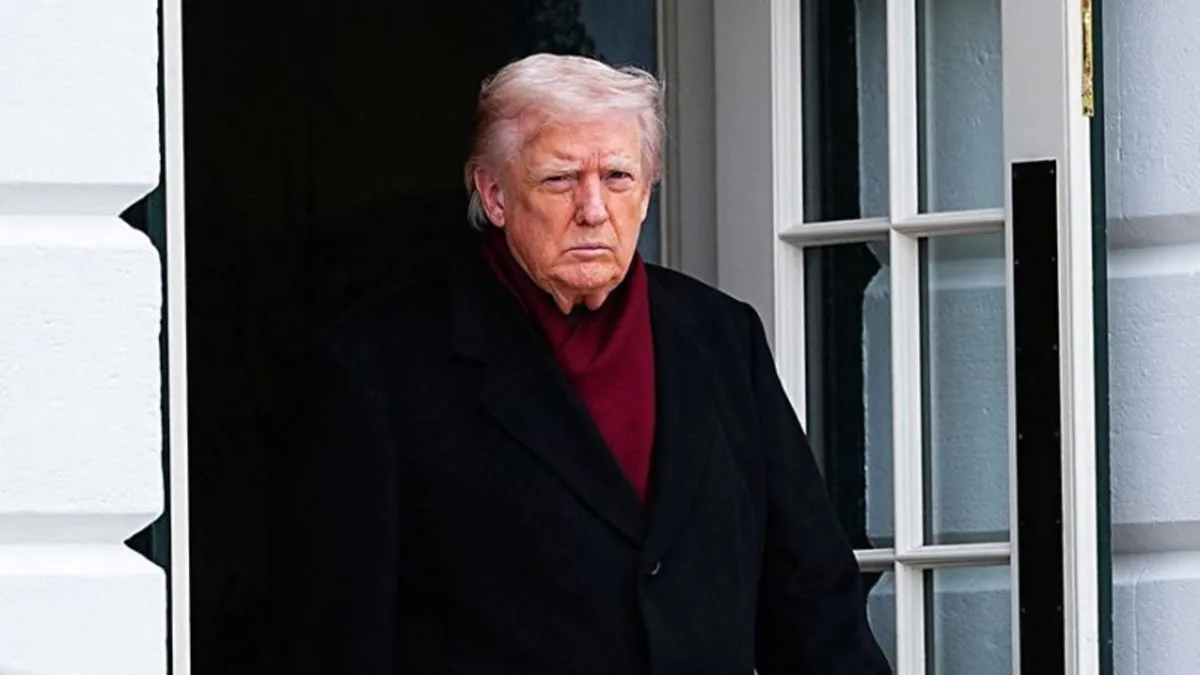
On Tuesday, President Donald Trump will embark on a significant journey to a swing district in eastern Pennsylvania, marking the first of several planned domestic trips aimed at reinforcing his economic message. This initiative comes as the White House believes that the economy will be a pivotal factor in the upcoming midterm elections. The concept of “affordability” has emerged as a crucial term among leaders from both political parties, as they engage in a battle of narratives to address the financial pressures experienced by millions of Americans.
For Trump, who campaigned on the promise of ushering in a new era of economic prosperity, this trip represents a critical test of his capacity to deliver on those promises. With Republican lawmakers bracing for a challenging defense of their House and Senate majorities, the stakes have never been higher. “Everybody gets it at the White House,” noted a Trump adviser. “We’ve got a lot of work to go, and it’s frustrating for the president, but it’s what we’ve got to deal with.” Despite his electoral win over a year ago, polls indicate that many Americans feel Trump has yet to fulfill his economic commitments. If he cannot regain his footing on economic issues quickly, he risks facing severe electoral losses in the midterms.
Recent polling data paints a troubling picture for Trump; a Gallup poll indicated that 40% of Americans rated economic conditions as poor in November, an increase from 37% in October. Additionally, a Fox News national survey revealed that 76% of voters view the economy negatively. Alarmingly for Trump and his aides, there is a noticeable decline in the Republican Party’s long-standing advantage over Democrats on economic issues, with many cost-conscious voters expressing dissatisfaction. “Large numbers, overall and among Republicans, say their costs for groceries, utilities, healthcare, and housing have gone up this year,” Fox News reported.
A key question looming over Tuesday’s event—and the White House’s broader economic strategy—is how Trump will address the cost-of-living issue during his speech at the Mount Airy Casino Resort. Will he continue to assert that the economy is thriving under his leadership, or will he acknowledge the need for action to alleviate Americans’ financial concerns?
The wake of recent electoral setbacks for Democrats in New Jersey, Virginia, and California has prompted heightened urgency among both parties. According to multiple White House officials, affordability and cost-of-living concerns were identified as top issues for voters. In response, Trump has begun to emphasize his economic policies and has encouraged party members to do the same. However, he views the issue primarily as a communication challenge. “He feels this is a communication issue,” an administration official explained. “He wants Republicans to step it up in talking about all the good work being done to improve the economy.”
Representative Brian Fitzpatrick of Pennsylvania, one of the few Republicans defending a district Trump lost in 2024, agrees with the president that affordability is the central issue. “That trumps everything else,” he stated in a recent interview, adding that he believes the party isn’t focusing enough on this topic. However, Fitzpatrick disagrees with Trump’s characterization of affordability as “a Democratic scam,” emphasizing the reality of rising costs he hears from constituents daily.
Trump has shown irritation at suggestions that there are fundamental flaws in the economy, often boasting about rescuing it from policies enacted during the Biden administration. He consistently attributes blame to former President Joe Biden, claiming he inherited a struggling economy and that his policies need time to take effect. While he has dismissed affordability concerns as a “hoax,” aides within the White House have advised him to express greater empathy for Americans facing financial difficulties.
As Trump nears the one-year mark of his second term, relying solely on blaming Biden is losing its effectiveness with the public. Despite his tendency to downplay Americans' financial struggles, his advisers recognize that the GOP is facing a significant challenge. Recent guidance from White House officials has urged Trump not to overlook the economic struggles of voters but rather to emphasize a message that contrasts his policies with those of congressional Democrats. “You’ve got to feel their pain,” one adviser noted. “You’ve got to talk about it every day.”
To enhance communication around his economic platform, Trump’s advisers are implementing a strategy that includes “policy time” in his schedule to address inflation. This approach involves the president traveling across the country to discuss his economic agenda, starting with his visit to Mount Pocono. The White House aims to create a consistent schedule of day trips focused on the economy, as they believe this can help regain lost ground.
During a recent roundtable, Trump acknowledged the need for a stronger economic message, asserting that “it’s a very simple statement: They caused it, we’re fixing it.” As the administration continues to highlight progress in reducing gas prices and the cost of everyday goods, officials are aware that voters must feel the effects of such progress. Despite the challenges ahead, both Trump and his team remain optimistic about their ability to improve the narrative surrounding the economy.