

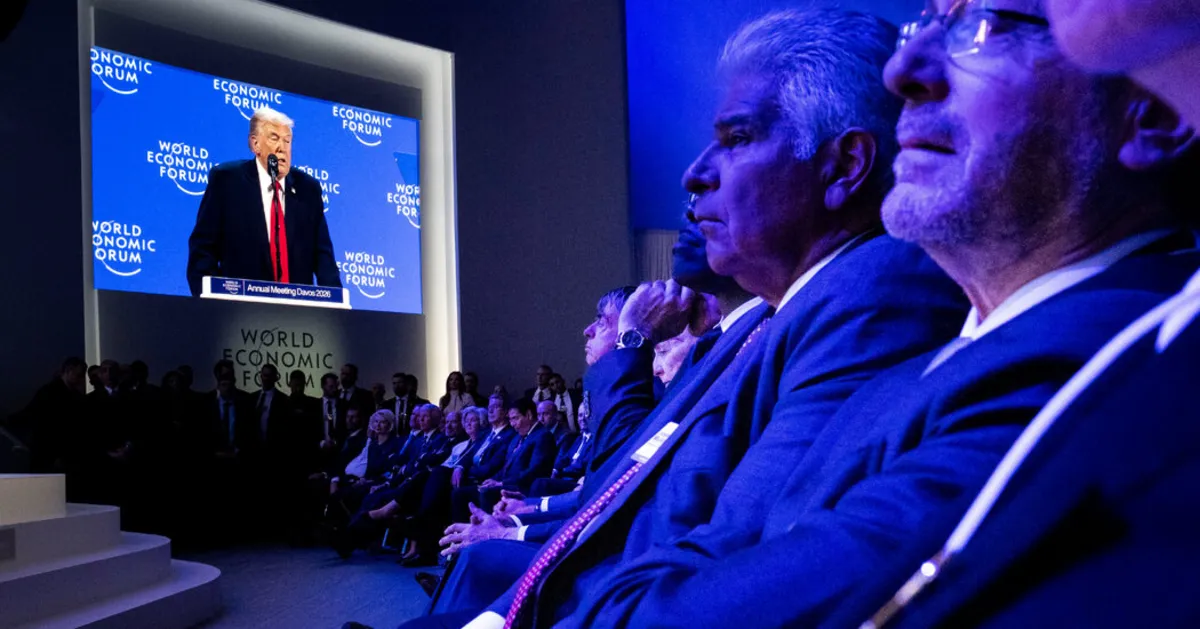
In a lengthy and dramatic speech at the World Economic Forum held in Davos, President Trump delivered a message that signaled a stark shift in American leadership within the global liberal democratic order established after World War II. His address, marked by a mix of bombast, grievance, and self-praise, proclaimed what many interpreted as the final rites for the United States' role as a leader in promoting globalization and international cooperation.
During his keynote address, President Trump made it clear that the era of the United States offering its markets and military protection to European allies is over. He labeled these allies as "freeloaders," emphasizing a growing sentiment that America should no longer bear the burden of global defense and economic support. This declaration underscores a significant shift in U.S. foreign policy, as Trump vowed to intensify his trade war and reassess existing trade agreements.
President Trump characterized tariffs as a necessary price for accessing the vast American market, which he described as a "land of 300 million consumers." His proclamation that “The United States is keeping the whole world afloat” reflects a belief that other nations have exploited American generosity for too long. This rhetoric not only reinforces his America-first agenda but also serves to galvanize his base by portraying the U.S. as a victim of international exploitation.
Adding to the drama of the day, President Trump caused a stir with a sudden change of heart regarding Greenland. In a social media post later in the evening, he announced that he would no longer seek to impose tariffs in an attempt to acquire the Danish territory. This decision came amid ongoing discussions between his top aides and European leaders, suggesting a potential softening of his earlier aggressive stance. While this announcement may have spared Greenland's sovereignty, it did little to mitigate the impact of Trump's earlier criticisms of the global economic order.
Trump's statements at the World Economic Forum illustrate a profound transformation in the United States' relationship with its allies and the global economic landscape. By attacking the principles that have underpinned international cooperation for decades, the President has signaled a willingness to embrace a more isolationist approach. As the ramifications of his speech unfold, the international community will be closely watching how this shift affects future diplomatic and economic relations.