

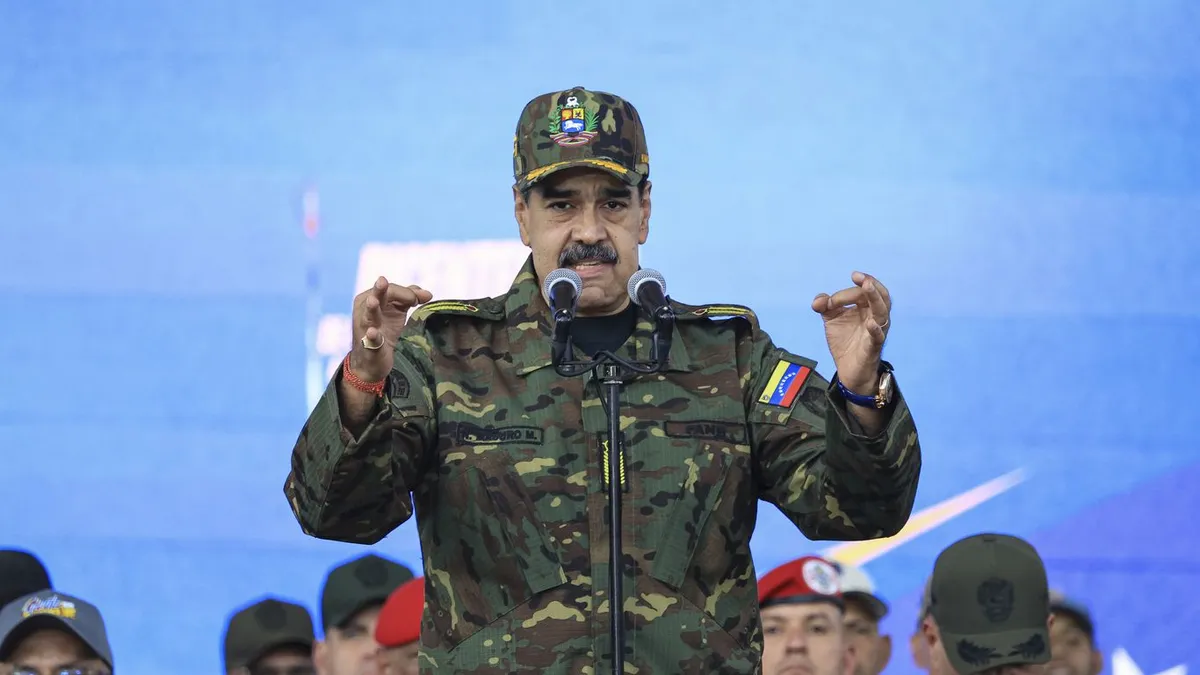
On Thursday, the Trump administration took significant action by imposing new sanctions on three nephews of Venezuelan dictator Nicolas Maduro, a businessman closely associated with his regime, and six companies involved in shipping Venezuelan oil. This move marks a continuation of President Trump's ongoing pressure campaign against Maduro, who has been accused by U.S. officials of leading a narco-trafficking terrorist organization.
According to Treasury Secretary Scott Bessent, these sanctions are crucial in addressing the flood of drugs from Venezuela that are poisoning the American populace. “Nicolas Maduro and his criminal associates in Venezuela are flooding the United States with drugs that are poisoning the American people,” Bessent stated in a written statement obtained by Axios. The sanctions aim to counteract the detrimental effects of Maduro's regime on both the Venezuelan and American people.
The announcement of the sanctions comes just one day after U.S. authorities seized a vessel carrying Venezuelan crude oil, which was listed on the Treasury Department's Specially Designated Nationals (SDN) sanctions list. Individuals and entities placed on this list are prohibited from accessing the U.S. banking system and financial networks that involve U.S. interests. Furthermore, they cannot engage with U.S. businesses or properties, among other penalties.
Among the newly sanctioned individuals are three nephews of Maduro's wife, Cilia Flores: Efrain Antonio Campo Flores and Franqui Francisco Flores de Freitas, who became infamous as Flores's "narco nephews" after their arrest in Haiti. In 2016, they were convicted in the U.S. on cocaine trafficking charges. Although President Biden granted them clemency in October 2022 during a prisoner swap related to negotiations with Maduro, they have now been re-sanctioned. The third nephew, Carlos Erik Malpica Flores, is linked to Venezuela's state-owned oil company, Petroleos de Venezuela, SA (PDVSA), and faced sanctions back in 2017. He was briefly removed from the sanctions list by the Biden administration amid discussions of a democracy deal that ultimately fell through.
Additionally, Ramon Carretero Napolitano, a Panamanian businessman involved in the oil sector, was also sanctioned. The four individuals now join Maduro, Cilia Flores, their son Nicolas Maduro Guerra, and Cilia's three other sons on the SDN List, which targets those connected to the Maduro regime.
Recent data indicates that last month, 18 vessels transported Venezuelan oil. Notably, six of these vessels were already under SDN sanctions, excluding the one seized on Wednesday, named Skipper, which was headed to Cuba carrying 1.8 million barrels of oil. The details surrounding the six newly sanctioned vessels remain unclear; however, they include companies registered in locations such as the Marshall Islands and the British Virgin Islands.
Bessent criticized the previous Biden administration's attempts to negotiate with Maduro, stating that these sanctions are necessary to prevent Maduro from maintaining his "dictatorial and brutal control" over Venezuela. A source from the Trump administration hinted at more actions to come, emphasizing that Maduro and his associates must choose between ceasing their corrupt activities or facing further consequences.
As the situation unfolds, it remains to be seen how these sanctions will affect the Maduro regime and the geopolitical landscape in Venezuela.