

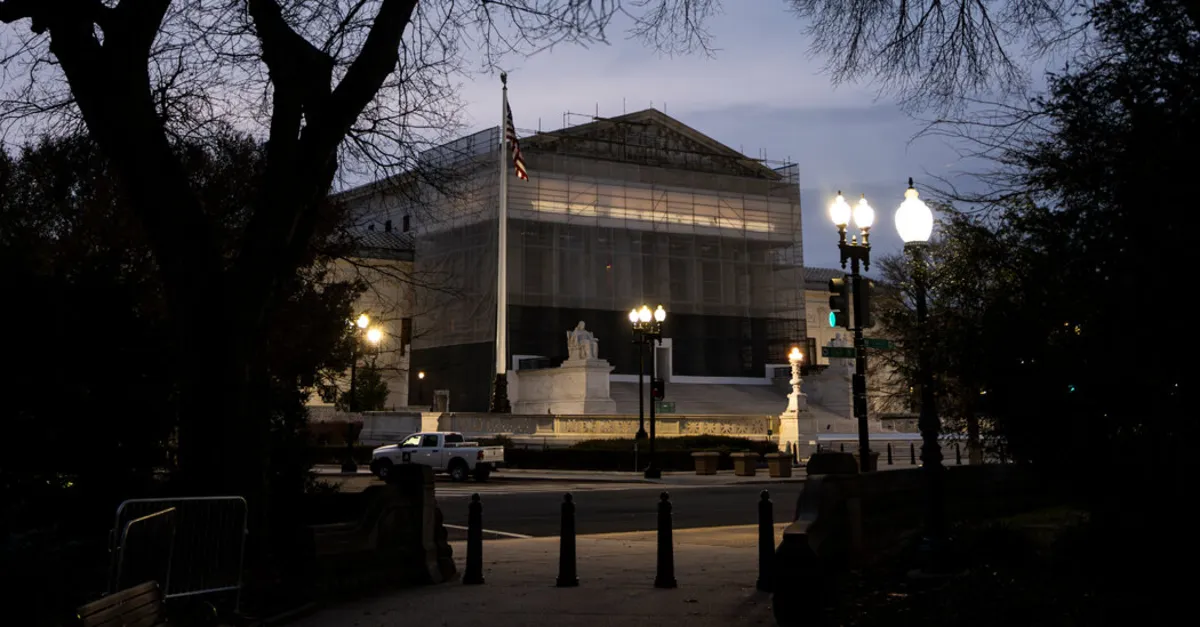
The Supreme Court is set to hear a pivotal case on Tuesday that could significantly alter the landscape of political campaign financing in the United States. This challenge has the potential to diminish one of the recent financial advantages that the Democratic Party has enjoyed in its campaign strategies. The upcoming case has sparked considerable interest, as it may redefine how political parties can fund their campaigns.
Fifteen years ago, the Supreme Court made a landmark decision in the case of Citizens United v. Federal Election Commission. This ruling fundamentally changed the campaign finance landscape by striking down legal limits on independent political spending by corporations and unions. As a result, a significant influx of new money entered the political arena, reshaping the dynamics of electoral campaigns. Since then, the court has continued to erode various campaign finance restrictions, raising concerns about the influence of money in politics.
The case under consideration, National Republican Senatorial Committee v. Federal Election Commission, challenges one of the remaining limits on campaign financing: the amount of money that political parties can spend in coordination with candidates. National Republican leaders have initiated this case, arguing that the existing limits infringe upon their First Amendment rights by restricting their capacity to engage and influence voters effectively.
The implications of the Supreme Court's ruling could be far-reaching. If the justices rule in favor of the Republicans, it could shift the balance of power back towards official political parties, moving it away from super PACs that have characterized recent elections. This decision could allow political parties to spend substantial amounts from wealthy donors directly on candidate campaigns, which may enhance the influence of big money compared to small-dollar contributions.
In recent years, Democrats have excelled in garnering smaller donations, which has played a crucial role in their campaign strategies. A favorable ruling for the Republicans could have immediate consequences for the upcoming midterm elections, potentially diminishing one of the Democratic Party's key financial advantages: the ability of candidates to acquire broadcast advertising time at lower costs.
This case not only highlights the ongoing debate over campaign finance reform but also underscores the critical role that funding plays in shaping electoral outcomes. As the Supreme Court prepares to hear this significant challenge, the nation watches closely, anticipating how it might redefine the future of political campaigning in America.