

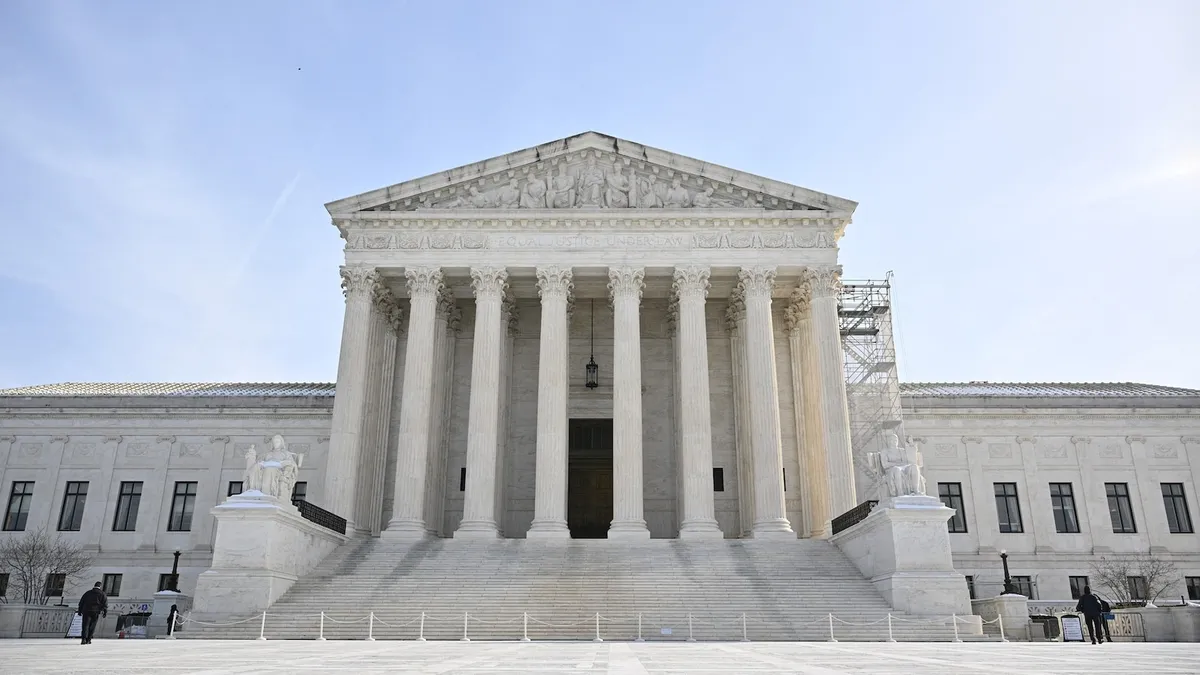
In a pivotal move, the Supreme Court announced on Friday that it will review the legality of President Trump's executive order aimed at ending birthright citizenship, which automatically grants citizenship to anyone born within the United States. This executive order, issued at the start of Trump’s second term, marks the first evaluation of his immigration agenda's legal merits by the Supreme Court.
President Trump’s executive order represents a significant shift in immigration policy, seeking to redefine the interpretation of the 14th Amendment’s Citizenship Clause. Historically, this clause has been understood to grant citizenship to all individuals born on U.S. soil, a principle that has endured for over 150 years. The order specifically targets children born in the U.S. to parents who are either in the country illegally or are present on a temporary basis, arguing that they should not be recognized as U.S. citizens.
The executive order has faced a barrage of legal challenges since its inception. Notably, no lower court has supported the Trump administration's interpretation of the 14th Amendment. The Justice Department contends that the Constitution does not confer citizenship to the offspring of temporary visitors or undocumented immigrants. Cecillia Wang, the national legal director of the American Civil Liberties Union (ACLU), representing the plaintiffs, asserted that no president has the authority to alter the fundamental promise of the 14th Amendment.
Wang emphasized that the federal courts have consistently ruled against Trump’s executive order, affirming that it contradicts both the Constitution and historical precedents, including a landmark Supreme Court decision from 1898. In her statement, she expressed optimism about resolving this issue at the Supreme Court level.
While the Supreme Court had previously intervened in various challenges to Trump’s immigration policies, it had done so at early stages and mainly through emergency requests for relief. The justices had not previously evaluated the substantive legality of the birthright citizenship order. In a recent ruling, the Supreme Court limited the ability of district court judges to issue nationwide injunctions but allowed for broad relief through class-action lawsuits, paving the way for further legal challenges.
Following the Supreme Court's decision, a federal district court in New Hampshire certified a provisional class representing all babies who would be affected by Trump’s birthright citizenship order. This court found that the executive order likely violates the Constitution and issued a ban on its enforcement against all impacted individuals. The Supreme Court is now poised to review the case before the U.S. Court of Appeals for the 1st Circuit has ruled on it.
Additionally, the Supreme Court has not acted on another appeal involving states—Washington, Arizona, Illinois, and Oregon—that challenged the executive order. Earlier this year, a three-judge panel from the U.S. Court of Appeals for the 9th Circuit ruled 2-1 that Trump’s executive order was invalid, citing its contradiction to the 14th Amendment's guarantee of citizenship to all born in the U.S.
The Justice Department is advocating for the Supreme Court to issue a definitive ruling on the constitutionality of Trump’s executive order. Solicitor General D. John Sauer has argued that the prevailing view of birthright citizenship is erroneous and has had detrimental effects. In contrast, the ACLU maintains that the Trump administration is attempting to rewrite the Citizenship Clause and dismantle over a century of established practice. Oral arguments in this critical case are anticipated next year, with a decision likely to be rendered by late June or early July.