

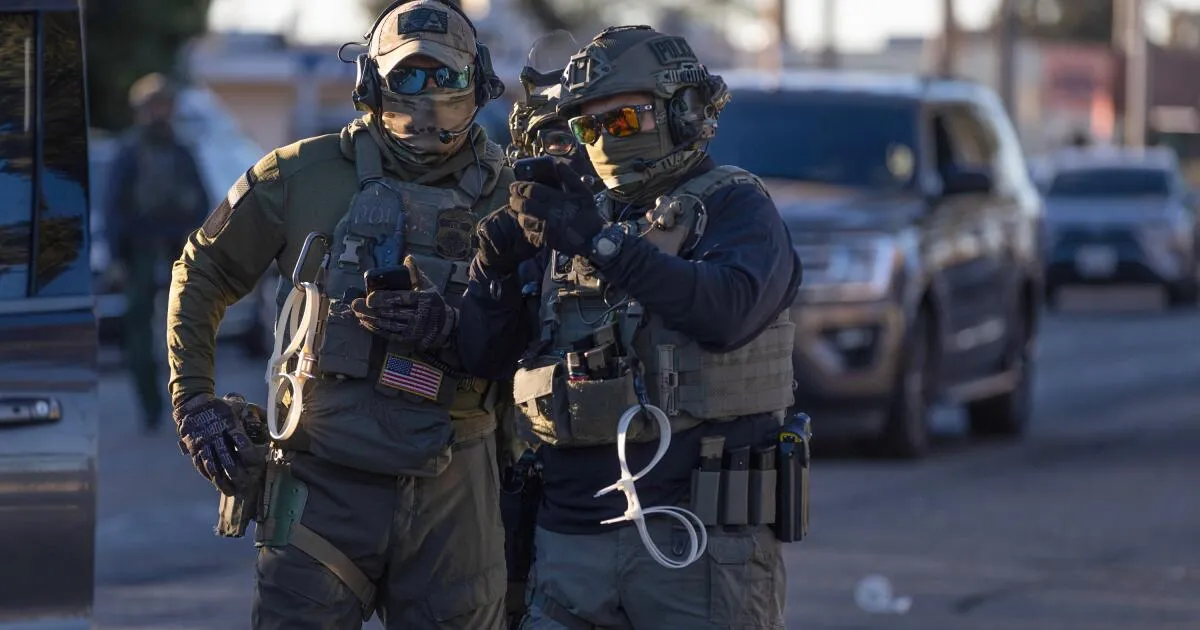
A top lawyer from the Trump administration urged a federal judge on Wednesday to block a groundbreaking California law that prohibits the majority of law enforcement officers in the state from wearing masks. This law particularly affects U.S. Immigration and Customs Enforcement (ICE) agents, raising significant concerns about its implications for federal law enforcement practices.
Tiberius Davis, representing the U.S. Department of Justice, made his case during a hearing in Los Angeles. He argued that this unprecedented ban on police face coverings could lead to chaos throughout the nation, potentially placing many ICE agents in precarious legal situations. “Why couldn’t California say every immigration officer needs to wear pink, so it’s super obvious who they are?” Davis questioned U.S. District Judge Christina A. Snyder. He further stated, “The idea that all 50 states can regulate the conduct and uniforms of officers... flips the Constitution on its head.”
Judge Snyder appeared doubtful about the necessity of the law. “Why can’t they perform their duties without a mask? They did that until 2025, did they not?” she asked. “How in the world do those who don’t mask manage to operate?” This line of questioning highlighted the ongoing debate regarding the practicality and implications of the anti-mask law.
The Trump administration initially filed a lawsuit to block the new regulations in November, following California Governor Gavin Newsom signing the No Secret Police Act and its companion, the No Vigilantes Act, into law. Collectively, these laws prevent law enforcement officers from wearing masks and require them to display identification while carrying out law enforcement duties in California. Violations of these provisions are classified as misdemeanors.
Federal officials have expressed their commitment to defy these newly enacted laws, labeling them unconstitutional and harmful to the safety of agents. They have also criticized the law's exemption for California state peace officers, arguing that this carve-out is discriminatory. For instance, the California Highway Patrol is among those exempted, while city and county agencies, including the Los Angeles Police Department, must comply with the law.
The hearing takes place amidst heightened public outrage towards ICE, particularly following the fatal shooting of American protester Renee Good by an ICE agent in Minneapolis. This incident has fueled public sentiment that masks symbolize perceived lawlessness and impunity among law enforcement.
California Department of Justice lawyer Cameron Bell argued in favor of the law, stating, “It’s obvious why these laws are in the public interest.” She emphasized that the state has had to absorb the repercussions of federal actions. Bell presented declarations from U.S. citizens who believed they were being abducted by masked immigration agents, leading to local police involvement. One Angeleno, Andrea Velez, recounted how her family thought she was kidnapped when confronted by ICE agents in masks.
The Trump administration contends that the anti-mask law would jeopardize the safety of ICE agents and other federal immigration enforcement officers. They argue that it could lead to doxing and impede the effective enforcement of immigration laws. “The laws would recklessly endanger the lives of federal agents and their family members,” the government stated in court filings.
California argues that its provisions are “modest” and consistent with past practices. Bell challenged the Department of Homeland Security's claims of an 8,000% increase in death threats against ICE agents, asserting that recent changes in what qualifies as a “threat” have led to significant credibility issues in federal court.
The fate of the mask law may depend on the peace officer exemption. Judge Snyder questioned whether the discrimination argument would diminish if the state altered the legislation to apply to all officers. Davis replied affirmatively, indicating that such a change could resolve the dispute.
The mask ban is scheduled to take effect on January 1, but it remains on hold as the legal battle unfolds. If upheld, California would become the first state to prohibit ICE agents and other federal law enforcement personnel from concealing their identities while on duty. A ruling on this pivotal case is expected as soon as this week.