

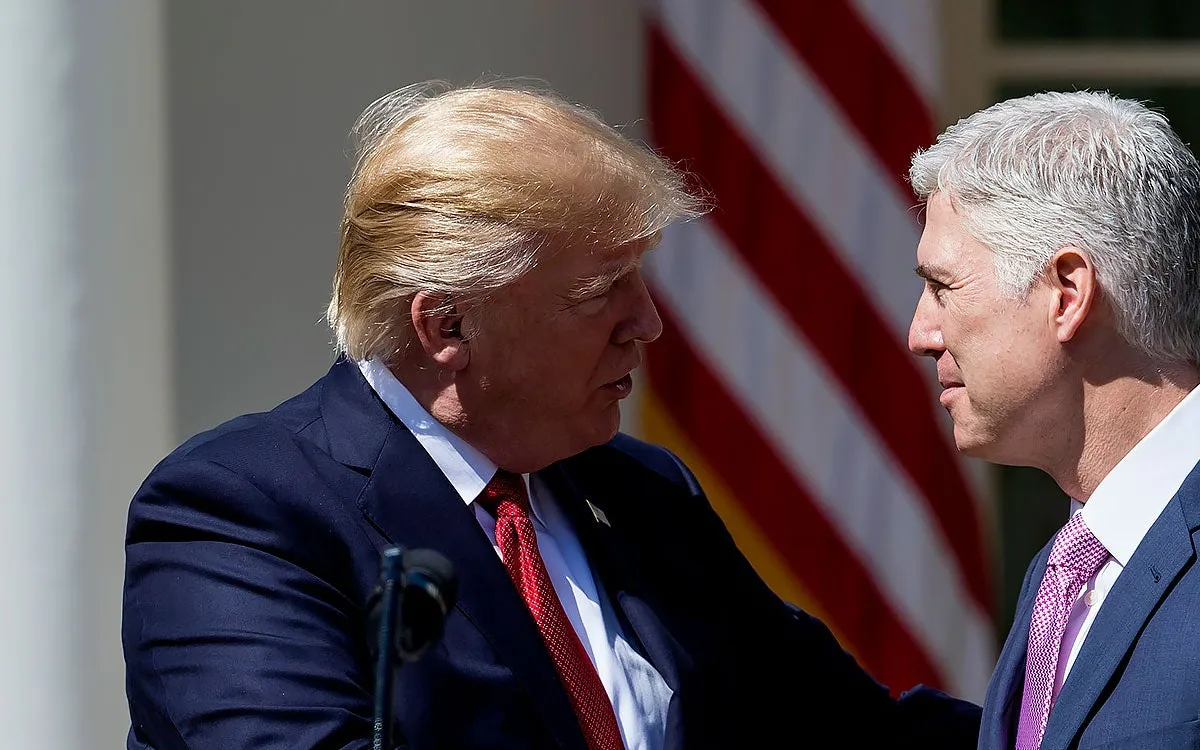
In October 2019, the Supreme Court heard oral arguments in the pivotal case of Bostock v. Clayton County. This landmark case addressed whether a federal civil rights law that prohibits employment discrimination based on “sex” extends its protections to gay and transgender Americans. Initially, right-wing culture warriors were optimistic that the court would rule against these protections. The previous year, President Donald Trump had appointed Justice Brett Kavanaugh, a staunch conservative known for his alignment with the right's agenda, replacing Justice Anthony Kennedy, who had occasionally sided with liberal justices on LGBTQ+ rights.
However, in a surprising turn of events, just eight months later, a six-justice majority upheld that federal employment protections do indeed extend to transgender individuals in the workplace. The majority opinion, authored by Justice Neil Gorsuch and supported by Chief Justice John Roberts and the four liberal justices, argued that if an employer treats a transgender man differently than it would treat a man assigned male at birth, that differential treatment is based on “sex.” This ruling sent shockwaves through conservative circles, as many had expected Kavanaugh's confirmation to yield immediate benefits for their agenda.
Justice Samuel Alito, joined by Justice Clarence Thomas, criticized the majority's reasoning as “deceptive” and “preposterous.” Some conservative activists even drew parallels between Bostock and the infamous Dred Scott decision, which denied citizenship to Black Americans. Missouri Republican Josh Hawley lamented that the ruling signified “the end of the conservative legal movement.”
Fast forward to the recent oral arguments in Little v. Hecox and West Virginia v. BPJ, two cases challenging state laws that prohibit trans women and girls from competing in sports consistent with their gender identity. This time, the conservative justices appeared more inclined to impose restrictions on legal protections for transgender individuals. Chief Justice Roberts attempted to differentiate these cases from Bostock, suggesting that sports eligibility classifications might not necessarily involve transgender status, thus potentially not being discriminatory.
Justice Amy Coney Barrett had previously expressed that trans individuals might not qualify as a “suspect class” under equal protection laws, implying that bans on trans participation in sports could be deemed constitutional. Although Kavanaugh did not join Barrett's opinion, his inquiries during the recent arguments indicated a willingness to grant states flexibility in order to uphold the integrity of women's sports.
The court's evolving stance on transgender rights reflects not just legal considerations but the shifting social and political landscape. The Bostock ruling came five years after the landmark decision in Obergefell v. Hodges, which affirmed the right of same-sex couples to marry. Public opinion at the time was increasingly supportive of LGBTQ+ rights, as evidenced by a Gallup poll indicating that 60 percent of Americans backed marriage equality.
In contrast, the climate has changed significantly since Bostock. Following a wave of anti-trans legislation, public sentiment has shifted, with more individuals believing that society has gone “too far in accepting transgender people.” Polls indicate that support for anti-trans measures has surged, with two-thirds of voters endorsing sports bans like those in Hecox and BPJ.
The conservative response to Bostock has been a concerted effort to amplify fears around transgender individuals, framing them as threats to women’s rights and safety. Since 2021, over 2,500 bills targeting trans rights have been introduced across various states, with Trump’s 2024 campaign further emboldening anti-trans activists. The media, particularly outlets like Fox News, have significantly increased their coverage of trans issues, fueling a moral panic that has shifted public perception.
The upcoming rulings in Hecox and BPJ are expected to be laden with legal jargon, justifying a departure from the protections established by Bostock. However, the underlying message will likely reflect a broader conservative strategy aimed at reversing the progress made in transgender rights. As the court continues to deliver verdicts shaped by ideological divides, the future of trans rights remains precarious, underscoring the importance of vigilant advocacy and public support.