

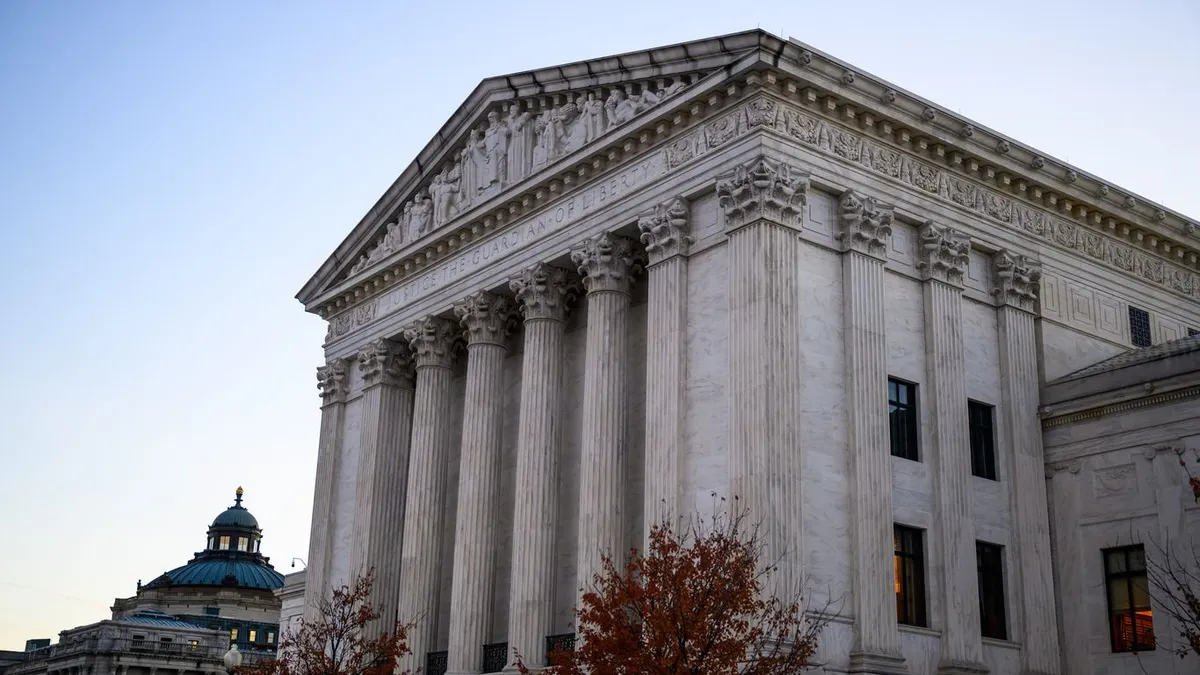
The Supreme Court has announced that it will decide whether to uphold President Trump's executive order aimed at ending birthright citizenship. This significant announcement, made on Friday, could potentially overrule a right that has been guaranteed by the U.S. Constitution and upheld by the Supreme Court for more than a century.
If the justices side with the president, it could fundamentally alter the interpretation of the Citizenship Clause of the Fourteenth Amendment. This clause was originally adopted to grant citizenship to newly freed slaves and their descendants, not to the children of temporary visitors or undocumented immigrants, as the government argued in its petition for a Writ of Certiorari before the court. White House spokesperson Abigail Jackson expressed that this case presents an opportunity to reassess the Citizenship Clause and restore the original meaning of citizenship in the United States.
Jackson emphasized that the outcome of this case could have "enormous consequences for the security of all Americans and the sanctity of American citizenship." The implications extend beyond legal definitions; they touch on the very fabric of American identity and equality under the law.
President Trump's executive order reflects a belief that children born to undocumented immigrants should not automatically receive U.S. citizenship. This perspective has been seen as a strategy to fulfill his administration's promises to reduce illegal immigration. However, the longstanding interpretation of the Fourteenth Amendment asserts that any individual born on U.S. soil is granted citizenship, irrespective of their parents' immigration status.
Advocates for birthright citizenship argue that this principle is a cornerstone of American values, ensuring that all children born in the U.S. are treated equally under the law. Todd Schulte, President of fwd.us, stated that any unlawful efforts to revoke this right would lead to confusion, discrimination, and long-term harm to families and communities. Andrea Flores, a former DHS official, echoed this sentiment, arguing that Trump's attempt to alter the Constitution should be unequivocally rejected.
The petition submitted to the Supreme Court seeks to overturn a previous ruling from a lower court, which issued a nationwide injunction against the executive order. This court determined that the order likely contradicts the text of the Fourteenth Amendment and established legal precedents that have remained unchanged for over a century.
Cecillia Wang, the national legal director of the ACLU, stated that no president has the authority to alter the fundamental promise of citizenship enshrined in the Fourteenth Amendment. For over 150 years, it has been a national tradition that anyone born on U.S. soil is automatically considered a citizen. Wang noted that federal courts have consistently ruled against the legality of Trump's executive order, citing a Supreme Court decision from 1898 and congressional law as foundations for their arguments.
The Supreme Court is scheduled to hear oral arguments on this pivotal case early next year, according to SCOTUSBlog. As the nation watches closely, the implications of this case will undoubtedly shape the discourse around birthright citizenship and the broader understanding of what it means to be a citizen in the United States.
For ongoing updates and in-depth coverage, stay tuned to news outlets like Axios, which continues to provide comprehensive reporting on this significant legal issue.