

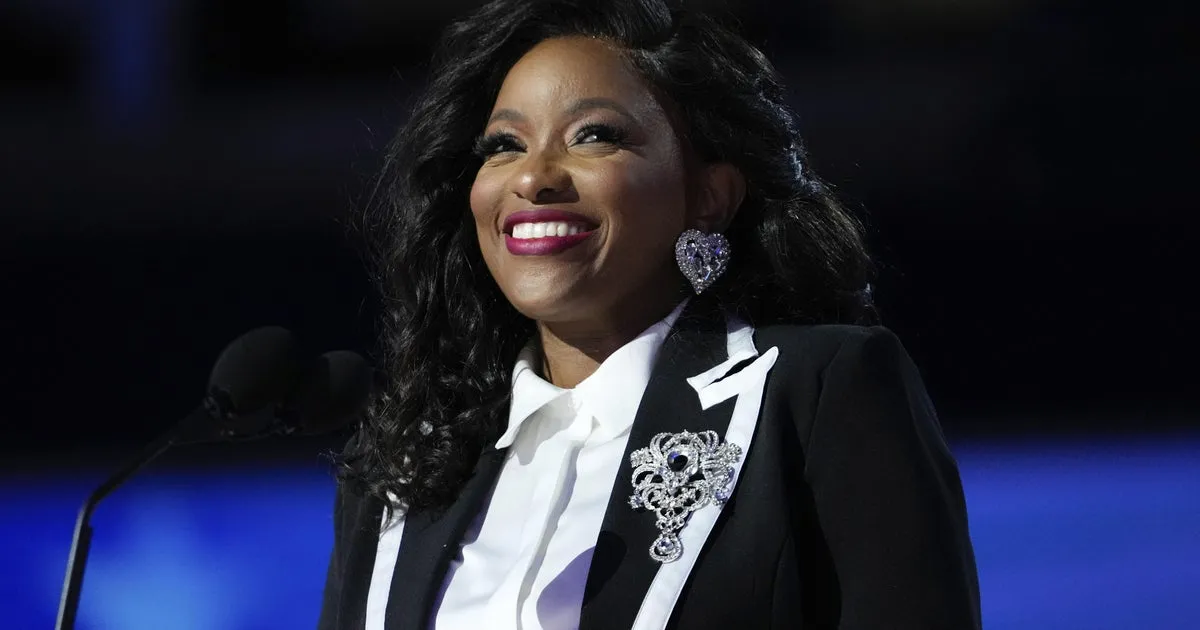
On Monday, Rep. Jasmine Crockett officially filed the necessary paperwork to enter the Democratic primary for the U.S. Senate seat in Texas. According to sources speaking to CBS News Texas, this announcement comes just hours before a scheduled press conference where she is poised to detail her campaign plans. The timing of her announcement is crucial, as it is set to occur 90 minutes before the state's 6 p.m. CT deadline for candidate registrations for the upcoming March 3 primary.
In the Democratic primary, Crockett will be up against state Rep. James Talarico from Austin. Talarico's campaign has recently made waves in national headlines, notably raising a record-breaking $6.2 million within the first three weeks following his campaign announcement. Following Crockett's filing, Talarico issued a statement emphasizing the grassroots nature of his campaign, highlighting the support of 10,000 volunteers dedicated to overcoming the influence of wealthy donors and establishment politicians in Texas.
On the Republican side, incumbent Senator John Cornyn, Attorney General Ken Paxton, and U.S. Rep. Wesley Hunt are also competing for the GOP nomination, setting up what is expected to be a closely watched race. The general election is anticipated to be one of the most expensive contests in the 2026 national cycle. Paxton's campaign took a jab at Crockett, referring to her as "Crazy Crockett," while also criticizing Cornyn for allegedly spending millions despite trailing in the primary.
Crockett's entry into the Senate race follows the withdrawal of another Democratic candidate, former Rep. Colin Allred, who opted to run for the newly drawn 33rd Congressional District. Allred expressed concerns that a contentious primary for the Senate could hinder the Democratic Party's ability to present a unified front against Republican challengers in the upcoming elections. He stated, "I've come to believe that a bruising Senate Democratic primary would prevent the Democratic Party from going into this critical election unified."
Before formally announcing her candidacy, some Democrats voiced concerns about the potential for multiple major candidates splitting support in the Senate race, which could detract attention from other important statewide positions such as governor and attorney general. In a previous interview, Crockett mentioned she would only run for the Senate if polling indicated a viable path to winning the general election, indicating a strategic focus beyond just the primary.
Crockett's candidacy is part of a broader narrative in Texas politics, where various Democrats believe that Paxton's controversial political history presents an opportunity to secure a statewide victory for the first time in over three decades. However, Crockett acknowledged that she cannot rely on crossover support from Republican voters, emphasizing the need to energize new voters to shift the electoral landscape in Texas.
Political analysts have varied opinions on Crockett's potential impact on the race. Matt Angle, Director of the Lone Star Project, noted the challenge for Crockett to boost turnout among Democrats without also energizing Republican voters. On the other hand, Republican consultant Vinny Minchillo expressed skepticism regarding Crockett's chances in a general election, labeling her as a polarizing figure who might inadvertently galvanize Republican opposition.
As Crockett pursues her Senate ambitions, she will vacate her current role representing the 30th Congressional District. Democratic Rep. Marc Veasey is expected to file to run in the newly drawn district, which predominantly includes parts of Dallas County and eastern Tarrant County. Additionally, other candidates are emerging for this newly configured district, including Frederick Haynes, III, a senior pastor exploring a candidacy in the 30th District.
With the political stakes high and the race already heating up, Texas voters can expect an intense electoral battle that will not only shape the future of the U.S. Senate but also the dynamics of statewide elections in the Lone Star State.