

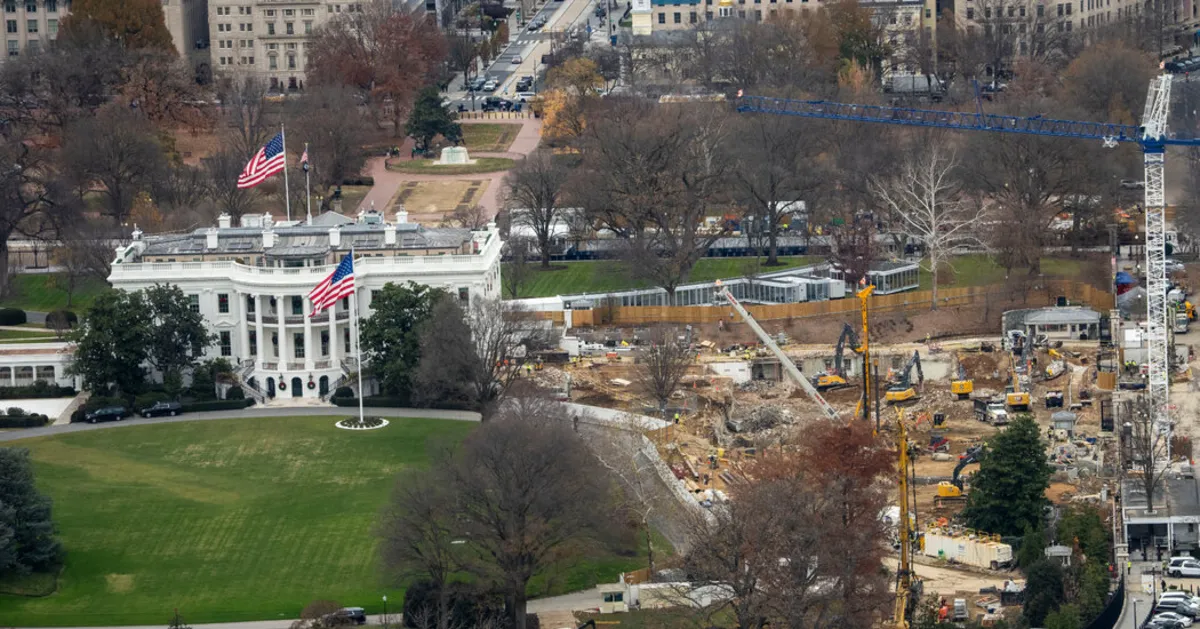
The National Trust for Historic Preservation has taken significant legal action by filing a federal lawsuit on Friday aimed at halting President Trump’s ambitious construction of a new, expansive ballroom on the grounds of the White House. The organization argues that the President has breached at least four federal laws by circumventing the necessary review processes associated with such a major construction project.
This lawsuit seeks to compel President Trump to submit his plans for the proposed 90,000-square-foot ballroom to multiple oversight bodies and Congress. This process is essential for ensuring public review and input before any further steps can be taken on the project. Notably, the East Wing of the White House has already been demolished to facilitate the construction of the new ballroom, with reports indicating that construction activities are ongoing even during nighttime hours.
The lawsuit emphasizes a critical legal point: “No president is legally allowed to tear down portions of the White House without any review whatsoever — not President Trump, not President Biden, and not anyone else.” This assertion underscores the importance of adhering to legal standards when it comes to alterations of such a historic and significant building.
The White House has defended its position by claiming that the grounds are exempt from the National Historical Preservation Act. However, the legal team representing the National Trust for Historic Preservation argues that President Trump is violating other pertinent sections of the U.S. Code. Specifically, the suit cites a federal law that explicitly states that “a building or structure shall not be erected on any reservation, park, or public grounds of the federal government in the District of Columbia without express authority of Congress.”
Moreover, the lawsuit contends that President Trump’s approach towards this construction project has also contravened several other federal laws, including the National Capital Planning Act, legislation governing the Commission of Fine Arts, the National Environmental Policy Act, and the Administrative Procedure Act. These violations add further weight to the National Trust's argument that thorough oversight and public input are essential in managing alterations to federal properties.
The outcome of this legal battle could set a significant precedent regarding the powers exercised by the President concerning historic federal properties. As the case unfolds, it will be crucial to monitor how the courts interpret these laws and the implications for future construction projects at the White House.