

Welcome to Miami, a city that is currently at the center of political scrutiny as both major parties focus on a pivotal race—the mayoral election. This election is significant for the Democrats, who have not held the mayoral office since the late 1990s. Recent shifts among Hispanic voters in South Florida have eroded the Democratic edge, making this race even more crucial. Notably, while Vice President Kamala Harris managed to narrowly carry the city of Miami last year, Democrats still lost Miami-Dade County, creating a competitive landscape for the upcoming election.
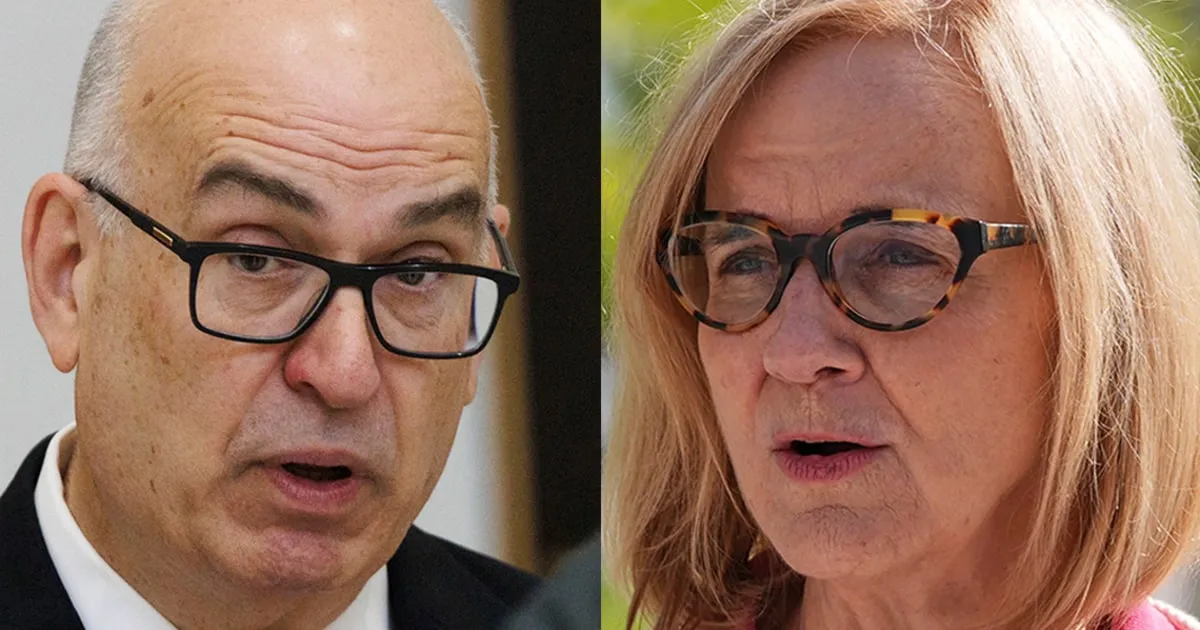
In this heated contest, former County Commissioner Eileen Higgins is vying for victory against Republican candidate Emilio T. González, a businessman and former city manager who has received an endorsement from former President Donald Trump. Both candidates are positioning themselves as a break from the traditional city politics, focusing on addressing pressing issues like affordability, which is a significant concern for residents in South Florida.
The race has taken on national importance as both parties gear up for the midterm elections next year. Following a blanket primary last month, Higgins and González have advanced to the runoff election scheduled for Tuesday. In the primary, Higgins led the field of 13 candidates with 36% of the vote, while González secured 19%. Notably, the two top Democratic candidates combined received a majority of votes, indicating a potential shift in voter sentiment.
Democrats enter this runoff with renewed energy, buoyed by their successes in recent special elections across the country. Party leaders believe that a victory in Miami could further boost their momentum ahead of the midterms. To support Higgins, a wave of national Democratic figures—including Arizona Senator Ruben Gallego, former Chicago Mayor Rahm Emanuel, and former Transportation Secretary Pete Buttigieg—have rallied to her side.
On the other hand, Republicans are determined to maintain their grip on the mayoral office, which they have held since 2009. Notably, an independent served as mayor from 2001 to 2009. Trump has actively participated in the race, rallying support for González, while prominent Florida Republicans like Governor Ron DeSantis, Senator Rick Scott, and Representative María Elvira Salazar are working to bolster González's campaign.
In her campaign, Higgins emphasizes her commitment to improving quality of life through practical solutions such as increasing affordable housing, streamlining permitting processes, and enhancing city infrastructure. Drawing from her experience on the Miami-Dade County Commission and her role as a former Peace Corps director in Belize, she argues that these initiatives are crucial for addressing local affordability crises exacerbated by rising costs and environmental challenges.
Higgins has also differentiated herself from González and the national GOP regarding immigration policy. As the former head of U.S. Citizenship and Immigration Services under President George W. Bush and a member of Trump's homeland security transition team, González has a complex background in immigration issues. During her campaign, Higgins has observed a growing sense of fear among Hispanic and Haitian communities regarding government actions, including deportations, which she believes could significantly impact voter sentiment.
During a debate hosted by CBS Miami, the candidates discussed immigration, with González advocating for the enforcement of laws targeting criminals while framing immigration as a federal issue. González, who has extensive experience in city management, claims that his tenure equips him to effectively address the challenges facing Miami as mayor. He has also positioned himself against overdevelopment and supported tax reforms aimed at alleviating the affordability crisis in the city.
The runoff election comes at a time when Democrats are savoring recent gubernatorial victories in New Jersey and Virginia, as well as significant wins in battleground states like Pennsylvania and Georgia. These results have raised questions about the durability of Trump's gains among Latino voters, especially as Florida Democrats have struggled to maintain competitiveness at the presidential level in 2024.
González has cautioned that electing a Democratic mayor would have far-reaching implications. He argues that this election transcends local politics and reflects a broader struggle against progressive policies that have gained traction in many major cities across the United States.
In contrast, Higgins views the national attention surrounding the race as a potential advantage, believing that increased media coverage can inspire higher voter turnout. “The more national parties encourage people to vote, the better it is for participation,” she stated, expressing her hope for robust voter engagement regardless of the outcome.