

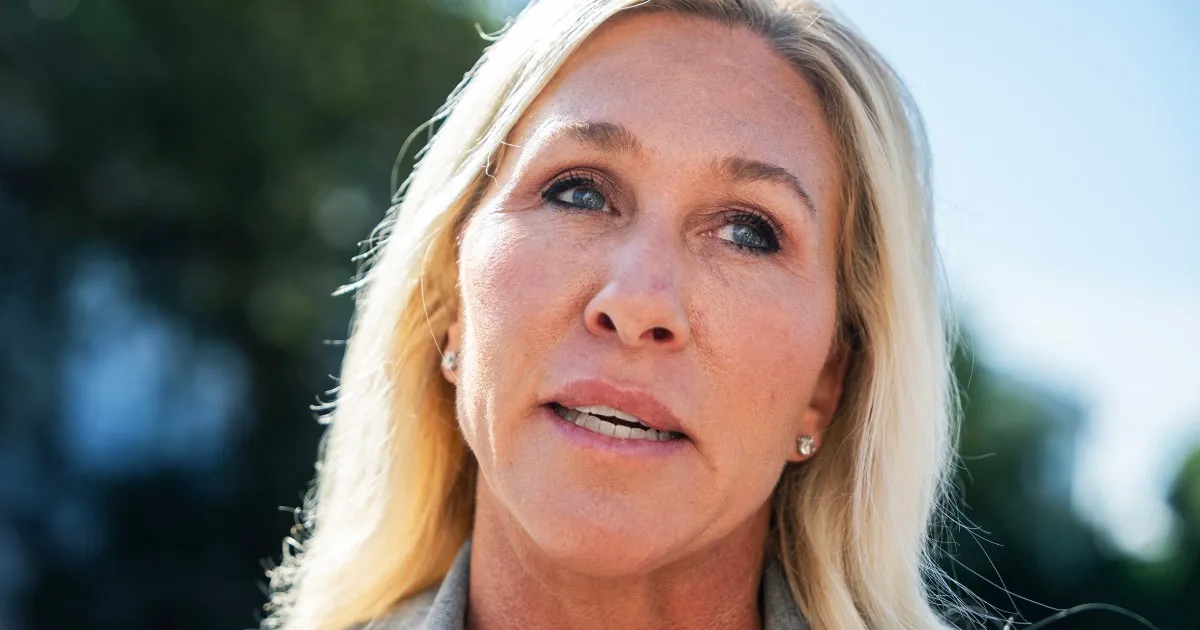
In a high-profile interview aired on CBS News' “60 Minutes,” Representative Marjorie Taylor Greene, a Republican from Georgia, publicly criticized former President Donald Trump, accusing him of inciting death threats against her and her son. Greene, who was once a strong ally of Trump, expressed her disappointment, stating that he failed to stick to his campaign promises aimed at improving the lives of Americans.
“For an ‘America First’ president, the No. 1 focus should have been domestic policy, and it wasn’t. And so, of course, I was critical because those were my campaign promises,” Greene remarked during the interview. She emphasized that her priorities lie with domestic issues first before engaging with international matters.
During the interview, when asked if she identifies with the MAGA movement, Greene responded, “I am America First. ... MAGA is President Trump’s phrase. That’s his political policies. I call myself America First.” This distinction highlights her attempt to separate her political identity from that of Trump, even as both align with the overarching theme of prioritizing American interests.
Greene’s remarks resonate with a growing faction of Republicans, both on Capitol Hill and in the broader party, who feel that Trump and the GOP are not adequately addressing concerns related to affordability and domestic issues. Despite this, Trump has pointed to recent achievements, including lower gas prices and an executive order aimed at investigating anti-competitive practices affecting food supply chains.
White House spokeswoman Abigail Jackson defended Trump in a statement, asserting that he has delivered on many of his campaign promises, such as securing the border and tackling inflation. "As the architect of the MAGA movement, President Trump will always put America First," Jackson stated, reiterating Trump's commitment to fulfilling his promises.
Greene's interview comes shortly after her surprising announcement that she will resign from her position in January, a year before her term is set to conclude. This decision followed her break with Trump and other party leaders after she signed a bipartisan discharge petition that successfully led to a vote in the House, compelling the release of government files related to Jeffrey Epstein.
In response to Greene's criticisms, Trump referred to her as “Marjorie Traitor Greene”, reflecting the tension between the two. Greene revealed that she has faced numerous death threats as a result of her fallout with Trump, to which he reportedly dismissed her concerns, stating, “I don’t think her life is in danger. ... I don’t think anybody cares about her.”
Greene elaborated on the timing of her conflict with Trump, noting that while he was criticizing her, he was engaging with controversial foreign leaders and local politicians. “He did this in the same time span where President Trump brought in the Al Qaeda leader that was wanted by the U.S. government, who is now the president of Syria,” Greene stated, expressing her frustration over Trump’s focus during critical political moments.
When asked if Trump had pushed her out of the political scene, Greene firmly replied, “No, not at all. ... I will be no one’s battered wife ... and I won’t allow the system to abuse me anymore.” This statement underscores her determination to stand her ground in the face of political adversity.
In the interview, Greene recounted a phone call with Trump where he expressed anger over her decision to support the discharge petition regarding the Epstein files. "We did talk about the Epstein files, and he was extremely angry at me that I had signed the discharge petition to release the files,” she revealed. Greene maintains that the victims deserve transparency and everything that has been requested concerning the case.
Ultimately, Greene and three other House Republicans remained steadfast against Trump’s pressures, leading to the successful passage of the Epstein bill. The legislation was signed into law by Trump, albeit quietly, amidst the backdrop of Greene’s escalating tensions with the former president.
As a result of her outspoken criticism, Greene has received numerous death threats, which she has communicated to both Trump and FBI Director Kash Patel. While Patel responded with urgency and support, Greene described Trump’s reply as “extremely unkind,” highlighting the stark contrast in responses from the two figures.
In her social media communications, Greene detailed her experiences with the threats and emphasized the lack of empathy she received from Trump. “I also sent these threats to Vice President JD Vance who responded promptly with kindness and sympathy,” she noted, showcasing the differences in support she has received from various leaders.
Despite speculation about her potential political ambitions, Greene firmly declared, “I have zero plans, zero desire to run for president. I would hate the Senate. I’m not running for governor.” She expressed frustration with the disbelief she encounters when asserting her intentions, further solidifying her current stance in the political arena.
Greene's candid revelations during her interview on “60 Minutes” mark a significant moment in her political journey, as she navigates her complex relationship with Trump while advocating for issues she believes are crucial for the American people.