

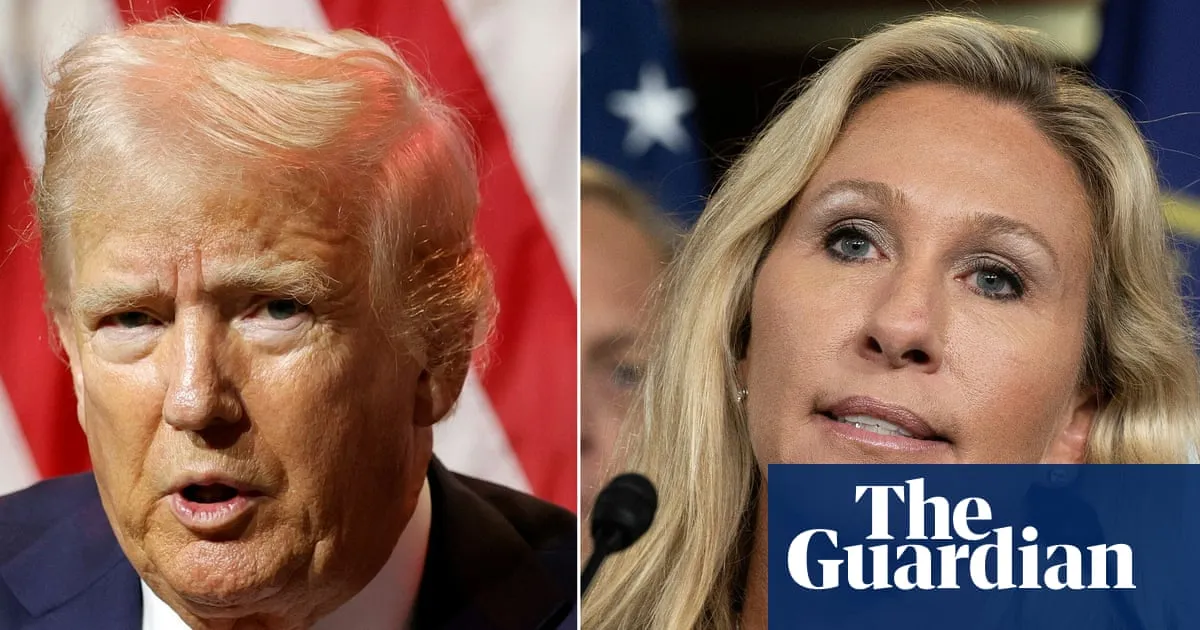
In a recent interview set to air on CBS's 60 Minutes, outgoing GOP House member Marjorie Taylor Greene revealed that many Republicans in Congress initially ridiculed Donald Trump but quickly changed their tune after he secured the party's 2024 White House nomination. Greene, a staunch supporter of Trump, shared her observation that her colleagues transitioned from mocking the former president's speech and style to openly supporting him once he gained momentum in the primary.
During her candid conversation with correspondent Lesley Stahl, Greene stated, “I watched many of my colleagues go from making fun of him, making fun of how he talks, making fun of me constantly for supporting him, to when he won the primary in 2024, they all started – excuse my language, Lesley – kissing his ass.” This candid reflection sheds light on the complex dynamics within the Republican Party, where loyalty and public perception often dictate behavior.
Marjorie Taylor Greene, who has been a vocal ally of Trump, noted that she now finds herself at odds with him. As she prepares to leave Congress in January, she revealed that Trump has labeled her a “traitor” and has publicly criticized her. This fallout has resulted in Greene facing a barrage of online threats, which she reported to the US Capitol Police. In a series of posts on X, Greene expressed her concern over the numerous threats she has received, highlighting that she has reported hundreds of them to authorities.
Greene elaborated on the nature of these threats, stating that they initially came from the political left but shifted when she stood up for the survivors of Jeffrey Epstein. She mentioned that her advocacy for these survivors, who were victims of abuse and trafficking, led to Trump’s criticism and a new wave of threats directed at her and her family. Greene explained, “All of the death threats came from the ‘left’ until I stood with the Epstein Survivors, women who were raped as teenagers, abused, and trafficked by rich powerful men – and that’s when President Trump turned on me.”
In her interview, Greene emphasized that many Republicans hesitate to criticize Trump publicly due to fear of retribution. “I think they’re terrified to step out of line and get a nasty Truth Social post on them,” she remarked. This fear reflects the growing influence Trump continues to exert over the Republican Party, as many members navigate the delicate balance between personal convictions and party loyalty.
As the political landscape evolves leading into the 2024 election, the implications of these dynamics within the GOP will be critical to observe. Greene's experiences underscore the intense pressure within the party and the lengths to which members will go to maintain their standing in an environment dominated by Trump's presence.