

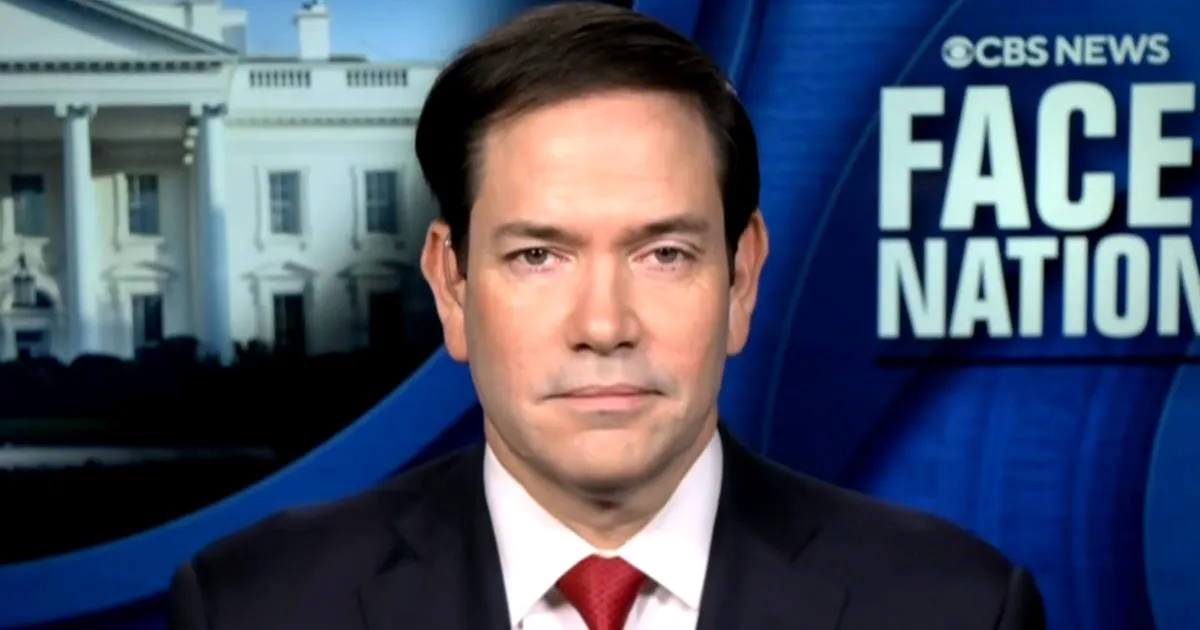
In an exclusive interview on Face the Nation with host Margaret Brennan on January 4, 2026, Secretary of State Marco Rubio discussed the United States' strategy regarding Venezuela and the ongoing challenges posed by its government. The conversation shed light on how the U.S. plans to exert pressure on the Venezuelan regime while clarifying the absence of intentions for military occupation.
During the interview, Brennan highlighted President Trump's assertion that the U.S. would maintain military options, including potential "boots on the ground" in Venezuela. Rubio emphasized that the focus lies on using sanctions and economic pressure rather than direct military intervention. He explained, "The key to what that regime relies on is the economy fueled by oil," and noted that the Venezuelan oil industry is in dire need of reform.
Secretary Rubio pointed out that the current oil industry in Venezuela does not benefit the populace; instead, the profits are siphoned off by corrupt officials. "None of the money from the oil gets to the people," he stated, outlining a U.S. strategy that includes a quarantine on sanctioned oil shipments. He affirmed that this approach would continue until the regime demonstrates changes that align with U.S. interests and improve the living conditions of Venezuelans.
Rubio clarified that while the President retains the constitutional right to act against imminent threats, the current focus is on significant naval deployments capable of enforcing sanctions. He stated, "What you see as a force posture is one of the largest naval deployments in modern history." This deployment aims to halt drug trafficking and restrict sanctioned vessels, thereby crippling the regime’s revenue-generating capabilities.
Brennan pressed further, questioning why certain high-ranking officials within the regime, such as Diosdado Cabello and the defense minister, who are indicted and considered narco-terrorists, remain in power. Rubio responded by highlighting the complexity of military operations and the focus on top priorities, including the arrest of former President Nicolas Maduro.
Secretary Rubio described the successful operation to arrest Maduro as "one of the most daring and sophisticated missions" undertaken by the U.S. in recent history. He explained that capturing Maduro, who was living on a military base, required precision and careful planning. "It is not easy to land helicopters in the middle of the largest military base in the country," he remarked, emphasizing the challenges faced during the operation.
When asked about the political future of Venezuela, Rubio expressed admiration for opposition leaders María Corina Machado and Edmundo González. He affirmed that the U.S. acknowledges the legitimacy of the elected leaders and is focused on facilitating a transition away from the current regime. However, he cautioned that such transitions take time and cannot be rushed, particularly given the entrenched nature of the Chavista system.
Rubio reiterated the U.S. commitment to support a democratic transition in Venezuela. "We want to see Venezuela transition to be a place completely different than what it looks like today," he stated, while also recognizing the need for patience and a realistic approach to changing the political landscape.
The discussion also touched on Venezuela's vast oil resources, which have been mismanaged under the current regime. Rubio stressed the critical need for investment in the oil industry to restore its potential and benefit the Venezuelan people. "Their oil industry is completely destroyed... They need investment from private companies," he explained.
Rubio concluded the interview by emphasizing that the U.S. will not allow a country like Venezuela to exist in its sphere of influence while aligned with malign actors like Hezbollah and Iran. He maintained that U.S. interests will always guide the approach taken towards Venezuela and its government.
As Secretary of State, Marco Rubio's remarks underscore the complex and evolving nature of U.S. foreign policy in Latin America, particularly regarding the urgent need for a solution to Venezuela's ongoing crisis.