

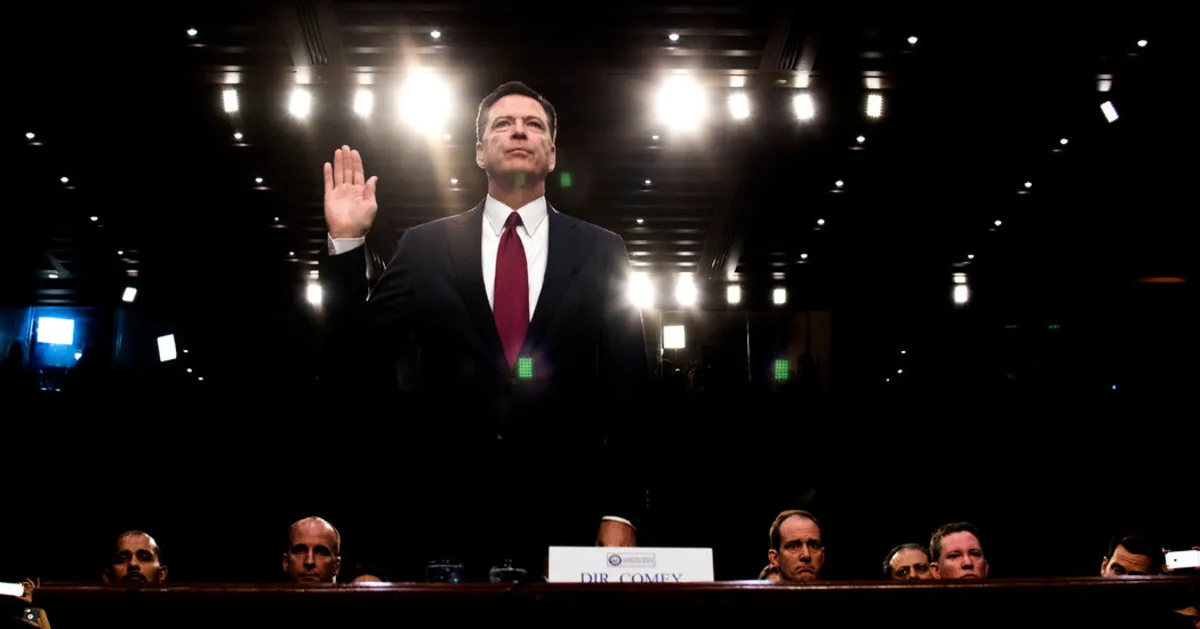
A significant legal development occurred on Saturday night when a federal judge, Colleen Kollar-Kotelly, issued a ruling that poses a temporary obstacle to the Justice Department’s intentions of seeking a new indictment against James B. Comey, the former director of the F.B.I. This decision has profound implications for the ongoing legal battles surrounding Comey and the Trump administration's attempts to re-indict him.
Judge Kollar-Kotelly's ruling, which spans four pages, effectively restricts the Justice Department's access to a crucial collection of evidence that was utilized in the original indictment against Comey, issued in late September. This ruling is set to remain in place until at least next Friday, creating a significant hurdle for prosecutors who aim to leverage the same evidence to bring forth new charges against Comey in the near future.
The initial indictment against Comey accused him of lying to Congress and obstructing justice regarding his testimony from five years ago. During this testimony, Comey denied leaking sensitive information to the media about investigations conducted during his tenure at the F.B.I. The charges stem from communications between Comey and his close associate, Daniel C. Richman, a former federal prosecutor and current law professor at Columbia University.
The Justice Department contends that emails and text messages exchanged between Comey and Richman demonstrate that Comey misled Congress about using Richman as an intermediary to pass information to reporters concerning sensitive investigations. However, in an emergency filing made to Judge Kollar-Kotelly on Friday night, Richman argued that the Justice Department had unlawfully obtained his communications, violating his constitutional rights. He asserted that this evidence should not be admissible in any future attempts to indict Comey.
While Judge Kollar-Kotelly’s ruling temporarily halts the Justice Department's plans, it remains uncertain whether this decision will lead to a permanent prohibition against re-indicting Comey. The outcome of this case could have far-reaching consequences for both Comey and the Justice Department, as it navigates the complexities of legal ethics and constitutional rights.
As the situation develops, observers will be keenly watching the Justice Department's next steps and whether they will find alternative routes to pursue their case against the former F.B.I. director. This latest twist in the ongoing legal saga reinforces the contentious relationship between Comey and the Trump administration, highlighting the intricate legal battles that continue to unfold.