

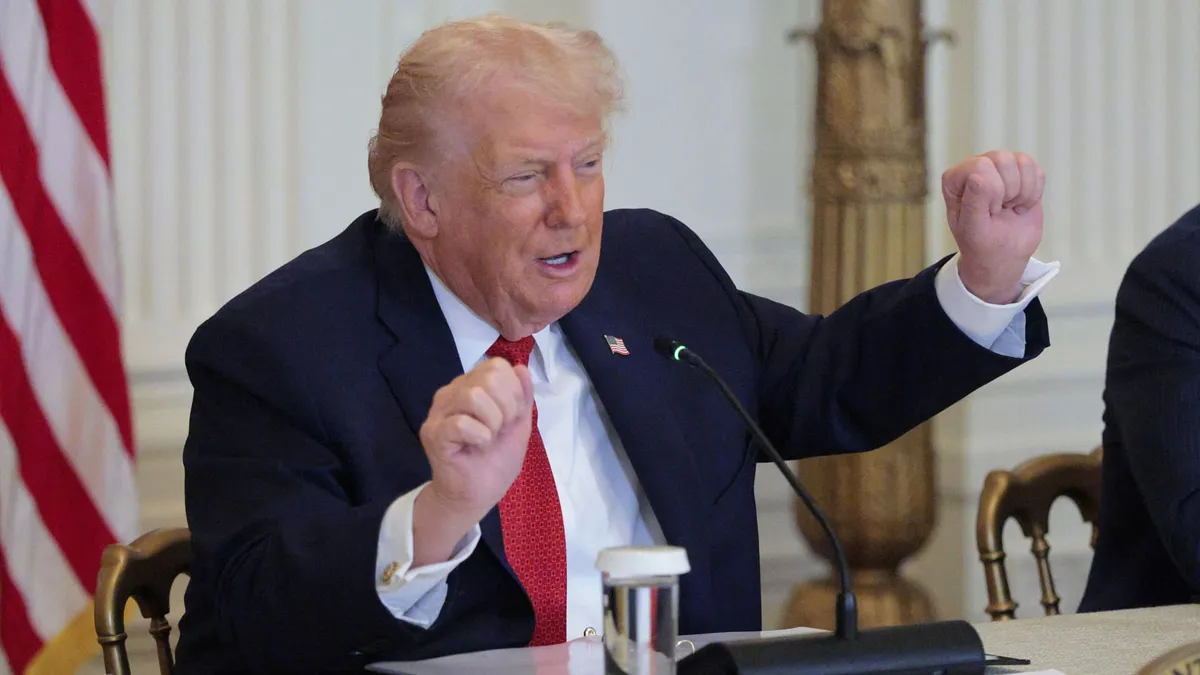
On Friday, President Donald Trump hinted at the possibility of imposing tariffs on countries that do not support U.S. interests regarding Greenland. During a health-care-related event at the White House, Trump stated, "We need Greenland for national security," underscoring the growing urgency of his administration's push to acquire the Danish territory.
Trump's comments reflect an increasingly aggressive stance on acquiring Greenland, a move he has been vocal about in recent months. As tensions with nations like China and Russia continue to rise, the Trump administration is exploring various options to take control of the Arctic island, including the potential use of the U.S. military. Currently, the U.S. operates a military base in Greenland, but Trump argues that full ownership is essential for national security.
Despite the U.S. interest, both Greenland and Denmark have firmly stated that the territory is not for sale and have expressed a desire to maintain their autonomy. The Trump administration has also considered making a formal offer to purchase Greenland, although such discussions have yet to yield any results.
Trump's latest remarks about possibly using tariffs as leverage come after he previously suggested a similar strategy concerning international drug prices. He has been advocating for lower drug costs in the U.S. by proposing that domestic prices align with those paid overseas. Trump mentioned that he had warned leaders from various countries to either increase their drug prices or risk facing heavy tariffs on imports to the U.S. His statement included, "I may do that for Greenland too," indicating his willingness to adopt aggressive economic measures.
Following a meeting with a delegation from Greenland and Denmark, Vice President JD Vance and Secretary of State Marco Rubio were informed of the fundamental disagreement between the nations and Trump's administration. The delegation's concerns highlight the complexities involved in Trump's approach to securing Greenland.
Since reentering office, Trump has significantly expanded the government's use of tariffs, raising the overall average tariff rate to an estimated 17%. Many of these tariffs have been implemented under the International Emergency Economic Powers Act (IEEPA), a law that grants the president broad authority to impose economic sanctions. However, the legality of using IEEPA for such actions has faced numerous challenges in courts, with some rulings deeming Trump's actions unlawful. This ongoing legal battle has now reached the Supreme Court, where a decision on the legality of Trump's tariffs is anticipated.
Trump expressed his concerns regarding the potential implications of the Supreme Court ruling on his administration's agenda, stating, "I hope we win the Supreme Court case, because if we don't, it'd be a shame for our country." The outcome of this case could have significant ramifications for both U.S. trade policy and Trump's broader foreign relations strategy, particularly as it pertains to Greenland.