

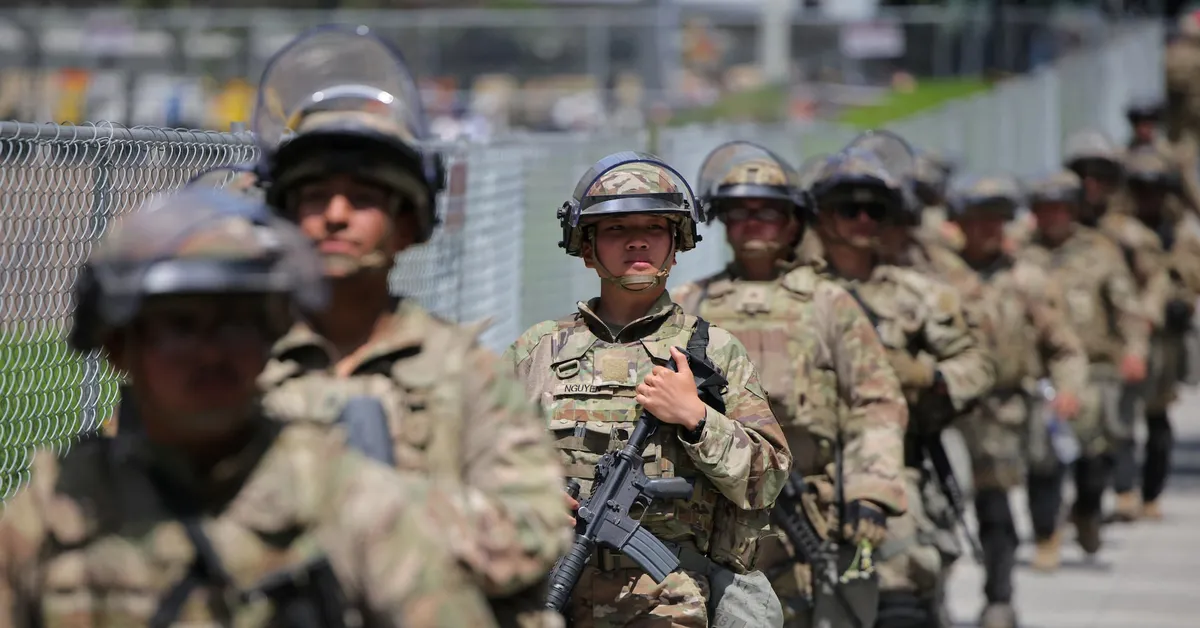
On December 10, 2023, a significant ruling came from a federal court as U.S. District Judge Charles Breyer intervened to block President Donald Trump's deployment of National Guard troops to Los Angeles. The judge ordered that these troops be returned to the control of California's governor, emphasizing the importance of state authority in matters of public safety.
Judge Breyer's ruling was a direct response to the Trump administration's assertion that recent protests against immigration authorities constituted a rebellion. The administration argued that this situation warranted the extraordinary measure of taking federal control over state National Guard units and deploying them into the streets of Los Angeles. However, Breyer firmly rejected this claim, highlighting the need for a balanced approach to governance.
In his decision, Judge Breyer also dismissed the administration's argument that courts lack the authority to review a president's actions regarding the control of state National Guard units during a declared emergency. He criticized this viewpoint as an excessively broad interpretation of executive authority, affirming that the U.S. government was designed to operate under a system of checks and balances.
Breyer articulated his stance by stating, "The founders designed our government to be a system of checks and balances. Defendants, however, make clear that the only check they want is a blank one." This statement underscores the necessity for judicial oversight in executive actions, particularly those that affect state governance.
As of now, the White House has not provided an immediate response to this ruling. The decision marks a notable moment in the ongoing discussions surrounding the role of the National Guard and the balance of power between federal and state authorities.
This ruling will undoubtedly have implications for future federal interventions in state matters, particularly in the context of public protests and national security. As discussions continue, it remains crucial to monitor how these legal interpretations evolve and their impact on state and federal relations.
For further updates on this story and other related news, stay tuned.