

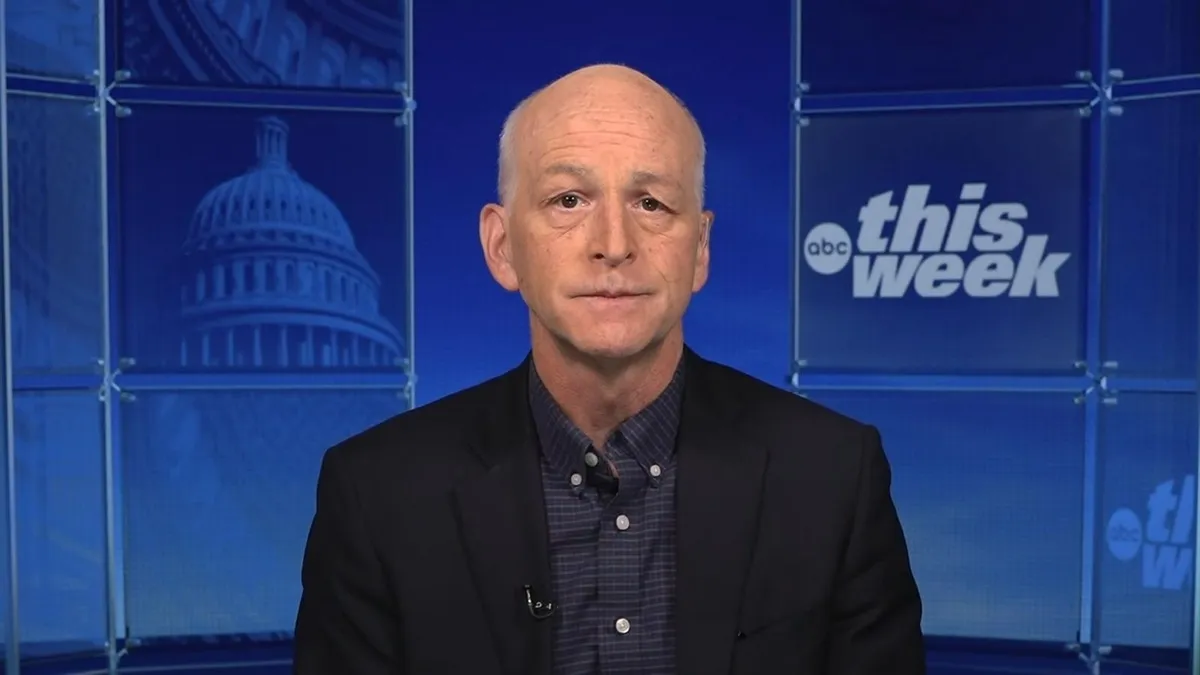
On Sunday, Rep. Adam Smith, the top Democrat on the House Armed Services Committee, raised significant concerns regarding the U.S. military strikes that targeted an alleged drug trafficking vessel in the Caribbean Sea on September 2. Smith indicated that surveillance video from the incident would contradict the narrative presented by Secretary of Defense Pete Hegseth and other Republican officials. He stated, “When the survivors were finally taken out, they weren’t trying to flip the boat over. The boat was clearly incapacitated, and they had no communications device. Certainly, they were unarmed.”
Smith emphasized that any claims suggesting the drugs survived the attack are difficult to reconcile with the video evidence, which he described as “deeply disturbing.” He asserted, “It did not appear that these two survivors were in any position to continue the fight,” a statement that directly opposes the accounts given by Hegseth and Republican Senator Tom Cotton. Cotton, who also viewed the video, claimed that he saw the survivors attempting to right the vessel, which was allegedly laden with drugs destined for the United States.
During the Reagan National Defense Forum, Hegseth recounted what he had been told regarding the circumstances leading up to the second military strike. He stated, “I was told that there had to be a reattack, because there were a couple folks who could still be in the fight.” This comment drew sharp criticism from Smith, who responded, “That’s ridiculous. There are no radios.” Smith urged for the release of the surveillance video, suggesting that its publication would debunk Republican claims and reveal the reality of the situation. He noted that the boat was adrift and that the survivors were merely trying to stay alive.
Former President Donald Trump expressed willingness to release the video, stating the administration would have “no problem” doing so. However, Hegseth remained noncommittal, indicating that any decision would require careful consideration of the implications. He stated, “Whatever we were to decide to release, we'd have to be very responsible about it.”
The legality of the military strikes aimed at the drug trafficking vessel has become a central point of debate. Legal experts have raised questions about the administration's justification for the strikes. Smith articulated his concerns, stating, “If you say anyone who has drugs that they're intending to illegally transit to the U.S. is a legitimate target for deadly force, the amount of power that gives the president and the U.S. military is unprecedented.”
In response, Republican Senator Eric Schmitt defended the administration, asserting that the strikes are legal and fall within the President's authority to target narco-terrorists. He claimed, “I reviewed the 40-plus page memo by the Office of Legal Counsel. There are Judge Advocates General officers in these rooms every time there’s a strike.” However, the opinion from the Justice Department's Office of Legal Counsel has not been made public, prompting calls from Democrats for its release.
In a separate discussion, Schmitt was questioned about Trump’s decision to pardon former Honduran President Juan Orlando Hernandez, who was serving a 45-year sentence for drug and weapons trafficking. Schmitt deflected the inquiry, stating, “I’m not familiar with the facts or circumstances, but I think it’s ridiculous to imply that President Trump is soft on drug smuggling.” He argued that such discussions detract from the administration's military campaign against drug trafficking.
Conversely, Smith suggested that the pardon was indicative of the administration’s efforts to exert control over South American politics. He highlighted the timing of the pardon alongside the recent national security strategy released by Trump, asserting that it appears to be more about political maneuvering than genuinely addressing the drug crisis in the U.S.
The contrasting narratives surrounding the military strikes and the subsequent political ramifications underscore the complexities of addressing drug trafficking and the associated legal implications. As the debate continues, the call for transparency and the release of the surveillance video remains a critical point of contention among lawmakers.