

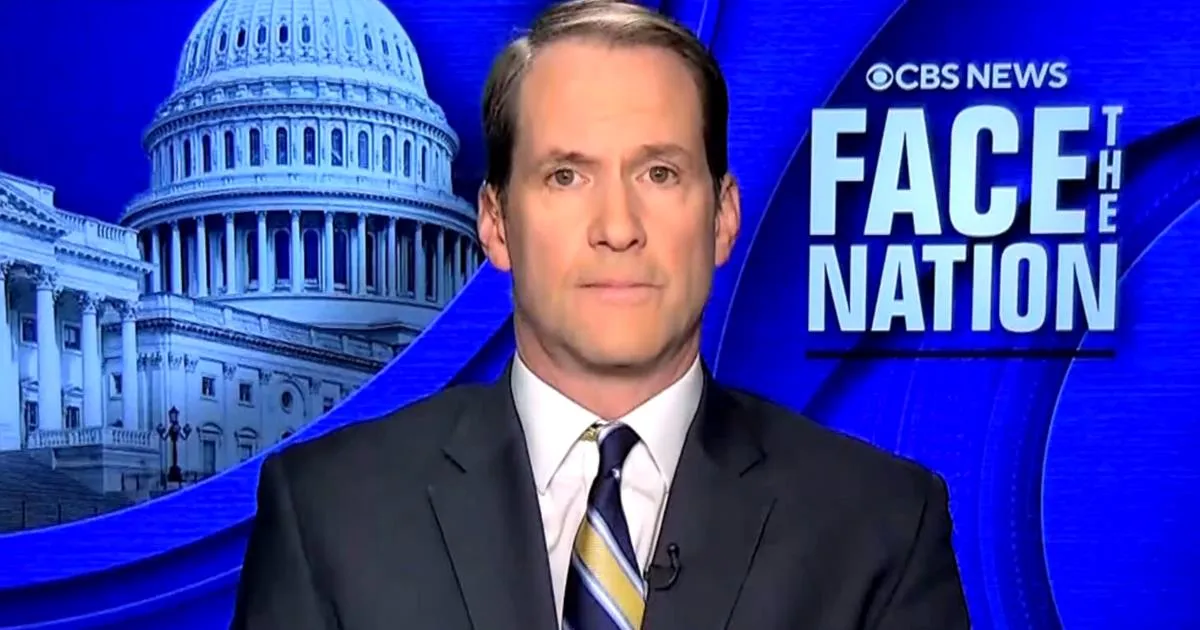
On Sunday, Representative Jim Himes, the leading Democrat on the House Intelligence Committee, expressed serious concerns regarding the credibility of Defense Secretary Pete Hegseth in relation to the controversial September strikes on an alleged drug boat. Himes highlighted the inconsistencies in the Pentagon's explanations surrounding a second strike that has recently come under scrutiny.
Himes was one of a select group of lawmakers who received closed-door briefings from military officials last week on Capitol Hill. These briefings focused on the Trump administration's aggressive campaign against alleged drug trafficking boats operating off the coast of South America. Among these was the follow-up strike on September 2, which has now become a contentious issue in Congress.
During the briefings, lawmakers were presented with video footage of the second strike targeting a Venezuelan drug boat. This came in the wake of a Washington Post report that revealed the second strike resulted in the deaths of two survivors from the initial attack. Following the briefing, Himes described what he witnessed as one of the most troubling experiences of his public service career.
Appearing on the CBS program Face the Nation with Margaret Brennan, Himes stressed the necessity of making the strike video public. He noted the stark division in interpretations of the video along party lines, stating, "This is an instance in which I think the American public needs to judge for itself." Himes expressed that he was deeply affected by the footage of the September 2 strikes and urged for public viewing to foster understanding of the situation.
According to Himes, there is a certain level of public sympathy for targeting drug runners; however, it is crucial for citizens to comprehend the implications when the full might of the U.S. military is directed at individuals in dire circumstances. He emphasized the need for a visceral understanding of the actions taken by the military, highlighting the human cost involved.
The September strike marked the beginning of the administration's intensified campaign against alleged drug traffickers in the Southern Hemisphere. Since that initial strike, the U.S. has conducted over 20 additional operations, resulting in more than 80 fatalities. The legality of these strikes has come under fire, as they have been executed without explicit authorization from Congress. The administration defends its actions by asserting that drug cartels have been designated as terrorist organizations, thereby granting them the legal authority to proceed with these strikes. However, they have yet to provide evidence that the vessels targeted were operated by such cartels.
Republican Senator Tom Cotton of Arkansas, who chairs the Senate Intelligence Committee and was also briefed on the strikes, disagreed with Himes' portrayal of the video. On Meet the Press, he contended that the survivors were not incapacitated and asserted that the decision to conduct a second strike was appropriate to ensure destruction of the boat's cargo.
Cotton stated that the individuals appeared to be actively trying to recover their capsized vessel, implying that they posed no imminent threat. In response, Himes reiterated on Face the Nation that the actions of the individuals at the time of the strike are critical to determining whether they were legitimate targets under the laws of war. He insisted that the individuals were barely alive and not engaged in hostilities, underscoring the importance of public access to the video evidence.
The lawmakers were briefed by General Dan Caine, the chairman of the Joint Chiefs of Staff, and Navy Admiral Frank Mitch Bradley, who was leading the mission. Himes spoke highly of Admiral Bradley, recognizing his integrity and storied career. However, he raised concerns about the moral dilemmas faced by military leaders under pressure to follow orders that may conflict with their ethical beliefs.
During the Reagan National Defense Forum, Hegseth elaborated on his involvement in the September 2 strikes, stating that a reattack was deemed necessary due to the possibility of survivors still posing a threat. Hegseth expressed confidence in the decision to strike again, claiming he would have made the same call himself, further complicating the ongoing debate regarding the administration's military actions.
The controversy surrounding the September strikes on alleged drug boats continues to unfold, with significant implications for military ethics and congressional oversight. As more details emerge, the necessity for transparency and public discourse becomes increasingly critical in understanding the complexities of U.S. military operations abroad.