

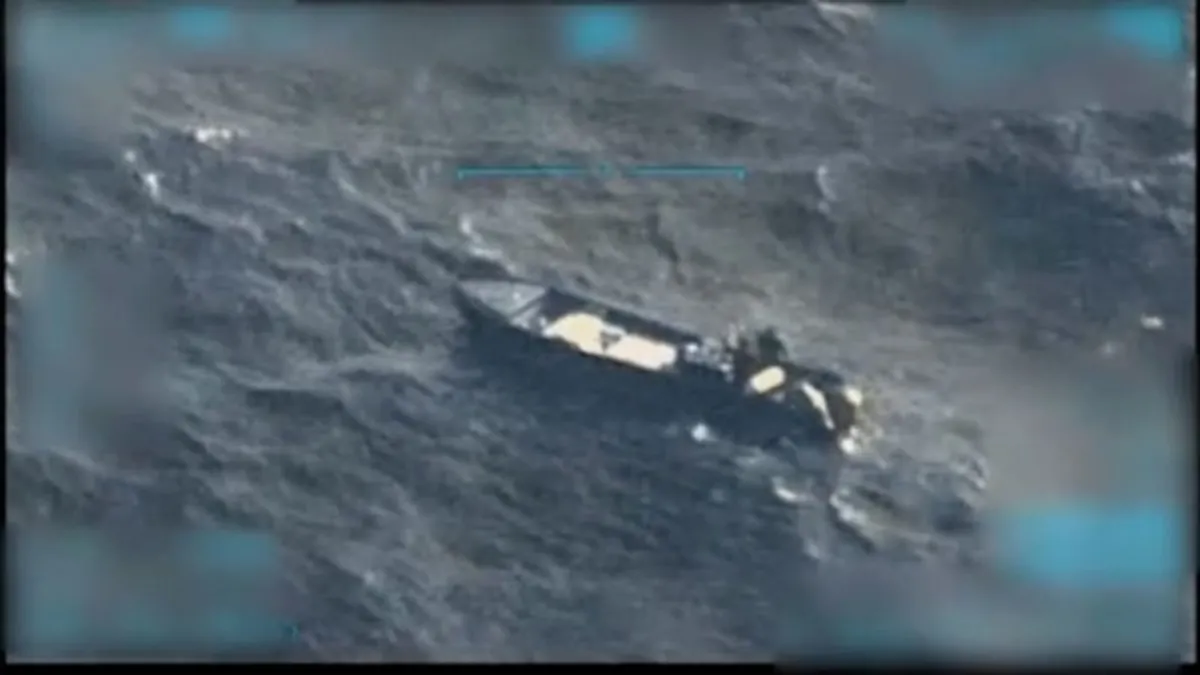
The family of Alejandro Carranza, a Colombian fisherman believed to have been killed in a US military strike in the Caribbean, has taken a significant step by filing what is considered the first complaint against such attacks with the Inter-American Commission on Human Rights (IACHR). This petition, submitted on Tuesday by renowned US human rights attorney Dan Kovalik, alleges that Carranza lost his life when a US strike targeted his boat off the Colombian coast on September 15.
The complaint highlights that the United States conducted an extrajudicial killing, violating Carranza’s fundamental human rights. Kovalik expressed to CNN that the family is seeking compensation and an end to these types of killings, although he did not specify how these demands would be addressed. “These killings are against international law and US law. We want this to stop, and we think this is at least a first step to having that happen,” Kovalik stated.
The complaint specifically names US Secretary of Defense Pete Hegseth as the individual responsible for ordering the bombing of boats similar to Carranza's, which resulted in the deaths of all individuals on board. Furthermore, it asserts that Hegseth's actions were “ratified” by former US President Donald Trump. In response to inquiries, the Pentagon directed questions to the White House, which has yet to provide a comment.
Since early September, the United States has reportedly executed at least 22 strikes targeting alleged drug trafficking boats in the Caribbean and Pacific, resulting in the deaths of at least 83 individuals. The US government has attempted to justify these strikes by claiming that the vessels were associated with approximately two dozen drug cartels engaged in conflict with the US. The White House maintains that these military actions comply with the Law of Armed Conflict, which aims to protect civilians during military operations.
On September 15, Trump announced that the strike had eliminated three “narcoterrorists from Venezuela” who were allegedly transporting drugs to the United States. However, Kovalik contends that Carranza was merely fishing for marlin and tuna at the time of the strike. “That is what he was doing. That was his profession and his vocation,” Kovalik asserted.
Colombian President Gustavo Petro has previously stated that Carranza was a lifelong fisherman with no connections to the drug trade. Petro mentioned that Carranza’s boat was displaying a distress signal due to engine problems when the strike occurred. While acknowledging that Carranza may have accepted money to transport prohibited goods due to financial hardship, Petro emphasized, “never did his actions deserve the death penalty.”
On Monday, Petro announced that Kovalik had initiated a “judicial defense” for Carranza’s family, calling for a commission of Colombian lawyers to investigate what he deemed “crimes” committed in the Caribbean. Kovalik noted that the petition he filed represents the first formal complaint against US strikes in the region, with hopes that more will follow. “That’s a goal. That’s one of our goals. We’re going to bring justice to these people,” he told CNN.
The IACHR states on its website that petitions allow victims of human rights violations to seek assistance. If accepted, the IACHR can recommend actions to the offending country to prevent similar incidents, conduct investigations, and provide reparations. Following the filing of this complaint, the IACHR expressed concerns regarding the US strikes and urged the United States to ensure that all security operations, including those conducted beyond its borders, adhere to international human rights obligations. The commission emphasized the importance of protecting the right to life, ensuring due process guarantees, and establishing accountability mechanisms.
CNN has reached out to the IACHR, Carranza’s family, and the Colombian government for additional information regarding the ongoing situation.