

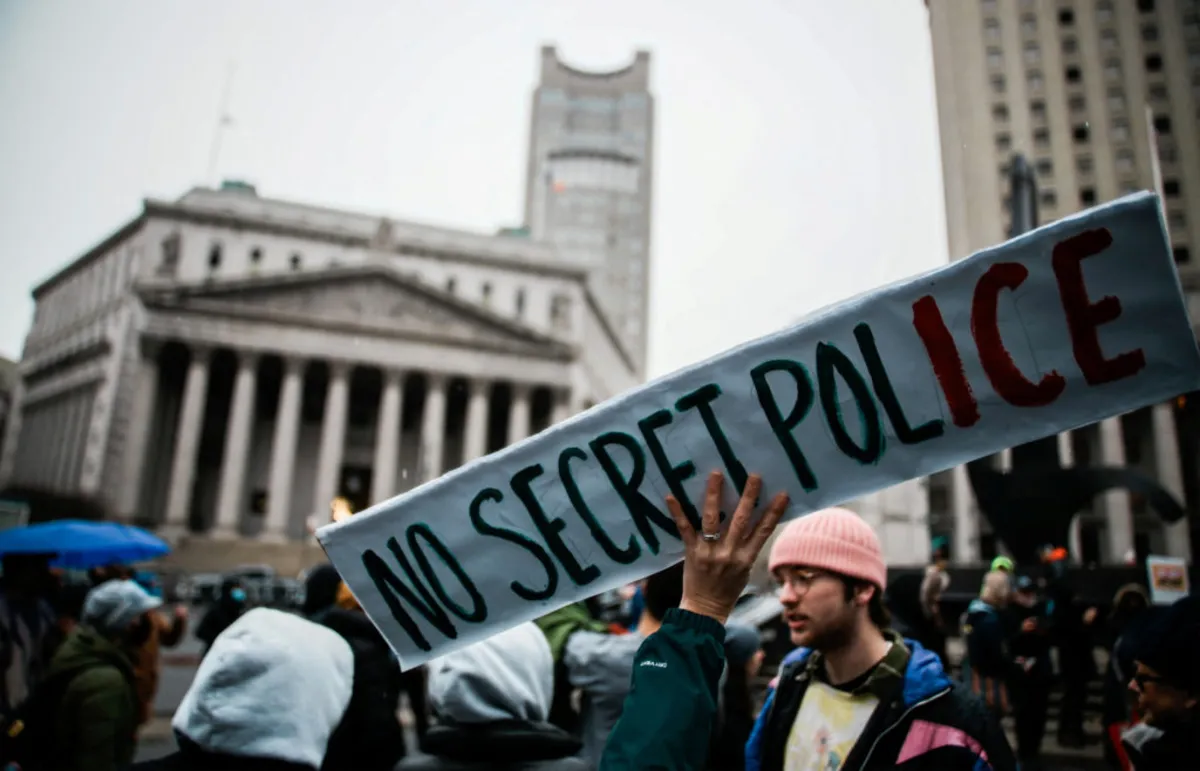
On Saturday, thousands of demonstrators took to the streets of Minneapolis to protest the tragic shooting of a woman by a federal immigration officer. This protest coincided with nationwide demonstrations sparked by the shooting of two individuals in Portland, Oregon. As tensions rose, Minnesota leaders urged participants to maintain a peaceful atmosphere during the marches.
The Minneapolis protest was part of a larger wave of protests across the United States that took place over the weekend. This gathering was particularly significant in a city already on edge following the death of Renee Good, who was shot by an Immigration and Customs Enforcement (ICE) officer on Wednesday. The incident has intensified fears within the community, as expressed by local resident Meghan Moore, who stated, "We're all living in fear right now. ICE is creating an environment where nobody feels safe, and that's unacceptable."
While many protests remained peaceful, a demonstration outside a Minneapolis hotel on Friday night turned chaotic. Approximately 1,000 people participated, and tensions escalated as some demonstrators threw ice, snow, and rocks at law enforcement officers. Minneapolis Police Chief Brian O'Hara reported that one officer sustained minor injuries from a piece of ice, leading to 29 individuals being cited and released.
Minneapolis Mayor Jacob Frey emphasized that, although the majority of protests have been non-violent, any actions resulting in property damage or harm to others would lead to arrests. He condemned the provocateurs who incite unrest within the crowds, asserting, "This is what Donald Trump wants. He wants us to take the bait."
Governor Tim Walz echoed Mayor Frey's sentiments, urging protesters to remain peaceful. He criticized the federal government, stating, "Trump sent thousands of armed federal officers into our state, and it took just one day for them to kill someone. Now he wants nothing more than to see chaos distract from that horrific action. Don't give him what he wants."
The U.S. Department of Homeland Security noted that the presence of immigration officers in the Twin Cities represents its largest immigration enforcement operation to date. The Trump administration has characterized both the Minneapolis shooting and the incidents in Portland as acts of self-defense, claiming that officers were attacked by vehicles.
Connor Maloney, a protester at the Minneapolis event, articulated his frustration with the ongoing immigration crackdown, stating, "Almost daily I see them harassing people. It's just sickening that it's happening in our community around us." Meanwhile, Steven Eubanks, attending a separate protest in Durham, North Carolina, expressed the need for action, saying, "We can't allow it. We have to stand up."
The Minneapolis protest was organized by a coalition of migrant rights groups, beginning in a park located roughly half a mile from the neighborhood where Good was fatally shot. Marchers carried signs demanding ICE to withdraw from the area and expressed solidarity with both Good and the broader immigrant community.
As the protest unfolded, heavily armed officers—some in Border Patrol uniforms—approached individuals who were closely following them, issuing stern warnings. This display of force highlighted the tense atmosphere, even as the majority of demonstrations remained peaceful, contrasting sharply with the violence that erupted in Minneapolis during the protests following the killing of George Floyd in 2020.
Reports indicate that ICE operations are occurring throughout Minneapolis, prompting numerous calls to 911 from residents reporting ICE activities, arrests, and abandoned vehicles. Some cars were left in a state of disarray, with reports of dogs left inside vehicles after their owners were apprehended by immigration enforcement.
The Trump administration's crackdown in Minnesota has involved the deployment of over 2,000 federal officers, a significant increase in immigration enforcement linked to allegations of fraud within the Somali community. These officers were previously part of operations in Louisiana before being redirected to Minnesota.
On Saturday morning, three congresswomen from Minnesota attempted to visit the ICE facility located within the Minneapolis federal building. Initially allowed entry, they were subsequently asked to leave just ten minutes later. U.S. Representatives Ilhan Omar, Kelly Morrison, and Angie Craig accused ICE agents of obstructing their congressional duties, asserting that the agency was disregarding federal law.
A recent federal ruling temporarily blocked the Trump administration from enforcing policies that limit congressional visits to immigration facilities, stemming from a lawsuit filed by a group of 12 Congress members who challenged ICE's amended visitor policies after being denied entry to detention facilities.
As protests continue to unfold across the nation, the calls for justice and accountability in the face of immigration enforcement actions remain at the forefront of community concerns.