

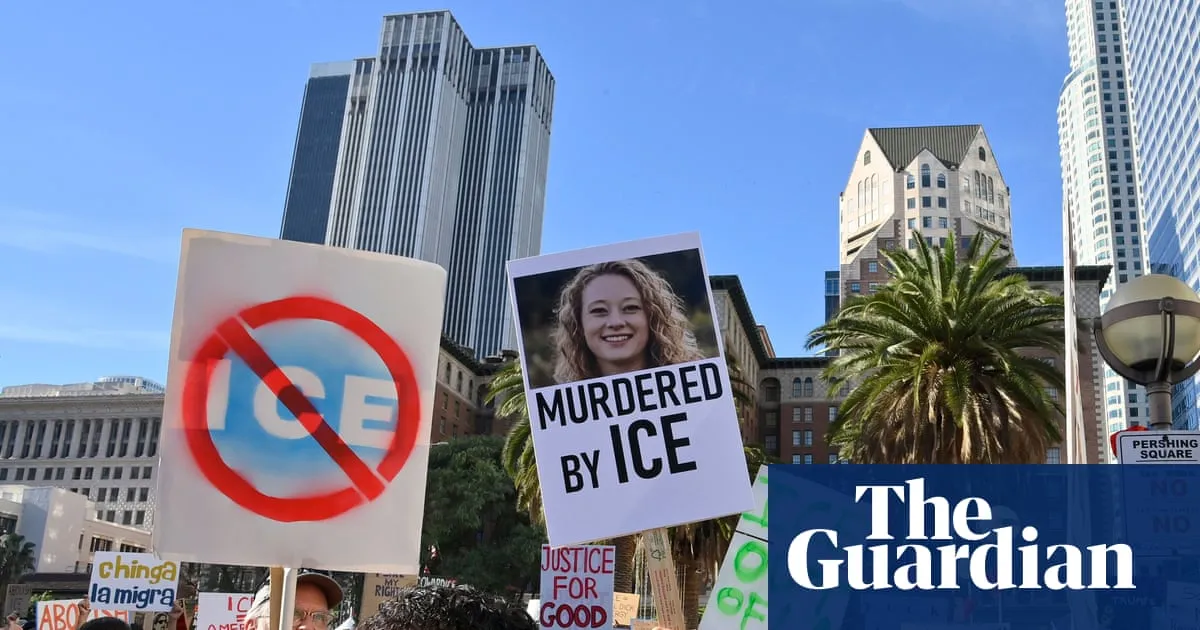
This past weekend, thousands of people took to the streets across the United States to voice their outrage over the tragic shooting of a Minneapolis woman by an Immigration and Customs Enforcement (ICE) officer. The incident has sparked widespread protests, especially in Minneapolis, where demonstrators gathered to march towards the residential area where Renee Good, a 37-year-old American citizen and mother of three, was fatally shot while driving her car.
Renee Good was shot on Wednesday, and the aftermath of her death has led to significant unrest. Officials reported that 30 people were arrested during Saturday’s protests, and one police officer sustained injuries after being struck by a chunk of ice. Minneapolis Mayor Jacob Frey stated that while there were instances of violence, the “vast majority of community members have demonstrated peacefully.” The protests reflected the intense anger not only over Good's death but also other recent shootings involving federal immigration enforcement, including one in Portland, Oregon, that left three individuals injured this week.
The protests in Minneapolis were notable for their size, with demonstrators facing frigid winds while demanding justice for Good. The outcry has resonated across various metropolitan areas and smaller communities, with significant protests also occurring in cities like Los Angeles and Salt Lake City. Many of these demonstrations extended into the night and continued into Sunday.
In the wake of the incident, Democratic leaders in Minnesota and the Trump administration have offered sharply contrasting narratives regarding the shooting. The tragic event unfolded shortly after approximately 2,000 federal agents were deployed to the Minneapolis-St. Paul region in what the Department of Homeland Security (DHS) characterized as its largest operation to date. Officials from the Trump administration have made unfounded claims that Good was involved in terrorism, while President Trump alleged that the ICE agent was “run over,” despite video evidence disproving this assertion.
Mayor Frey has been vocal in his criticism of the federal response, urging ICE officers to vacate the city. He expressed his frustration during an appearance on NBC’s Meet the Press, stating that the administration was “so quick to jump on a narrative as opposed to the truth” and lamenting the refusal to allow state investigators to assist in the FBI’s ongoing investigation.
Amid the rising tensions, Kristi Noem, head of homeland security, announced on Sunday the decision to send “hundreds more” federal agents to Minneapolis. In an interview with Fox News, she asserted, “We’re sending more officers today and tomorrow. There will be hundreds more in order to allow our ICE and our border patrol individuals that are working in Minneapolis to do so safely.”
In Los Angeles, protests unfolded on Saturday evening outside several federal buildings, with demonstrators marching along Alameda Street while carrying inverted American flags and homemade signs denouncing ICE. The Los Angeles Police Department issued a dispersal order for the area, instructing protesters to vacate. Protests were also widespread in California’s Bay Area, with significant gatherings reported in cities such as Oakland, Berkeley, and San Francisco. In San Francisco, hundreds of protesters took to Van Ness Avenue, and another group at Ocean Beach formed a human banner reading “IT WAS MURDER – ICE OUT,” according to local reports.
In Salt Lake City, about 1,000 demonstrators circled Washington Square Park while police managed traffic, later positioning themselves in front of Utah's third district court. The movement showcases a growing national sentiment against federal immigration enforcement and the need for accountability in incidents of police violence.