

The Department of Homeland Security (DHS) has instituted a new policy mandating that members of Congress provide prior notice before inspecting immigration detention facilities. This decision, aimed at circumventing a recent court order that blocked officials from limiting such oversight visits, was dated January 8 and filed in federal court over the weekend.
Under this new directive, members of Congress must schedule any visits to Immigration and Customs Enforcement (ICE) facilities a minimum of 7 days in advance. Any exceptions to this rule must receive approval from Homeland Security Secretary Kristi Noem, who has officially endorsed the memo. This policy is a stark shift from previous practices where lawmakers could access these facilities without prior notification.
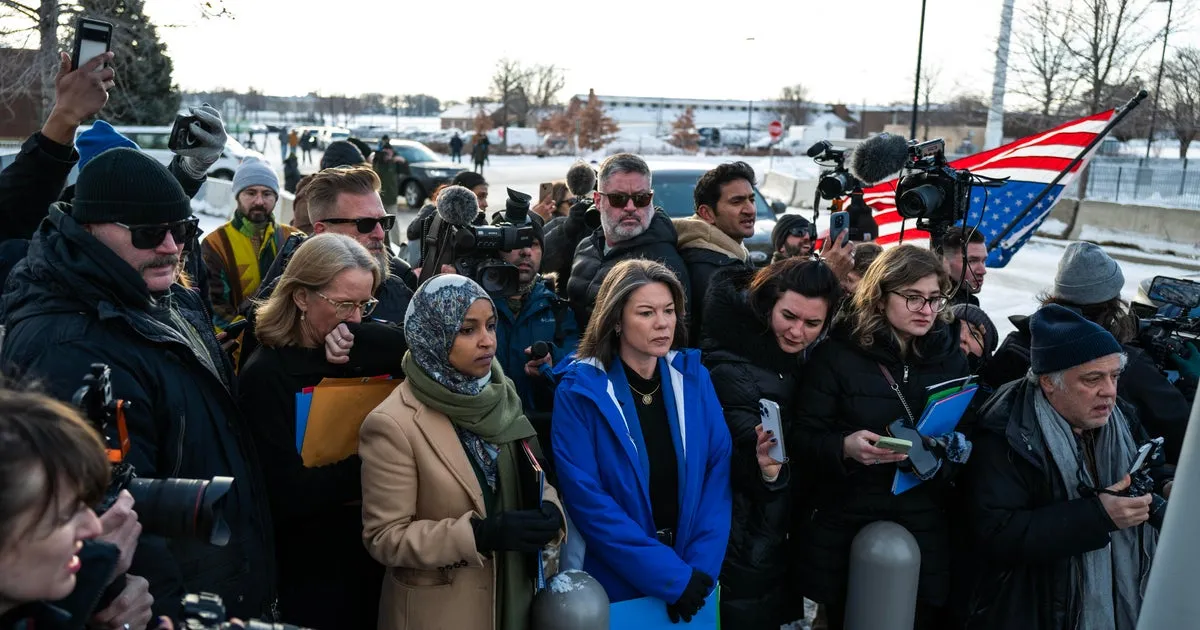
Recent events have heightened tensions at ICE facilities, particularly after an officer shot and killed Renee Nicole Good in Minneapolis. Over the weekend, Democratic Representatives Ilhan Omar, Angie Craig, and Kelly Morrison reported being denied entry to an ICE facility in the area. The officer involved in the shooting has claimed self-defense, a narrative that has been challenged by local leaders.
In December, a federal judge in Washington, D.C., blocked an earlier DHS policy that also required a 7-day advance notice for congressional visits to facilities housing individuals facing deportation. This ruling referenced appropriations law, which prohibits DHS from utilizing funds to obstruct congressional oversight visits or from enforcing prior notice requirements.
Despite this legal setback, Secretary Noem's new memo allows DHS to reinstate the 7-day notice requirement, citing funding appropriated through the One Big Beautiful Bill Act. This act, signed into law last summer, allocated a historic $75 billion to ICE to enhance deportation initiatives and expand detention capacities.
Noem has articulated that the policy is necessary to safeguard lawmakers, their staff, and both ICE detainees and employees. In her memo, she emphasized that unannounced visits disrupt the normal operations of ICE officers, pulling them away from their regular duties. Additionally, she expressed concern over a growing tendency to replace genuine oversight with what she described as “circus-like publicity stunts,” which contribute to a chaotic atmosphere and escalate emotional tensions.
This new policy reflects ongoing debates surrounding immigration enforcement and the oversight of detention facilities, raising further questions about the balance between transparency and security in the management of immigration policies.