

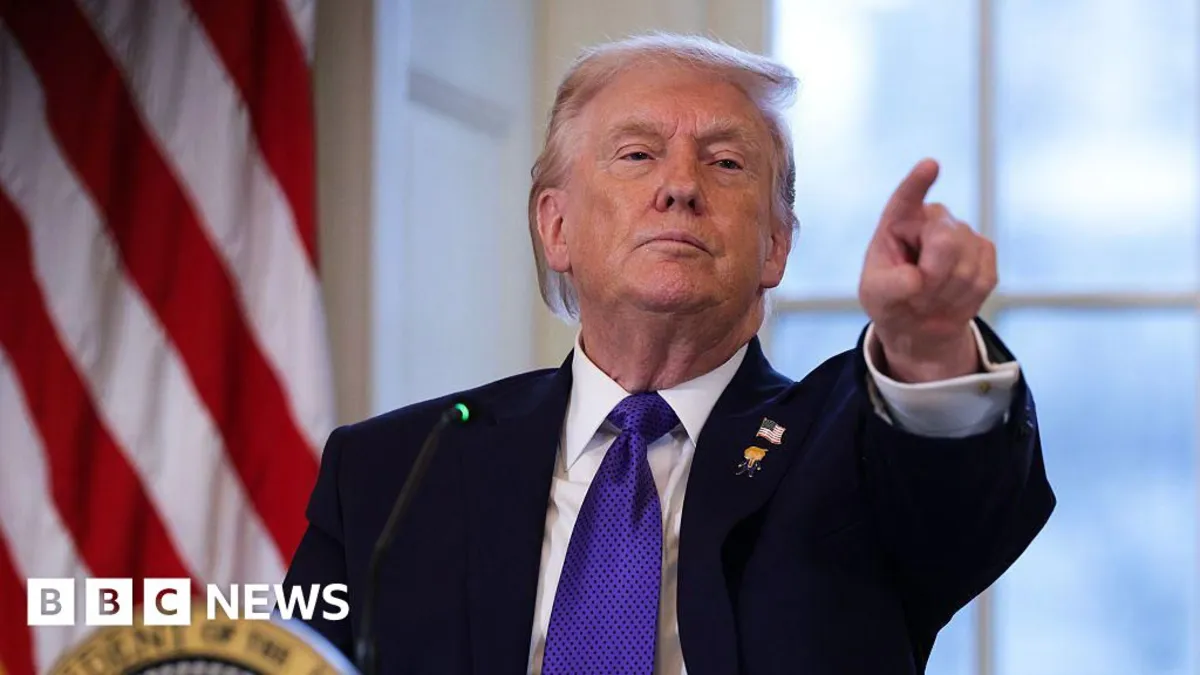
In a recent statement, former President Donald Trump has issued a stark warning to Cuba, urging the island nation to negotiate or face severe repercussions. The announcement comes in the wake of heightened tensions following the US military's raid on Venezuelan leader Nicolás Maduro on January 3. This bold move has placed Cuba in a precarious position, as the country has long depended on Venezuelan oil and financial support.
Historically, Cuba has relied heavily on Venezuela, which is estimated to send approximately 35,000 barrels of oil daily to the island. This flow of oil and money has been vital for Cuba's economy, especially during times of hardship. However, Trump has made it clear that this support will be cut off, stating emphatically, "THERE WILL BE NO MORE OIL OR MONEY GOING TO CUBA - ZERO!" on his platform, Truth Social.
Cuba's reliance on Venezuelan resources is not new. In exchange for oil, Cuba has historically provided security services to the Venezuelan government, particularly under the regimes of the last two dictators. However, Trump’s recent declaration indicates a significant shift in US foreign policy towards Cuba, suggesting that the longstanding support from Venezuela will come to an end. He implored Cuba to "make a deal, BEFORE IT IS TOO LATE."
While the Cuban government has not yet officially responded to Trump's latest threats, President Miguel Díaz-Canel has previously honored the 32 Cuban nationals who lost their lives during the US operation to capture Maduro. He referred to these individuals as "brave combatants" who fought against what he termed "terrorists in imperial uniforms." This highlights the ongoing tension and the deep-rooted historical complexities of US-Cuba relations.
Following the raid, Trump remarked on the implications for Venezuela, emphasizing that the country no longer requires protection from the "thugs and extortionists" who have historically held power. He stated, "Venezuela now has the United States of America, the most powerful military in the World (by far!), to protect them." This statement underscores the potential for increased US involvement in the region and further complicates relations with Cuba.
US Secretary of State Marco Rubio has echoed Trump’s sentiments, warning that Cuba's leadership should be deeply concerned about their future. He mentioned that if he were part of the Cuban government, he would be "in a lot of trouble." This statement reinforces the notion that the Trump administration is prepared to take significant action against Cuba if necessary.
In addition to military threats, the Trump administration’s strategy has included confiscating sanctioned Venezuelan oil tankers. This tactic has already exacerbated the fuel and electricity crisis in Cuba, further destabilizing the nation’s economy. As the situation evolves, the pressure on Cuba to negotiate with the US is likely to increase, raising questions about the future of US-Cuba relations.
As the world watches, the unfolding drama between the United States and Cuba could shape the geopolitical landscape in Latin America for years to come. With the stakes higher than ever, it remains to be seen whether Cuba will heed Trump's warning or continue to stand its ground.