

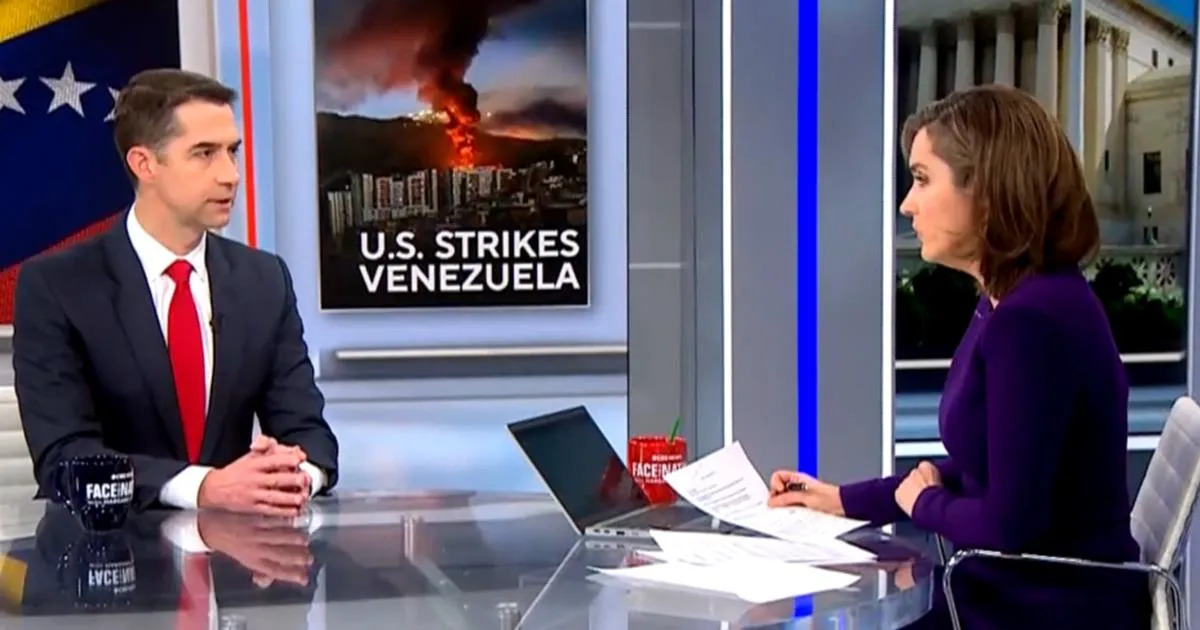
On this week’s episode of Face the Nation with Margaret Brennan, key figures discussed the implications of a dramatic top-secret military operation conducted by the Trump administration in Venezuela, resulting in the capture of the nation’s dictator, Nicolas Maduro. This operation, executed by the elite U.S. Delta Force, saw Maduro arrested and transported to a Brooklyn jail, facing serious drug trafficking charges. The broadcast featured insights from Secretary of State Marco Rubio, Senator Tom Cotton, Congressman Jim Himes, and Senator Chris Van Hollen.
The military operation, which reportedly took place early Saturday, was months in the planning and was executed in under three hours, resulting in at least 40 Venezuelan casualties. President Trump described the assault as unprecedented, claiming, “No nation in the world could achieve what America achieved yesterday.” The operation raises significant questions about the future of U.S. involvement in Venezuela and the legal justification for such military actions.
During the broadcast, Secretary of State Marco Rubio elaborated on the U.S. government's strategy moving forward. He emphasized that the regime's reliance on oil must be addressed, highlighting that Venezuela's oil industry is currently mismanaged and funds are siphoned off by corrupt officials. Rubio mentioned a continued quarantine on sanctioned oil shipments, asserting that this measure provides significant leverage until conditions improve for the Venezuelan populace.
Margaret Brennan inquired about the potential for U.S. troops to occupy Venezuela, to which Rubio clarified that the president retains military options but emphasized a focus on economic pressure rather than an occupation. The Secretary noted that the current military posture includes a significant naval deployment capable of enforcing sanctions against drug trafficking and other illicit activities linked to the Venezuelan regime.
Questions about the legality of the military strikes and the operational scope of U.S. intervention were a significant part of the discussion. Rubio defended the operation, asserting that the mission targeted the highest priority — Maduro himself — and described the complexities involved in executing such a sophisticated operation within a military base. Meanwhile, Brennan raised concerns regarding the legitimacy of the remaining regime members, including Diosdado Cabello, who continues to hold power despite being indicted.
Senator Tom Cotton praised the military's execution of the operation, reaffirming the intelligence community’s role in facilitating the mission. The senator reiterated that the U.S. would hold accountable the current Venezuelan leadership if they do not change their behavior regarding drug trafficking and alliances with hostile nations such as Iran and Hezbollah. Cotton expressed optimism that the Venezuelan government could transition to a more cooperative stance, allowing for future diplomatic solutions.
Congressman Jim Himes, representing the Democratic viewpoint, criticized the lack of a clear plan for governing Venezuela post-Maduro. Himes cautioned against the euphoria surrounding the military success, drawing parallels to previous military interventions that led to instability and chaos. He questioned the administration’s commitment to a long-term strategy that prioritizes the well-being of the Venezuelan people.
As the program concluded, Senator Chris Van Hollen voiced concerns over the administration’s approach, arguing that military force is not a sustainable solution for regime change or stabilization. He emphasized the need for a coherent strategy that respects international law and the sovereignty of nations. The discussion on Face the Nation highlighted the complexities and ramifications of the U.S. military’s involvement in Venezuela, leaving viewers with crucial questions about the future of U.S.-Venezuelan relations.
For full transcripts of this episode and more, visit the Face the Nation website.