

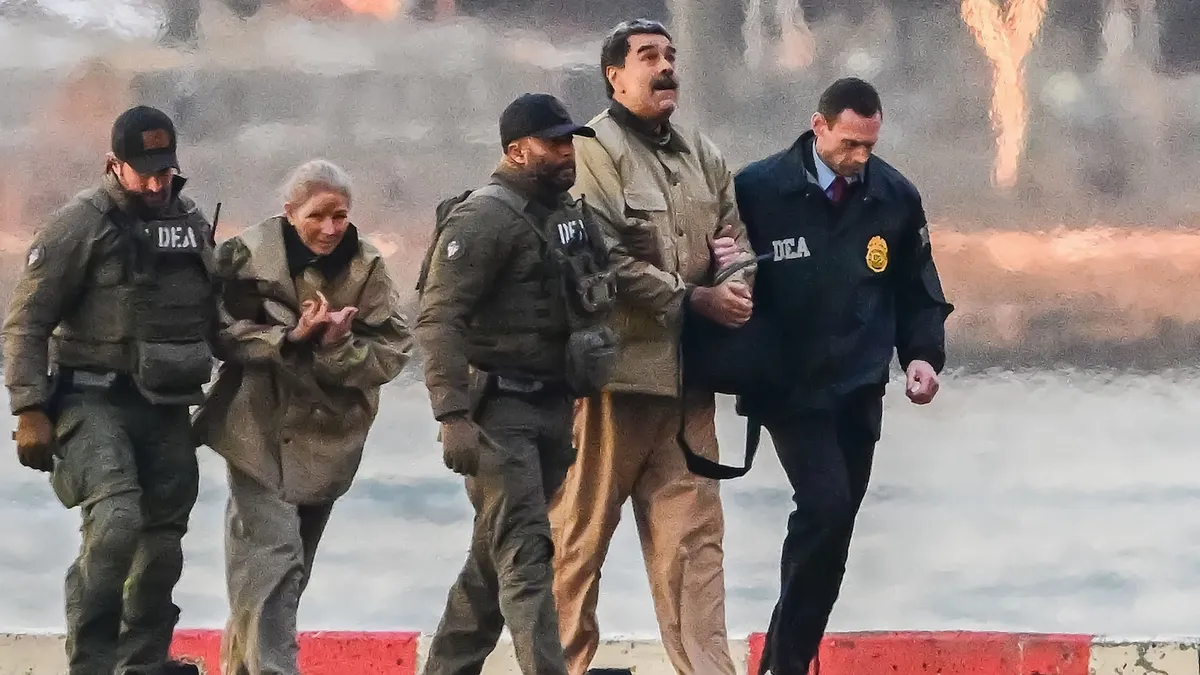
Nicolas Maduro, the ousted Venezuelan leader, and his wife, Cilia Flores, are set to make their initial court appearances on Monday in a federal court located in Manhattan. This follows their recent capture by U.S. forces during a military operation in Caracas, the capital of Venezuela. The couple is expected to stand before Judge Alvin Hellerstein at 12 p.m. ET. Currently, both Maduro and Flores are being held in federal custody at MDC-Brooklyn, although it remains unclear if they have secured legal representation prior to their arraignments.
The couple is among six defendants named in a four-count superseding indictment that alleges their involvement in a conspiracy with violent drug traffickers over the past 25 years. This indictment also includes Maduro's son, two high-ranking Venezuelan officials, and an alleged leader of the Tren de Aragua criminal gang. Maduro has consistently denied all allegations against him, maintaining his innocence amid the ongoing legal proceedings.
On Saturday, U.S. President Donald Trump confirmed that a large-scale military operation resulted in the capture of Maduro and Flores, who were subsequently flown out of Venezuela. Trump noted that this operation was executed in collaboration with U.S. law enforcement agencies. Reports indicate that the elite Delta Force was deployed to support this law enforcement initiative, raising concerns among observers about the implications of U.S. military involvement in Venezuela.
During a press conference at his Mar-a-Lago estate, Trump made a controversial statement regarding the future of Venezuela. He asserted that the U.S. would manage the country for an indefinite period, claiming, "We'll run it properly. We'll run it professionally." He expressed intentions to invite major oil companies to invest significantly in Venezuela, with the promise that the primary beneficiaries would be the Venezuelan people. Trump's remarks have sparked debate about U.S. foreign policy and military engagement in Latin America.
In the wake of these developments, Delcy Rodriguez, the Vice President of Venezuela, has been sworn in as the interim leader. Rodriguez has called for the return of Maduro and condemned what the Venezuelan Supreme Court has termed as his kidnapping. She has vowed to defend Venezuela against perceived American aggression. However, in a more conciliatory tone, Rodriguez posted a statement on social media inviting the U.S. government to collaborate on an agenda aimed at shared development and international cooperation.
As the situation unfolds, Trump stated to reporters that the U.S. is currently in charge of Venezuela. When asked if he intended to communicate with Rodriguez, he responded, "At the right time, I will," indicating that discussions may be on the horizon as the political landscape continues to evolve.
This unprecedented situation in Venezuela highlights the complexities of international relations and the impact of U.S. foreign policy in Latin America. The developments surrounding Maduro and Flores' court appearances are being closely monitored as they could significantly influence the future of Venezuela.