

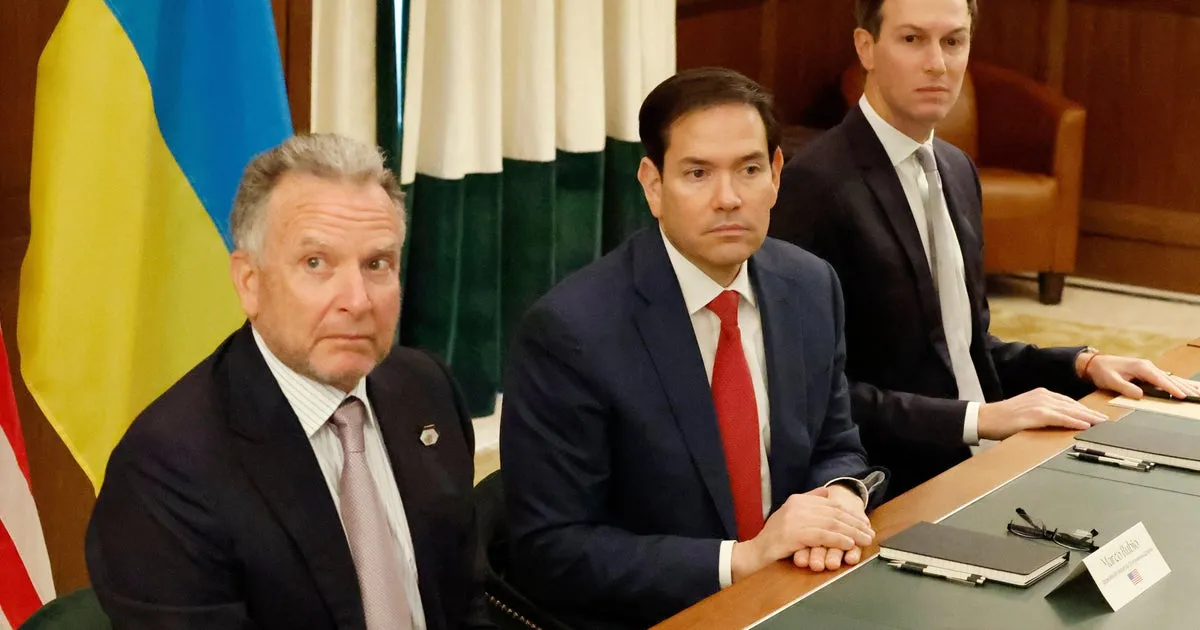
On Sunday, U.S. and Ukrainian officials participated in a significant four-hour meeting aimed at establishing a resolution to the ongoing war between Russia and Ukraine. The talks, led by Secretary of State Marco Rubio, included special envoy Steve Witkoff, Jared Kushner, the son-in-law of former President Trump, and key Ukrainian delegates. Rubio characterized the session as both productive and useful, with plans for further discussions in Moscow with Russian President Vladimir Putin scheduled for later this week.
Rubio emphasized that the objective of these negotiations extends beyond merely ending the conflict. "We don't just want to end the war," he stated. "We also want to help Ukraine be safe forever, ensuring they never face another invasion.” He underscored the importance of establishing terms that would set Ukraine on a path toward long-term prosperity.
Witkoff is expected to arrive in Moscow on Monday, as confirmed by a U.S. official to CBS News. This meeting comes at a critical juncture for Ukraine, which is not only combating Russian forces that invaded in 2022 but also grappling with a domestic corruption scandal.
Diplomats are currently focusing on revisions to a proposed peace plan that has emerged from discussions between Washington and Moscow. This plan has faced criticism for being overly favorable to Russian demands. During the recent meeting, Rubio worked to reassure Ukrainian officials of U.S. support.
Rustem Umerov, Ukraine’s secretary of national security, offered gratitude to American negotiators following the talks but remained vague about the specifics discussed. "We discussed all the important matters that are important for Ukraine," he noted, emphasizing the supportive nature of the talks. Umerov expressed optimism about the ongoing discussions, stating, “This meeting was productive and successful, and we hope to keep you updated.”
Umerov has recently taken an active role in the negotiations, replacing Andriy Yermak, who was previously the head negotiator and chief of staff to President Volodymyr Zelenskyy. Yermak’s resignation came after anti-corruption investigators searched his home amid a scandal involving the embezzlement of $100 million from the energy sector through contractor kickbacks. This has heightened domestic pressures on Zelenskyy’s government.
Just a week prior, Rubio had met with Yermak in Geneva, with both sides expressing positivity concerning the development of a revised peace plan. The Ukrainian delegation included other notable figures such as Andrii Hnatov, head of Ukraine's armed forces, and presidential adviser Oleksandr Bevz.
The peace plan, which Trump has since downplayed as merely a concept needing refinement, would impose certain limitations on Ukraine's military, prevent the country from joining NATO, and require elections within a 100-day timeframe. While negotiators have indicated that the framework has evolved, the specific changes remain unclear. Notably, the initial proposal suggested Ukraine cede the entire eastern Donbas region to Russia, a contentious issue for Kyiv.
Trump announced plans to send Witkoff and potentially Kushner to Moscow this week to discuss the peace plan with Putin. Kremlin spokesperson Dmitry Peskov confirmed that Putin would meet Witkoff before his departure for India later this week.
Both Witkoff and Kushner, who come from backgrounds in real estate and are familiar with deal-making, play pivotal roles in these negotiations. They previously contributed to a 20-point proposal leading to a ceasefire in Gaza. Zelenskyy expressed hope on social media platform X that the Ukrainian delegation would quickly and effectively outline the necessary steps to end the war.
In his nightly address, Zelenskyy acknowledged the American side’s constructive approach, suggesting that in the coming days, it is realistic to clarify the steps needed to bring the war to a dignified conclusion.