

President Trump issued a stark warning on Friday via his social media platform, Truth Social, stating that if Iran violently kills peaceful protesters—an act he associates with the nation’s historical response—the United States of America will come to their rescue. This message, shared shortly before 3 a.m. Eastern Time, did not elaborate on potential U.S. intervention strategies but emphasized that the U.S. is "locked and loaded and ready to go."
The warning from Trump followed reports indicating that at least six individuals had been killed amid a week of escalating protests in Iran. These protests began last weekend as business owners expressed their frustration over dire economic conditions within the Islamic Republic. Iran has been grappling with severe hyperinflation for years, a situation exacerbated by Western sanctions linked to the hardline clerical government’s nuclear ambitions and its support for militant groups throughout the region.
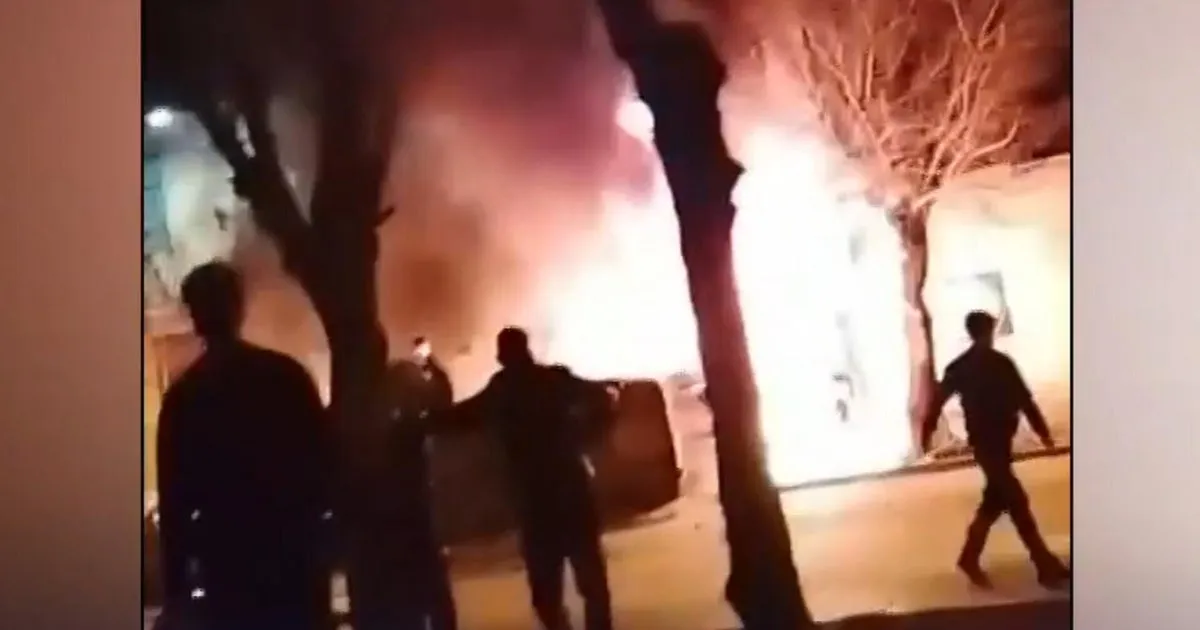
Social media platforms have been flooded with videos and images from Tehran and other cities, depicting protesters marching through the streets, often chanting anti-government and pro-monarchy slogans. These demonstrations have sometimes resulted in violent clashes with security forces.
In an effort to quell the unrest, Iranian officials have acknowledged the economic grievances of the populace, declaring that peaceful protests are legitimate. However, they have also suggested that foreign powers—typically referring to the U.S. and Israel—are instigating violence among protestors.
In reaction to Trump's comments, Ali Larijani, former speaker of Iran's parliament and current secretary of the country's National Security Council, expressed that any U.S. intervention in Iran's internal affairs would lead to chaos in the region and jeopardize American interests. He urged the American public to be aware that Trump's actions could have destructive consequences for U.S. soldiers stationed nearby, especially given Iran’s extensive ballistic missile stockpile.
Ali Shamkhani, an advisor to Iranian Supreme Leader Ayatollah Ali Khamenei, issued a more severe warning, stating that any interventionist actions threatening Iran's security would be met with forceful retaliation. He underscored the historical repercussions of American "rescue" efforts, citing experiences from Iraq, Afghanistan, and Gaza.
Prior to Trump's warning, both the U.S. and Israeli governments had publicly supported the Iranian protests, with U.S. Ambassador to the United Nations Mike Waltz stating, "The people of Iran want freedom. They have suffered at the hands of the Ayatollahs for too long." Waltz expressed solidarity with the protesters across the nation who are denouncing a regime that has led them into economic despair and conflict.
The tension between the U.S. and Iran surged this week, particularly following a visit by Israeli Prime Minister Benjamin Netanyahu, who has long advocated for a stronger U.S. stance against Iran. After their meeting at Trump's Mar-a-Lago resort in Florida, Trump indicated that there were concerns Iran might attempt to revive its nuclear program after U.S. military strikes on its enrichment facilities in June. He warned, "If Iran tries to rebuild, we'll knock them down. We'll knock the hell out of them. But hopefully that's not happening."
In response, Iranian President Mahsoud Pezeshkian declared that Tehran would react decisively to any acts of "cruel aggression," while the nation remains no stranger to widespread protests, including the significant unrest in 2022 triggered by the death of Mahsa Amini, a young woman who died in police custody. Her tragic death sparked nationwide anger, leading to a brutal crackdown that resulted in hundreds of casualties.
The ongoing protests in Iran highlight the deep-rooted economic and political discontent among its citizens. Trump's warning of potential U.S. intervention marks a significant moment in the evolving narrative of U.S.-Iran relations. As the situation develops, both domestic and international responses will play crucial roles in shaping the future landscape of Iran's political climate.