

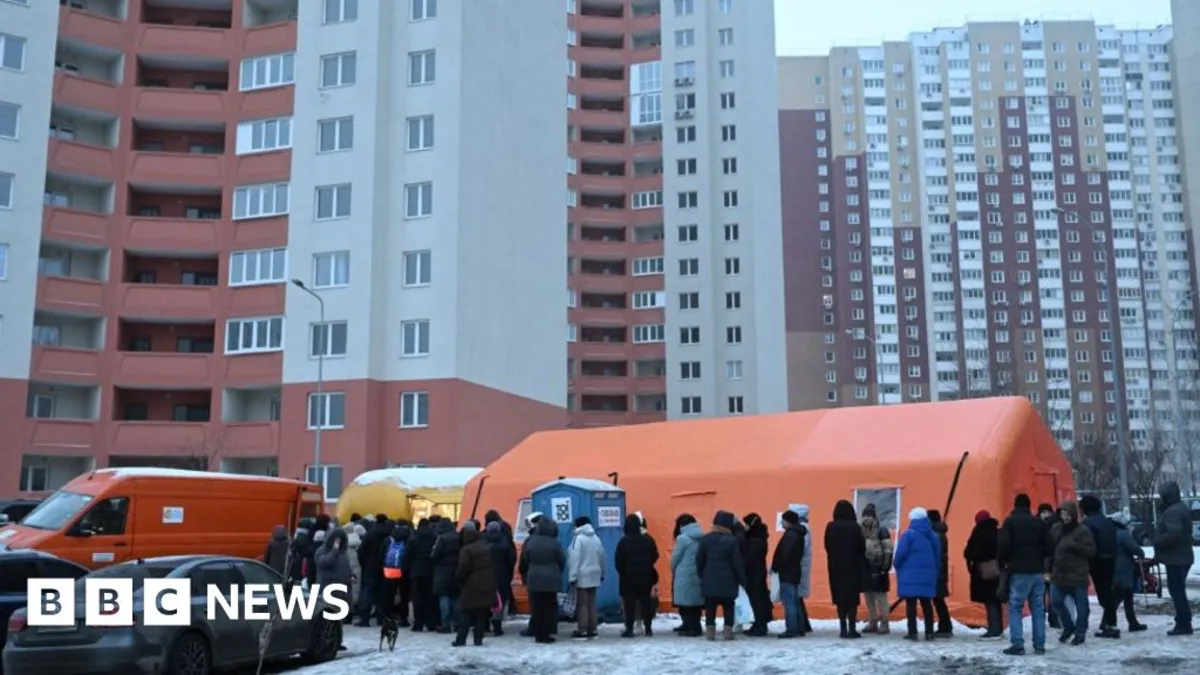
Ukraine is currently facing its most challenging winter in recent history. As temperatures in January have plunged to below -15°C, the ongoing attacks on energy infrastructure by Russia have left nearly one million Ukrainians without heating. The city of Kyiv, the capital of Ukraine, has become the primary target of these destructive assaults. Following the latest round of bombardments on January 24, nearly 6,000 apartment blocks in Kyiv were reported to be without heating, according to Mayor Vitaly Klitschko. This incident marks the third attack on Kyiv’s heating infrastructure within just over two weeks, following similar strikes on January 9 and January 20, which also left hundreds of thousands of residents shivering in their homes.
Living in Kyiv has become a precarious situation, as one resident named Rita described to the BBC. She explained that if one manages to have heating and gas, they often find themselves without electricity and water. Conversely, if they have electricity and water, heating is unavailable. "Coming home is like playing a guessing game every day," Rita shared. "Will I be able to shower, enjoy a hot cup of tea, or neither?" To compound these challenges, the threat of missiles and drones looms overhead. Rita revealed that she often goes to bed wearing a hat and multiple layers of clothing to combat the cold.
The situation in Ukraine is exacerbated by the prevalence of apartment blocks that rely heavily on communal central heating. In this system, water is heated at a central location and then distributed to individual apartments. The heating plants in Ukraine are substantial facilities, and when they are targeted by Russian forces, thousands of residents are left vulnerable. Ukrainian officials report that all such power plants have now been struck. While these attacks disrupt electricity supplies, having a generator or battery pack may not resolve heating issues, especially when electricity is needed to operate heaters.
Kyivteploenergo, the sole provider of heating and hot water services in the Ukrainian capital, informed the BBC that the vast majority of homes in Kyiv depend on its services, although they could not disclose specific numbers for security reasons. In Zaporizhzhia, a city on the frontline housing approximately 750,000 residents, it is estimated that nearly three-quarters of the population relies on central heating, as stated by Maksym Rohalsky, head of the local apartment block association. Before Russia's full-scale invasion in 2022, about 11 million households in Ukraine depended on central heating, compared to around seven million households that had autonomous heating options, according to Ukrainian energy expert Yuriy Korolchuk.
The urban landscapes of cities in Ukraine, as well as other former Soviet states, are characterized by large-scale construction projects initiated in the 1950s, which aimed to mass-produce affordable housing. These cities are dominated by nine-storey residential buildings made from pre-fabricated concrete panels, known as panelki, and smaller five-storey blocks known as khrushchevki, named after Soviet leader Nikita Khrushchev, who oversaw their development. Heating for these residences is supplied by large facilities called TETs, an acronym for heat and electricity centrals in Ukrainian, as they produce both heat and electricity.
Detached houses, commonly referred to as private houses in Ukraine, are mostly located in rural areas and are scarce in urban settings. Ukraine inherited this centralized heating system from the Soviet era, and as Korolchuk noted, little has changed since then. He highlighted that these heating plants were not designed to withstand missile or drone strikes, revealing significant vulnerabilities that have come to light during the ongoing conflict. Korolchuk pointed out that this tactic is new for Russia; previous winters did not see such direct attacks on heating infrastructure, and strikes were infrequent.
Korolchuk also mentioned that the ongoing negotiations to end the war may play a role in these attacks, as they serve as a form of pressure. While centralized installations offer efficiency, their targeting can lead to catastrophic consequences for hundreds of thousands of people. The Ukrainian government is acutely aware of this vulnerability and is planning to implement measures to reduce it by making individual heating systems mandatory in apartment blocks. However, reversing decades of Soviet urban planning will be neither quick nor easy.