

On Sunday, a devastating shooting incident in Sydney, Australia, left at least 15 people dead and over 42 individuals hospitalized. The attack occurred during a celebration marking the start of Hanukkah, when a father and son opened fire on the crowd. Prime Minister Anthony Albanese condemned the incident as a terrorist attack specifically targeting Jewish Australians. This shocking event has reignited the debate surrounding Australia’s gun laws, prompting calls for stricter regulations to prevent such tragedies in the future.
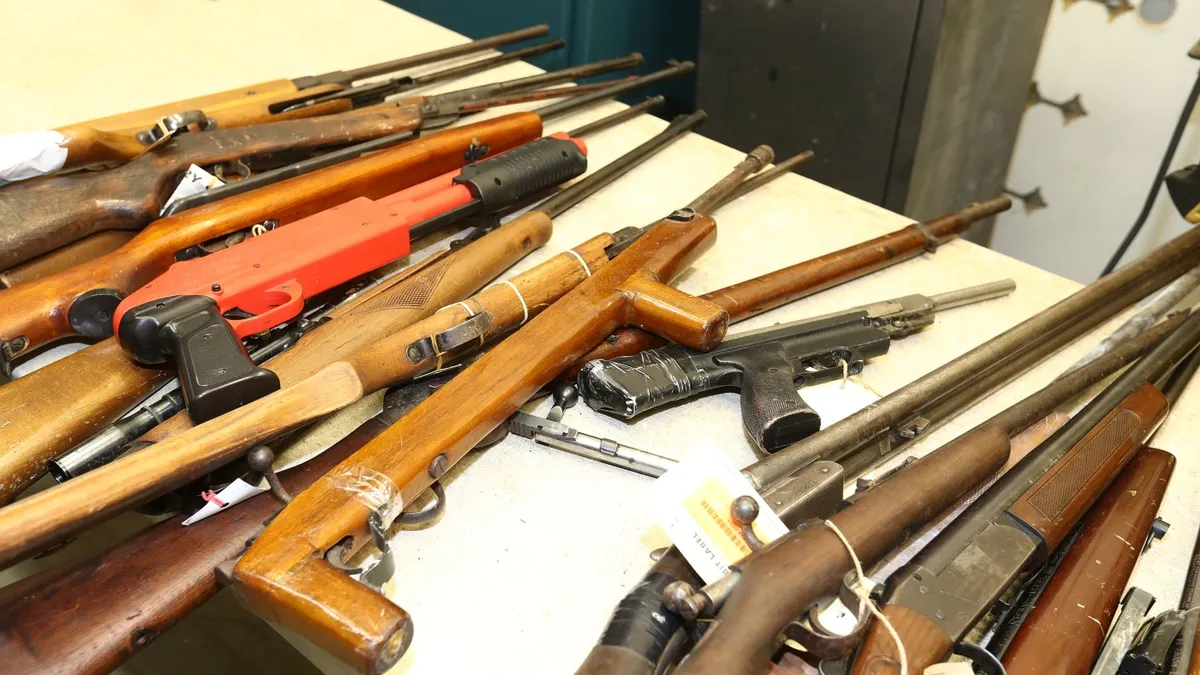
Australia is known for its strict gun laws, which were enacted following the tragic Port Arthur massacre in 1996, where a gunman killed 35 people in Tasmania. This horrific event galvanized the nation, leading to a unified effort among political leaders to tighten gun regulations. Under the leadership of then-Prime Minister John Howard, the National Firearms Agreement was established, significantly restricting the sale of semi-automatic rifles and pump-action shotguns. This comprehensive agreement also initiated a national buyback program that successfully removed over 650,000 firearms from circulation, as reported by the National Museum of Australia.
The National Firearms Agreement has been widely recognized as a successful model for gun control, credited with drastically reducing firearm-related deaths in Australia. Research indicates that following its implementation, the country experienced no mass shootings for more than two decades. Prime Minister Albanese acknowledged in a recent press conference that the reforms introduced by the Howard government represented a significant step forward for public safety.
Despite Australia’s historically strict gun laws, recent years have seen a concerning rise in firearm ownership. According to a report by The Australia Institute, the number of guns in the country has increased by 25% since 1996, reaching over 4 million firearms. Additionally, certain provisions of the National Firearms Agreement have been inconsistently applied, leading to concerns among public policy experts about the effectiveness of existing regulations. Graham Park, president of Shooters Union Australia, remarked that firearm owners in Australia are gaining ground, further complicating the landscape of gun control.
In response to the recent tragedy, Prime Minister Albanese and regional leaders convened to discuss potential enhancements to existing gun laws. Key proposals include:
Renegotiating the National Firearms Agreement to strengthen regulations. Accelerating the establishment of a National Firearms Register to create a comprehensive database of firearm owners and licenses. Incorporating criminal intelligence into the firearms licensing process. Limiting the number of firearms an individual can possess. Restricting the types of firearms and modifications permitted. Ensuring only Australian citizens can obtain a firearms license. Implementing stricter customs regulations on firearms and related accessories.Albanese also reaffirmed the commitment to Australia’s national firearms amnesty program, which allows individuals to surrender unregistered firearms without facing legal penalties. Notably, the suspect involved in the shooting had previously been flagged by the Australian Security Intelligence Organisation in 2019 due to his connections with a terrorism cell.
Australia's ability to swiftly address pressing national issues, such as gun control, is largely facilitated by the National Cabinet. Formed in early 2020 to coordinate responses to the COVID-19 pandemic, this body comprises the Prime Minister and the premiers of Australia’s six states and two territories. While the National Cabinet does not have legislative power, its members collaborate to create strategies that their respective parliaments can implement.
Public opinion in Australia strongly favors stricter gun laws. A January 2023 poll conducted by The Australia Institute revealed that 64% of Australians believe the country’s gun laws should be further strengthened, with only 6% advocating for their relaxation. This sentiment reflects a national commitment to prioritize public safety over individual gun ownership rights, contrasting sharply with the ongoing debates in other countries, particularly the United States.
In the wake of Sunday’s shooting, there are renewed calls from various stakeholders, including Walter Mikac, a prominent advocate for gun control whose family was tragically affected by the Port Arthur massacre, to remain vigilant against gun violence. Mikac emphasized the need for continued vigilance and robust laws to protect the safety of all Australians, reinforcing the collective commitment to community safety established after the 1996 tragedy.