

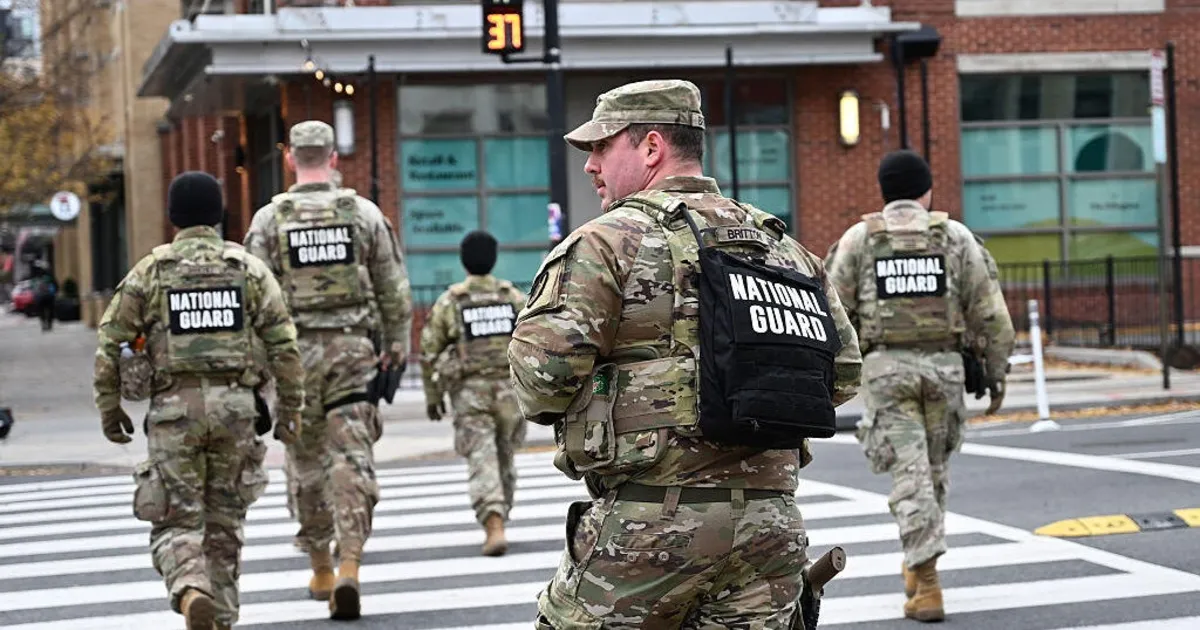
The suspect accused of shooting two West Virginia National Guard members in Washington, D.C., has been reported to have significant mental health issues following his arrival in the United States. Rahmanullah Lakanwal, who entered the U.S. during the tumultuous aftermath of the Afghanistan withdrawal as part of the Biden-era Operation Allies Welcome, reportedly faced challenges in adjusting to life in America, often isolating himself in a dark room.
According to emails obtained by CBS News from a case worker assisting Lakanwal's family in accessing services, the 29-year-old struggled to maintain employment and had been experiencing mental health difficulties for over a year. He arrived in the U.S. in 2021, along with his wife and five sons, after being relocated to Bellingham, Washington, where Washington state welcomed nearly 3,000 Afghan nationals.
In an email dated January 11, 2024, the case worker highlighted Lakanwal's inability to find work and reported that his family had received an eviction notice due to nonpayment of rent. The email expressed concern over Lakanwal's mental health, noting that he had not been engaging with family members and had effectively become non-functional as a father and provider since March 2023. This situation prompted volunteers from World Relief, a refugee resettlement agency, to step in to assist the family.
Further correspondence revealed that Lakanwal spent extensive periods confined to his darkened bedroom, avoiding communication with even his closest family members. The case worker described episodes of mania, during which Lakanwal would leave in the family car, followed by periods of attempts to reconcile with his loved ones. The case worker suggested that Lakanwal might be suffering from PTSD, stemming from his experiences working with U.S. military forces in Afghanistan.
A former Afghan commando, who spoke with CBS News, indicated that Lakanwal had a distinguished military background, having led a unit of Afghan special forces and collaborated closely with international troops prior to the U.S. withdrawal. The same source noted that Lakanwal was deeply affected by the death of a close friend, an Afghan commander, in 2024, who had sought asylum in the U.S. but was unsuccessful.
Lakanwal submitted his asylum application in December 2024, navigating a rigorous immigration process overseen by the Department of Homeland Security. This process included thorough background checks, social media evaluations, and in-person interviews, which he successfully completed, resulting in the granting of asylum in April 2025.
As of now, Lakanwal faces murder charges following the shooting incident. Homeland Security Secretary Kristi Noem commented on the situation, suggesting that Lakanwal had become radicalized during his time in the U.S., although no specific details were provided. She stated, “We do believe it was through connections in his home community and state.”
In the wake of this tragic event, Shawn VanDiver, President of AfghanEvac, emphasized that Lakanwal's actions do not represent the Afghan community at large, which continues to make valuable contributions across the United States. Moreover, he pointed out that Afghan immigrants undergo some of the most stringent vetting processes of any immigrant group.
During the attack, Lakanwal was shot by another National Guard member and is currently hospitalized, sedated, and on a ventilator, complicating efforts by investigators to interview him. U.S. intelligence analysts are actively reviewing Lakanwal's communications and online presence to uncover any potential signs of international coordination or ideological radicalization. However, initial examinations of his social media and messaging platforms have not indicated any connections to extremist groups or foreign handlers.