

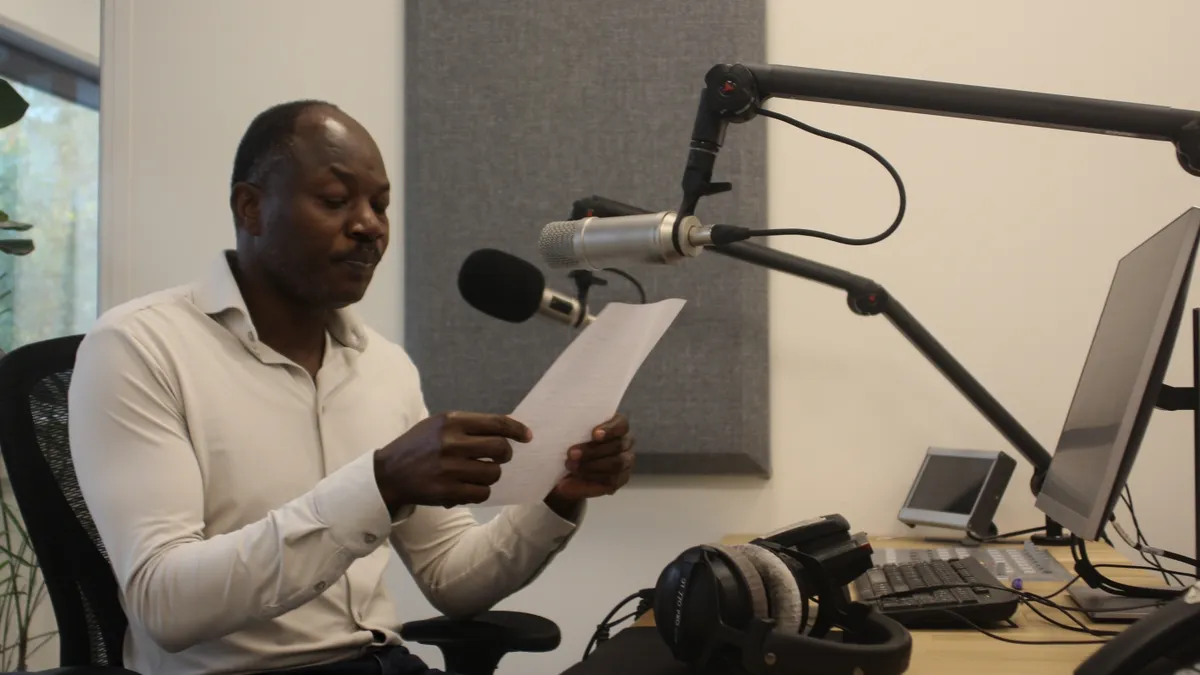
In early 2023, Radio Dabanga abruptly halted its morning broadcast due to significant budget shortfalls. This decision was not merely a logistical setback; it resonated deeply with its listeners in Sudan, who depend on the station for critical information amidst a devastating civil war. Editor-in-chief Kamal Elsadig was quick to realize the far-reaching implications of this cut, as messages of concern flooded in from Sudanese individuals scattered across various regions.
Listeners expressed their distress, voicing worries about their families and the dire need for updates. One listener, situated in a refugee camp in eastern Chad, implored, "We don't know what is happening to our families, and we depend very much on Radio Dabanga." Another listener from Northern Sudan echoed this sentiment, hoping for the swift return of the morning service, emphasizing its importance for those living under the shadow of war.
Since its inception in 2008, Radio Dabanga has served as the last independent Sudanese news station, operating from exile approximately 3,000 miles away in Amsterdam. For millions of Sudanese enduring the ongoing civil war, it represents one of the few reliable sources of verified news. However, the station's future hangs in the balance. With former President Trump's administration slashing U.S. foreign assistance programs—critical funding that previously comprised over half of the station's nearly $3 million budget—Radio Dabanga was compelled to reduce its workforce and temporarily suspend its morning news service.
As Elsadig recalls, listeners reached out, anxious about the station's silence: "What's going on? We didn't hear Dabanga today. Is there any problem happening?" This reliance on Radio Dabanga highlights the dire state of communication in Sudan, where access to information has become increasingly scarce.
The war in Sudan has precipitated one of the world's most severe humanitarian crises. As of 2023, conflict erupted between the Sudanese army and the paramilitary group Rapid Support Forces, resulting in the deaths of approximately 150,000 people and displacing around 14 million individuals, according to reports from the Norwegian Refugee Council. The ongoing violence has obliterated much of the media infrastructure, with Free Press Unlimited estimating that about 90% has been destroyed. Furthermore, over 400 journalists have fled the country, and many have faced dire consequences, including kidnapping or death.
"Sudan has become completely in a darkness of access to information," Elsadig stated poignantly. From their base in Amsterdam, the dedicated journalists at Radio Dabanga strive to illuminate the bleak reality through reports on conflict zones, disease outbreaks in refugee camps, and the aftermath of harrowing events like those witnessed in the city of el-Fasher.
Kamal Elsadig, a soft-spoken journalist in his early 60s, founded Radio Dabanga after relocating to the Netherlands from el-Fasher in 2008. His vision was to create an independent news platform for Darfur, a region that has been a focal point of conflict since 2003. The violence, fueled by the government-backed Janjaweed militia and ethnic strife, led to widespread atrocities labeled as genocide by human rights organizations and the U.S. government. In October, the International Criminal Court in The Hague convicted a Janjaweed leader of war crimes committed two decades ago, reinforcing fears that history may be repeating itself.
The Rapid Support Forces, which emerged from the Janjaweed, are now accused of perpetrating mass killings and human rights violations. As the war unfolds amidst a backdrop of information blackouts, the need for Radio Dabanga has never been greater.
Recently, a stark contrast emerged in Amsterdam's industrial northern district. While the city buzzed with laughter and music during the Amsterdam Dance Event (ADE), a nearby café hosted a fundraiser for Radio Dabanga. Jean-Pierre Fisher, a co-founder of Marimba Amsterdam, organized the event to raise awareness about Sudan. "Each ADE, we choose a subject that needs attention. This time it was Sudan," Fisher explained.
The fundraiser included a panel discussion featuring a reporter from Radio Dabanga and activists who highlighted the importance of keeping the station operational. Among the attendees were Sudanese sisters Maaza and Amany Altareeh, who fled to the Netherlands three years prior. Despite building their lives in Amsterdam, they remain deeply connected to their family in Sudan, where communication has grown increasingly challenging due to collapsing networks.
Maaza expressed the difficulties of reaching loved ones in Sudan, noting that "the only way to reach people is through Starlink satellite internet, which is only possible if someone in the neighborhood happens to have one." With most of her news coming from the social media platform X, she emphasized the importance of Radio Dabanga as a reliable source: "Anytime we see news, we try to hold onto that." The sisters viewed the fundraiser as a beacon of hope amidst despair, with Maaza stating, "I was so happy to know that there are people who care about it." The event raised several thousand dollars, yet the radio station's budget shortfall remains around $1.5 million.
As Radio Dabanga faces a critical budget deadline in April, its online presence may persist, but the majority of Sudanese listeners rely on traditional radio broadcasts for information. Elsadig stressed the gravity of the situation, noting that the loss of reliable information could lead to dire consequences for countless Sudanese lives. "We will continue fighting on this, and we will keep hoping," he affirmed, underscoring the vital role Radio Dabanga plays in providing a lifeline to those navigating the treacherous waters of war and uncertainty.