

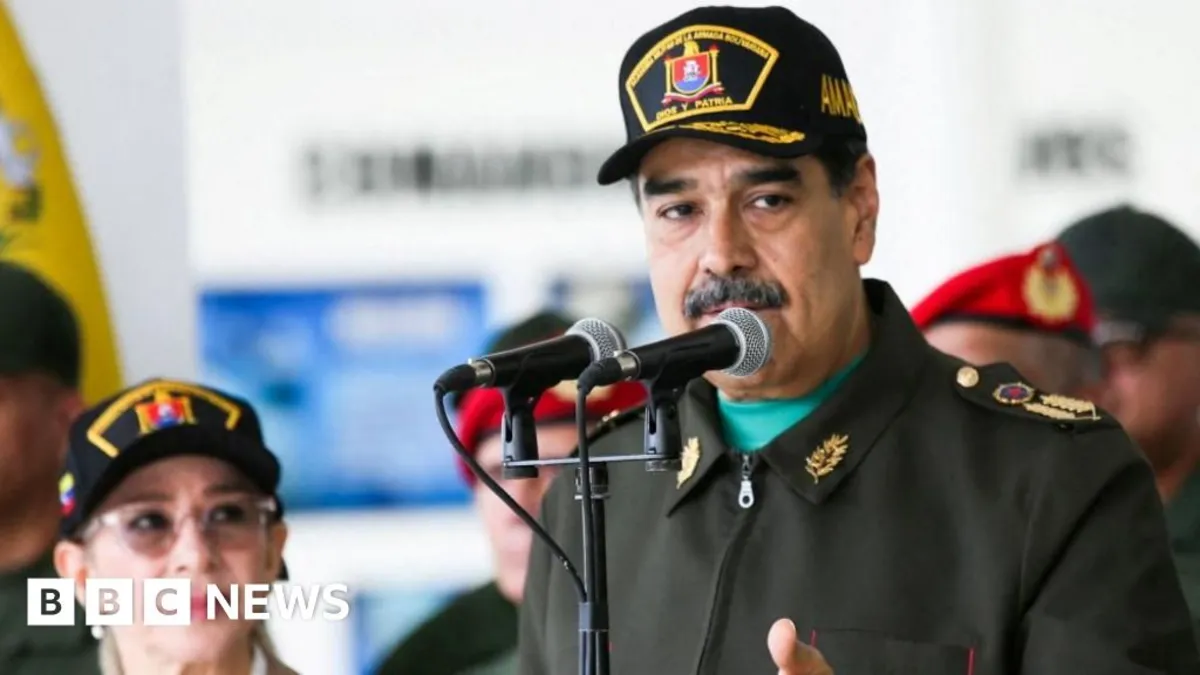
On Thursday, Venezuelan leader Nicolás Maduro expressed his willingness to engage in discussions with the United States regarding critical issues such as drug trafficking and oil exports. This announcement comes amidst a heightened pressure campaign against his government, marking a potential shift in relations between the two nations.
In an interview broadcasted on Venezuelan state television, Maduro stated he is ready for dialogue with the US "wherever they want and whenever they want." However, he remained evasive when questioned about President Donald Trump's recent comments concerning an alleged US attack on a docking facility in Venezuela, an operation reportedly conducted by the CIA.
The US has intensified its military operations in the Caribbean and eastern Pacific over the past three months, targeting vessels suspected of smuggling narcotics. So far, more than 30 strikes have been conducted as part of the Trump administration's ongoing war on drugs, resulting in over 110 fatalities since the first attack on a boat in international waters on September 2.
The latest incident occurred on Wednesday, when US military forces struck two boats allegedly carrying drugs, leading to the deaths of five individuals on board. On Monday, Trump confirmed that the US had executed a strike on a dock area linked to purported Venezuelan drug boats, causing a significant explosion. Reports from CNN and the New York Times suggest that this blast was the result of a drone strike orchestrated by the CIA, marking a potential first in terms of US operations within Venezuelan territory.
During the interview, when asked to confirm or deny the attack, Maduro was noncommittal, stating that this was a topic they could discuss in the coming days. In addition to addressing drug trafficking, Maduro also indicated his readiness to negotiate on matters related to oil and migration.
Trump has made unsubstantiated accusations against Maduro, claiming he has emptied prisons and insane asylums to push inmates into migrating to the US. Concurrently, the US has been rigorously enforcing sanctions against oil tankers entering and leaving Venezuela. A notable incident occurred on December 10, when US forces seized an oil tanker accused of transporting sanctioned oil from Venezuela and Iran, an act that Venezuela condemned as "international piracy." Since that time, the US has seized another oil tanker and is currently pursuing a third.
The Trump administration has framed its operations against alleged drug boats as a non-international armed conflict against traffickers. However, legal experts have raised concerns that these actions may violate laws governing armed conflicts. The US has yet to provide concrete evidence that the targeted vessels were indeed engaged in drug trafficking. Nonetheless, the US Southern Command reiterated this week that intelligence supports the assertion that these vessels were operating along known narco-trafficking routes.
The ongoing situation highlights the complexities surrounding US-Venezuela relations, particularly in the context of drug trafficking and oil trade, as both nations navigate a turbulent geopolitical landscape.