

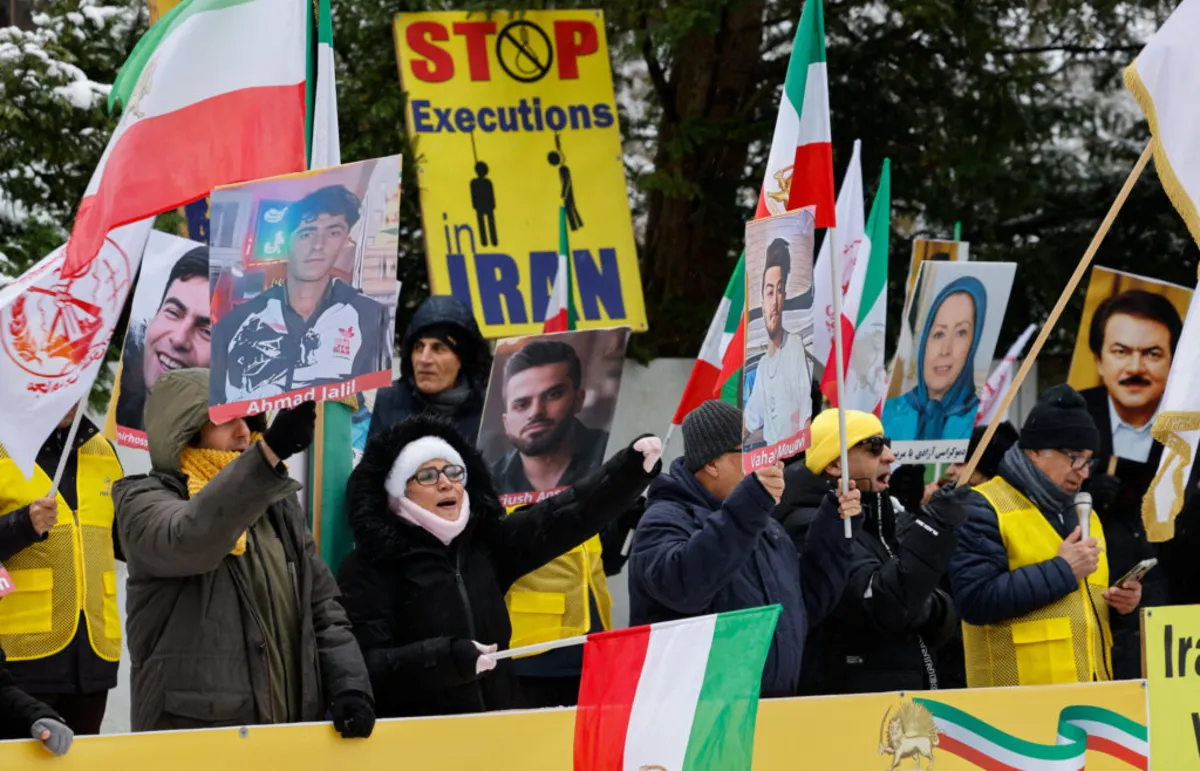
In a significant statement on Saturday, Iran's supreme leader, Ayatollah Ali Khamenei, emphasized the need to control the ongoing protests that have recently erupted across the nation. These protests, driven by discontent over Iran's struggling economy, have reportedly resulted in the deaths of at least 10 individuals. Khamenei's remarks come during a critical week of unrest and appear to provide a mandate for security forces to take a more aggressive stance against demonstrators.
These protests are the most significant since the turmoil that followed the death of Mahsa Amini in police custody in 2022. Amini’s death sparked widespread demonstrations against the Iranian government, particularly regarding women's rights and the enforcement of the hijab. Despite the current protests being serious, they have not yet reached the same intensity as those from the previous year, when Amini's tragic fate catalyzed nationwide outrage.
In his address to a Tehran audience, Khamenei distinguished between the grievances of ordinary citizens and what he termed "rioters." He stated, "We talk to protesters; the officials must talk to them. But there is no benefit to talking to rioters. Rioters must be put in their place." This statement underscores the regime's intent to suppress dissent while appearing to engage with legitimate concerns of the populace.
In a move that reflects the government's long-standing narrative, Khamenei claimed that foreign powers, particularly Israel and the United States, are inciting these protests. He provided no evidence for these assertions but reiterated that "a bunch of people incited or hired by the enemy are getting behind the tradesmen and shopkeepers." This tactic of blaming external forces for internal dissent serves to rally support for the regime and delegitimize the protesters’ demands.
The Revolutionary Guard, which operates independently and answers directly to Khamenei, has a history of suppressing protests. The all-volunteer Basij force, part of the Revolutionary Guard, has previously used violence to quell dissent, as seen in the 2009 Green Movement and the protests of 2022. Despite some officials advocating for dialogue to address the protesters' demands, the hard-line faction within the Iranian government appears poised to escalate their crackdown.
The situation has escalated, with reports of deaths attributed to the protests. A recent incident in Qom, a city known for its major Shiite seminaries, involved a grenade explosion that killed a man alleged to have been carrying it for an attack. Additionally, a member of the Basij was killed in a violent confrontation in Harsin, demonstrating the increasing danger associated with the protests.
According to the Human Rights Activists News Agency, protests have spread to over 100 locations across 22 of Iran's 31 provinces. The demonstrators are voicing their frustration not only about economic issues but also against the Iranian theocracy itself. As the Iranian economy continues to struggle, exacerbated by recent conflicts, including a war with Israel and U.S. military actions against Iranian nuclear sites, public discontent is likely to persist.
As the unrest continues, international responses have emerged, including a warning from U.S. President Donald Trump that America would intervene if the Iranian regime violently suppresses peaceful protesters. This threat has heightened tensions, with Iranian officials vowing to retaliate against U.S. military forces in the region. The interplay between local protests and international diplomacy could significantly impact Iran's political landscape in the coming weeks.
As the situation evolves, the resilience of the Iranian regime's security apparatus will be tested against a backdrop of mounting public unrest and international scrutiny.