

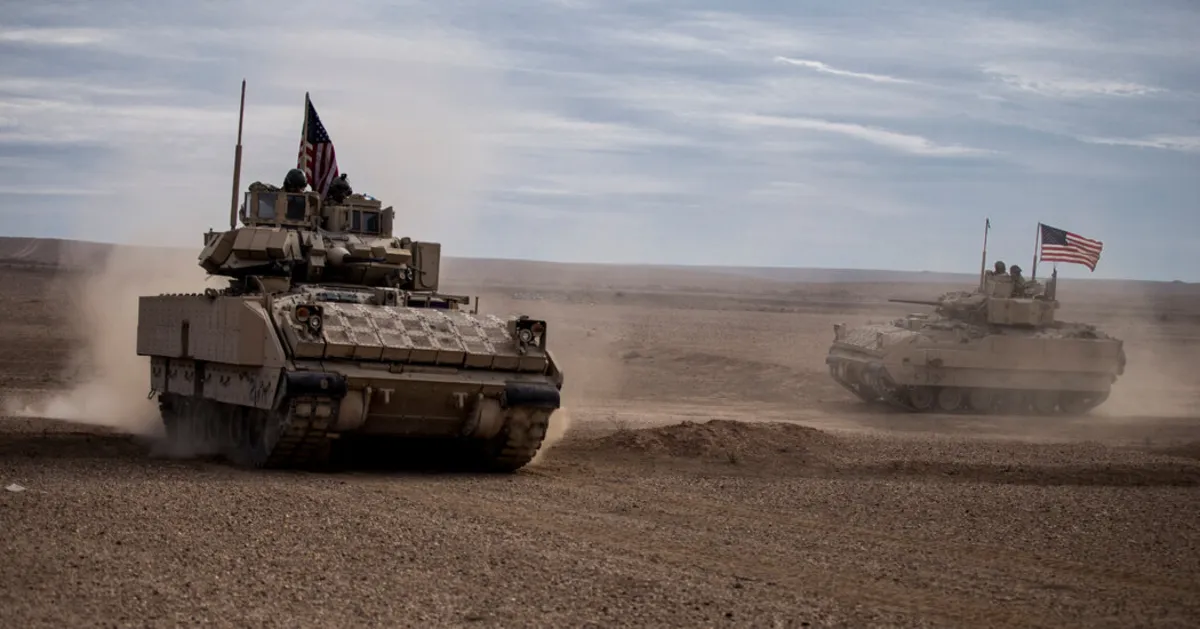
On Saturday, a joint patrol involving American and Syrian forces came under gunfire near the historic city of Palmyra, according to reports from the Syrian state news agency, SANA. The incident has resulted in injuries to at least two members of the Syrian security forces, as well as several U.S. personnel. This alarming situation has raised concerns regarding the safety of coalition forces operating in the region.
A U.S. military official, who spoke on the condition of anonymity due to a lack of authorization to disclose operational details, described the event as “a serious situation.” The official indicated that further information would likely be provided as the Pentagon continues to receive updates from commanders on the ground. Meanwhile, a spokesperson for the Syrian Ministry of Interior has not yet responded to inquiries regarding the attack.
According to the Syrian news agency, the assailant who targeted the joint forces has been killed. However, specifics about the gunman's identity or motives remain unclear. The New York Times has not been able to independently verify the details of the incident, and as of now, no group has claimed responsibility for the attack.
The Syrian Observatory for Human Rights, a well-known monitoring group, has corroborated reports of this assault on American and Syrian forces. As of December of the previous year, approximately 2,000 American service members were stationed in Syria, according to Pentagon figures. These forces are deployed at various U.S. bases, including the strategic base at al-Tanf in southeastern Syria and other locations in the northeast.
The primary objectives of these troops have included combating the Islamic State, safeguarding important areas like oil fields, and countering Iranian influence in the region. American forces have partnered with the Syrian Democratic Forces, a Kurdish-led militia that controls much of northeastern Syria, to provide essential training and equipment, maintaining pressure on the remnants of ISIS.
Palmyra, known for its invaluable archaeological heritage, was seized by ISIS in 2015, leading to the destruction of significant historical sites and a series of brutal attacks on civilians and military personnel. The ongoing conflict in Syria has raised alarms about the potential resurgence of ISIS, as the group remains resilient, continuing to attract fighters and conduct operations despite the changing political landscape since the ousting of dictator Bashar al-Assad.
As U.S. officials note, the United States has been gradually drawing down its military presence in Syria, reflecting the evolving situation in the region. However, ISIS's capacity to break thousands of hardened militants out of detention poses a significant threat, which could destabilize Syria even further. This situation exacerbates the already volatile environment characterized by sectarian violence, severe humanitarian crises, and the daunting task of rebuilding military and security forces.
This is a developing story, and further updates are expected as more information becomes available. John Ismay contributed to this report.