

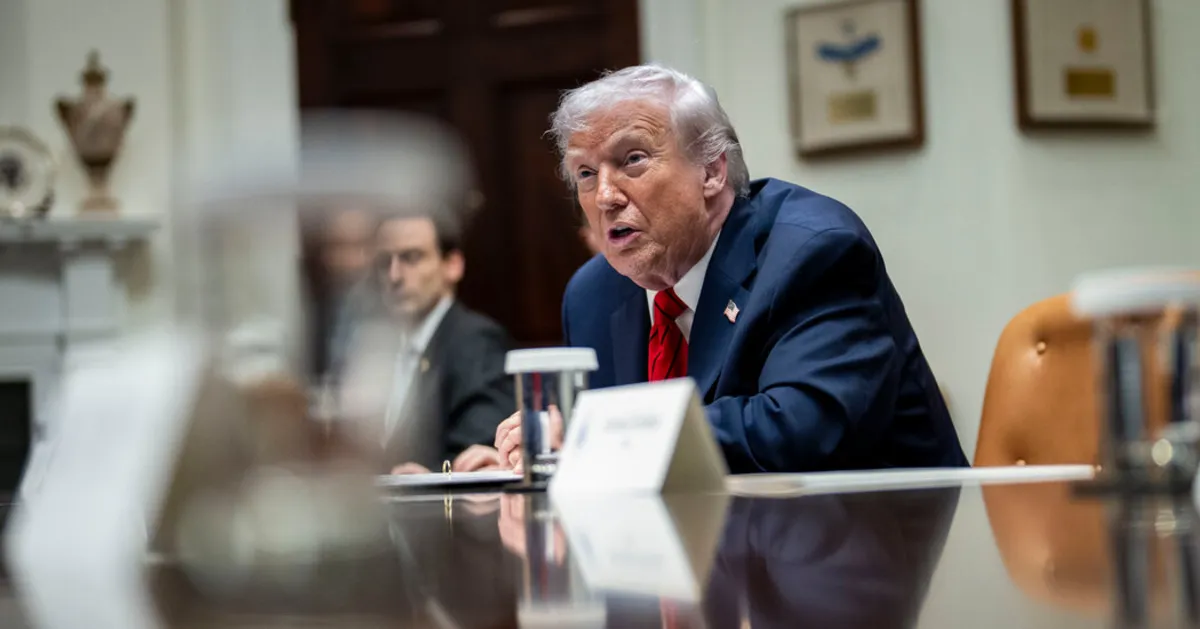
On Thursday, President Trump signed an executive order aimed at diminishing the impact of state laws that impose restrictions on the artificial intelligence (A.I.) industry. This move has been hailed as a significant victory for technology companies that have actively lobbied against regulatory measures affecting the rapidly growing A.I. sector. President Trump has consistently emphasized the necessity for the United States to take the lead in the A.I. arena, particularly in the face of competition from China.
In his statements, President Trump criticized existing state laws, describing them as a confusing “patchwork of regulations.” He asserted that his executive order would establish a singular federal regulatory framework that would take precedence over state laws. “It’s got to be one source,” Mr. Trump remarked to reporters in the Oval Office, emphasizing that businesses should not have to navigate through “50 different sources” of regulation.
The president's recent actions reflect a growing affinity for the A.I. industry. He has previously signed executive orders designed to limit regulation, facilitate access to federal data, and simplify the processes for companies looking to develop the necessary infrastructure to support A.I. technologies. Additionally, he has eased restrictions on the export of chips essential for A.I. development, further fostering a conducive environment for technological advancement.
President Trump has also publicly praised leaders in the tech industry and has appointed David Sacks, a prominent Silicon Valley investor, as his A.I. and crypto czar. This appointment has granted Sacks substantial influence over policy decisions related to artificial intelligence, aligning governmental objectives with the interests of the tech sector.
The executive order has generated widespread bipartisan opposition and is expected to face legal challenges from state governments and consumer advocacy groups. Legal experts have indicated that these entities may argue that only Congress holds the authority to override state laws. Wes Hodges, acting director of the Center for Technology and the Human Person at the Heritage Foundation, suggested that if President Trump successfully diminishes state laws, he should instead propose a comprehensive national standard for A.I. regulations.
As the debate continues, the implications of this executive order on the future of A.I. regulation in the United States remain to be seen, with potential impacts on both innovation and consumer protection.