

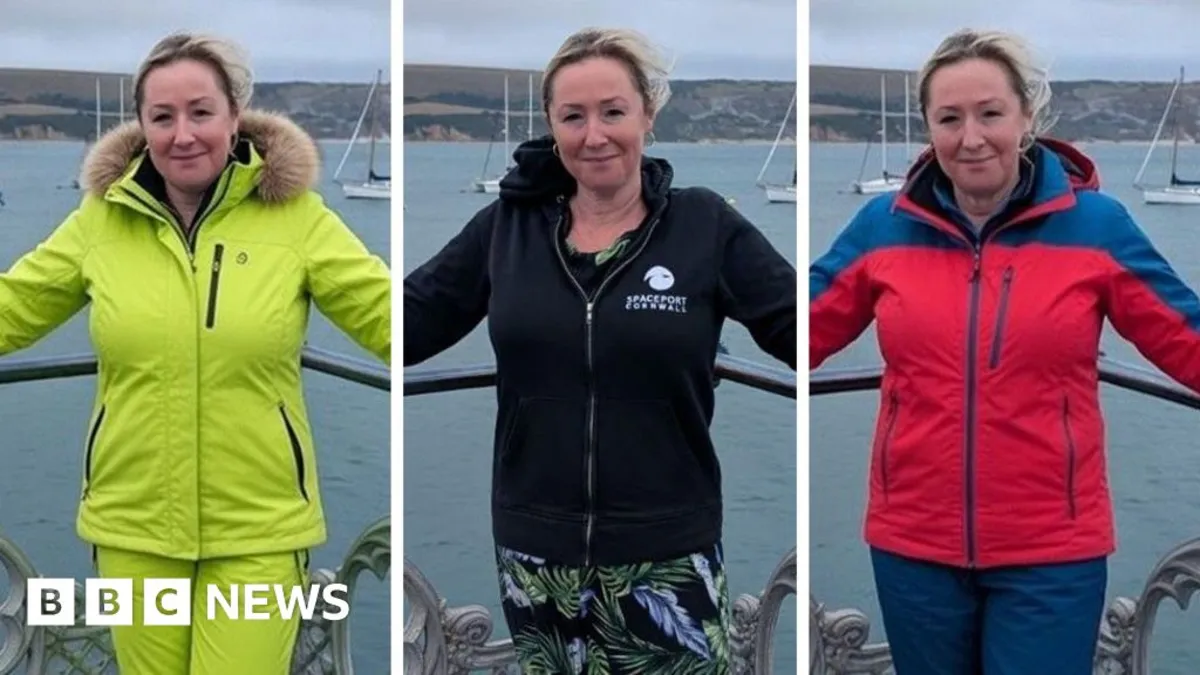
In a recent incident, an individual shared images taken at the end of a pier in Dorset during the summer, two of which were generated using the artificial intelligence tool Grok. This free AI tool, owned by Elon Musk, has garnered attention for its ability to create highly convincing images. However, the person in question has never worn the distinctive yellow ski suit or the red and blue jacket depicted in the generated images. The challenge now lies in proving the authenticity of personal photographs amid such AI-created visuals.
The AI tool Grok is currently under fire for its controversial feature that allows users to manipulate images inappropriately. Reports indicate that Grok has been generating images of individuals in revealing clothing, including bikinis, often without their consent. This has raised significant ethical concerns, particularly regarding the creation of sexualized images of children. Following widespread outrage, the UK's online regulator, Ofcom, has announced an urgent investigation into whether Grok has breached British online safety laws.
The UK government is pressuring Ofcom to expedite its investigation. However, the regulator must ensure a thorough process to avoid accusations of infringing on free speech, a concern that has surrounded the Online Safety Act since its inception. Elon Musk has remained relatively silent on the controversy but did post accusations against the British government, claiming they are using the situation to justify censorship.
Public opinion on the matter is divided. Campaigner Ed Newton Rex argues that AI tools generating images that undress individuals is not an exercise of free speech but rather constitutes abuse. He emphasizes that when women share their photos online, the immediate reaction often involves distorted, sexualized renditions, indicating a severe issue within the digital landscape.
As Ofcom embarks on its investigation, the process could prove lengthy, potentially testing the patience of both politicians and the general public. This situation represents a pivotal moment not only for the Online Safety Act but also for Ofcom itself, which has previously faced criticism for its effectiveness. Since the Act was fully implemented last year, Ofcom has issued six fines, with the largest being £1 million, yet only one fine has been settled.
Significantly, the Online Safety Act does not explicitly address AI-generated content, leaving a gap in the regulatory framework. While it is illegal to share intimate, non-consensual images, including deepfakes, the act of asking an AI to create such images remains unregulated. However, the UK government plans to introduce new legislation that will make it illegal to create these images. Additionally, amendments are underway to prohibit companies from supplying tools designed for the creation of such content.
This announcement demonstrates the government's commitment to addressing criticisms regarding slow regulatory processes by taking swift action when necessary. It's important to note that the upcoming regulations are not part of the Online Safety Act but rather fall under a separate legislative framework known as the Data (Use and Access) Act. These measures, which have been anticipated for some time, signal a proactive approach to ensure the protection of individuals in the digital age.
As the situation evolves, it is clear that Grok and similar AI tools will be closely monitored under new regulations, reflecting a growing awareness of the need for robust online safety measures.