

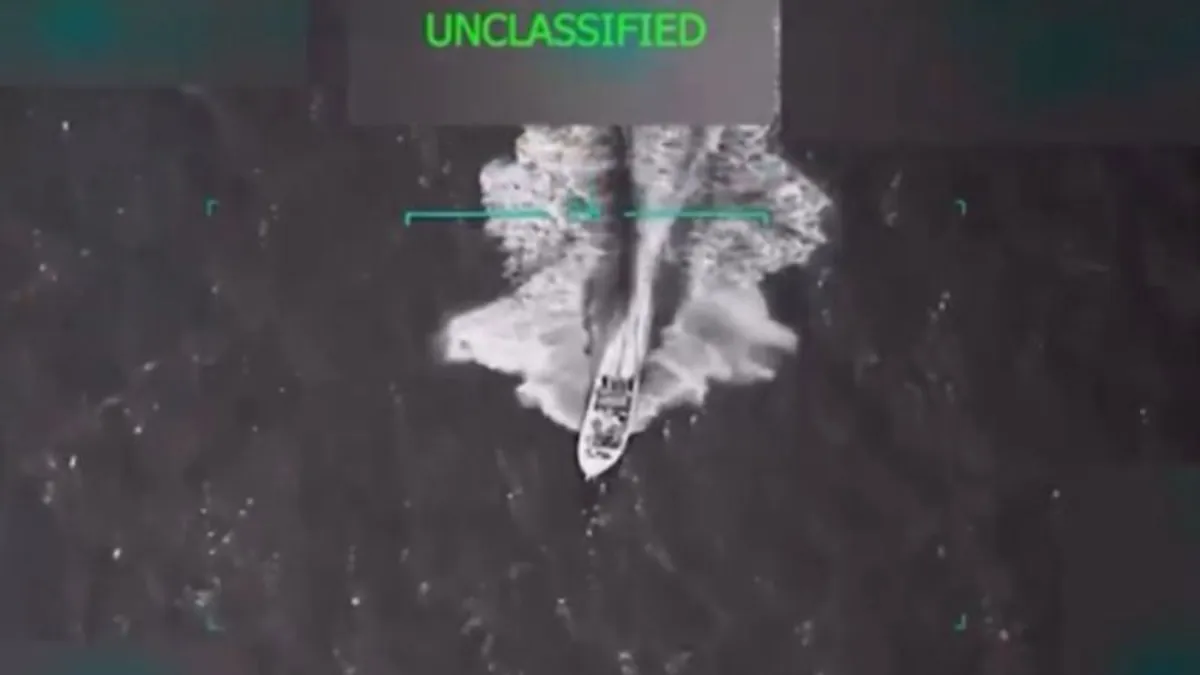
On September 2, a significant military operation led by the US military resulted in the deaths of alleged drug traffickers who were reportedly en route to connect with a larger vessel destined for Suriname, a small South American nation located east of Venezuela. This information was disclosed by Admiral Frank Bradley during a briefing with lawmakers, as reported by two sources familiar with the proceedings.
According to intelligence gathered by US forces, the targeted boat was planning to "rendezvous" with a second vessel to transfer illicit drugs. Admiral Bradley emphasized that the US military was unable to locate this larger vessel during the operation. He argued that the potential for the drug shipment to ultimately reach the US justified the decision to strike the smaller boat, despite it not being directly on course for US shores at that moment.
US drug enforcement officials have indicated that trafficking routes through Suriname are predominantly aimed at European markets. In recent years, however, the focus of US-bound drug trafficking has shifted towards the Pacific Ocean. This new information complicates the narrative surrounding the Trump administration's justification for the military action, which involved multiple strikes on the boat and the killing of survivors.
Following the strike, Secretary of State Marco Rubio stated to reporters in Florida that the boat was likely headed to Trinidad or another Caribbean destination. Contrarily, President Donald Trump claimed in a post that the military action occurred while the alleged traffickers were in international waters transporting illegal narcotics towards the United States.
Admiral Bradley, who led the Joint Special Operations Command during the mission, acknowledged that the boat had turned around before the strikes were executed, as the crew onboard appeared to have spotted the American aircraft. Reports indicated that the US military ultimately conducted four strikes on the vessel, with the first strike splitting the boat in half and leaving two survivors clinging to a capsized section. The subsequent strikes resulted in the deaths of the survivors and the sinking of the vessel.
It is crucial to note that it is considered a war crime to kill individuals who are shipwrecked and in need of assistance, as defined by the Pentagon's law of war manual. Most Republicans have shown support for President Trump’s broader military campaign in the Caribbean; however, the secondary strike on September 2 has faced bipartisan scrutiny, leading the Senate Armed Services Committee to pledge oversight over the incident.
Questions continue to arise regarding the role of military officials in this operation, particularly regarding the orders given by Hegseth before the mission commenced. Lawmakers were informed that Hegseth had specified the need for lethal strikes, but was unaware of the survivors until after the strikes had concluded. Reports indicate that Admiral Bradley understood the mission's objective to involve the killing of all individuals aboard the vessel, but there was no explicit directive to eliminate those who might surrender, raising legal implications concerning the rules of engagement.
This story remains under development, with additional information expected to emerge as investigations continue.