

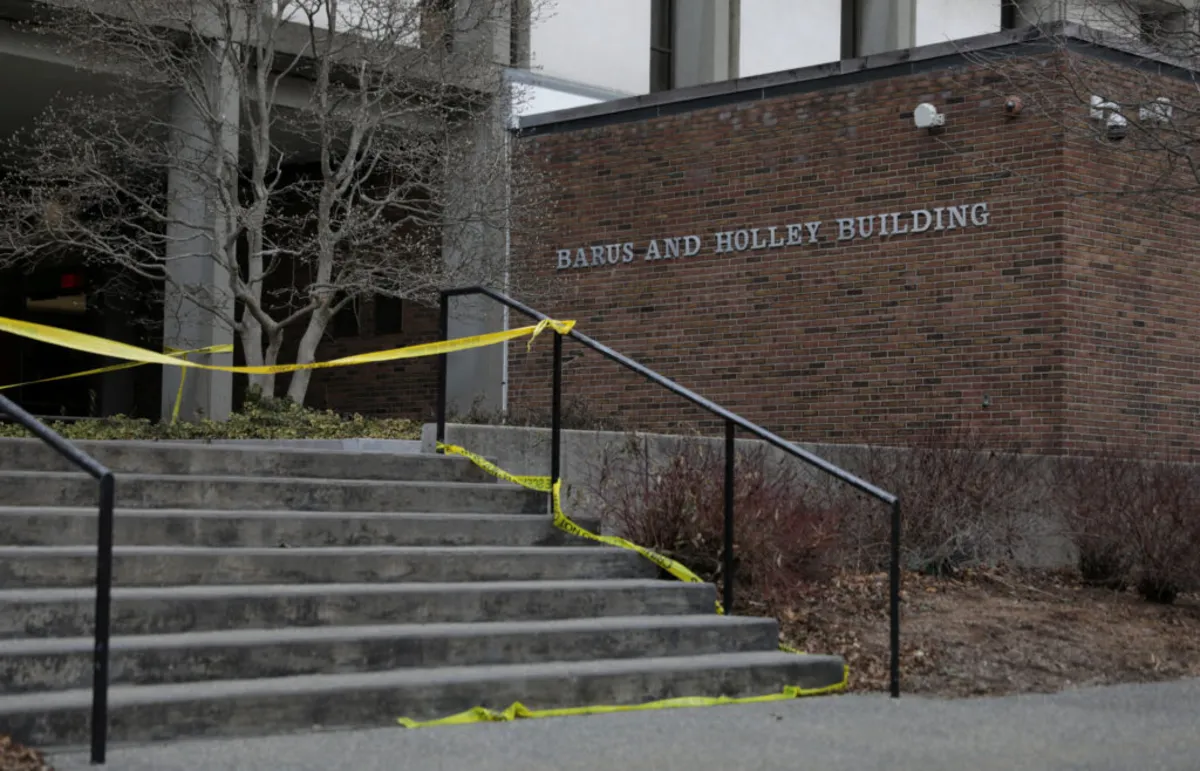
In a significant move on Thursday, President Donald Trump announced the suspension of the green card lottery program, a controversial initiative that has allowed individuals like the suspect in the recent Brown University and MIT shootings to enter the United States. This decision was revealed by Homeland Security Secretary Kristi Noem in a post on the social media platform X, where she stated that, at Trump’s direction, the United States Citizenship and Immigration Services (USCIS) would pause the program.
The announcement comes in the wake of a tragic incident involving the suspect, Claudio Neves Valente, a 48-year-old Portuguese national. Neves Valente is alleged to have carried out shootings at Brown University that resulted in the deaths of two students and injuries to nine others, as well as the murder of an MIT professor. Authorities reported that he was found dead from a self-inflicted gunshot wound on Thursday evening.
According to a police affidavit, Neves Valente had studied at Brown University on a student visa since 2000. He was issued a diversity immigrant visa in 2017, which later allowed him to obtain legal permanent residence status. However, there is a gap in his history regarding his activities between taking a leave of absence from school in 2001 and securing the visa in 2017.
The diversity visa lottery program, established by Congress, allocates up to 50,000 green cards each year through a lottery system to individuals from countries that are underrepresented in the U.S., particularly those from Africa. The program has been a point of contention, and the recent suspension is likely to face legal challenges.
In the latest lottery, nearly 20 million individuals applied for the 2025 visa lottery, with over 131,000 selected when including spouses of winners. Notably, only 38 slots were awarded to Portuguese citizens. Once selected, lottery winners must go through a thorough vetting process before they can apply for a green card.
President Trump has consistently opposed the diversity visa lottery, viewing it as a flawed system. Noem’s announcement marks another instance of leveraging a tragic event to bolster immigration policy reform. This is not the first time the Trump administration has enacted sweeping immigration restrictions following violent incidents; a similar approach was taken after an Afghan man was identified as the shooter in a deadly attack on National Guard members.
Trump’s administration has been focused on mass deportation and has sought to restrict legal immigration pathways. This includes challenging long-established laws and constitutional rights, such as the birthright citizenship for individuals born on U.S. soil, which the Supreme Court has recently agreed to review.
The suspension of the green card lottery program highlights the ongoing debate surrounding U.S. immigration policy, especially in light of recent violent events. As the situation develops, it remains to be seen how this decision will affect future immigration applications and what legal challenges may arise.
A free press is vital for a healthy democracy. Support trusted journalism and civil dialogue to stay informed about crucial issues like immigration policy.