

Washington — The Senate is poised to conduct a crucial vote today on a war powers resolution aimed at limiting President Trump's authority to take military action against Venezuela. This vote, scheduled for late Thursday morning, follows the recent surprise capture of Venezuelan leader Nicolás Maduro and his wife during a nighttime raid. The operation, which took many by surprise—including members of Congress—has intensified discussions about the U.S. military's role in the South American nation.
President Trump has hinted at the possibility of more land strikes against Venezuela, which have been part of a broader military campaign targeting alleged drug-smuggling vessels at sea. This campaign has tragically resulted in the deaths of over 100 people. Following the strikes on Venezuela, Trump stated that the U.S. would temporarily oversee the country's administration and control its oil sales, raising serious concerns about the implications of U.S. military involvement in the region.
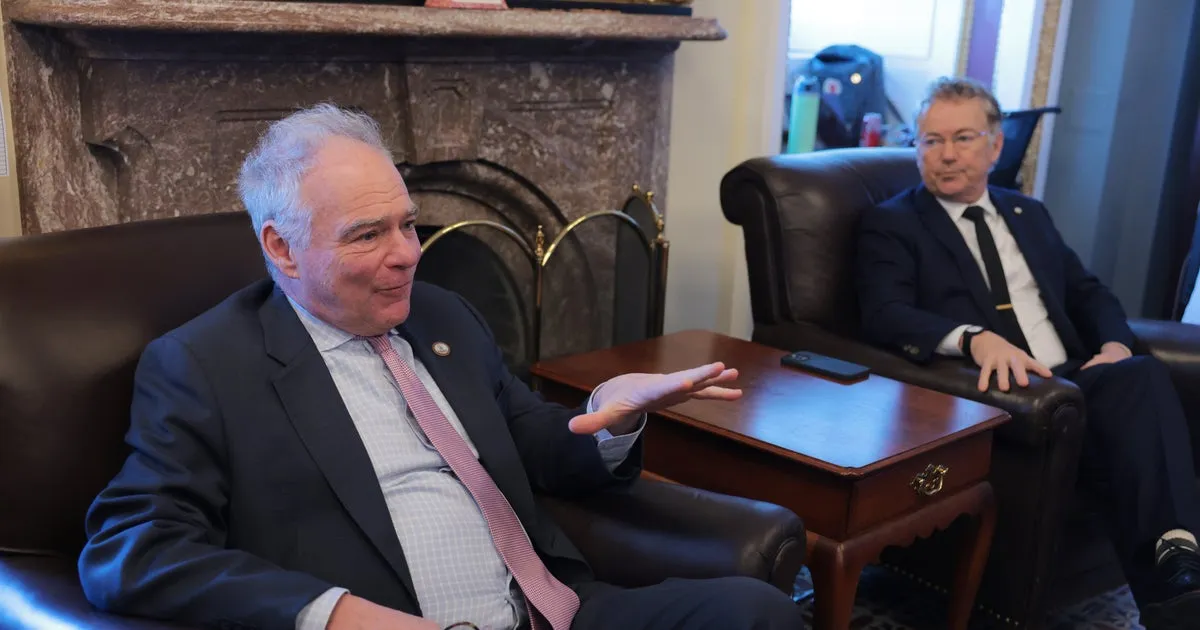
Senator Tim Kaine, a Democrat from Virginia, introduced this latest resolution in early December in light of disturbing revelations regarding U.S. military actions. Notably, these include the deaths of two individuals who survived the initial blast of a September 2 strike in the Caribbean Sea. Kaine's resolution seeks to mandate the removal of United States Armed Forces from hostilities against Venezuela that lack Congressional approval. He expressed concern over the long-term U.S. involvement in Venezuela, stating, "This is not an arrest warrant. This is far bigger than that."
Despite Kaine's efforts, the resolution is anticipated to face significant hurdles, needing additional Republican support to succeed. Previous attempts to constrain military action in the region have failed, and the current measure is expected to meet a similar fate.
Members of the Trump administration, including Secretary of State Marco Rubio and Defense Secretary Pete Hegseth, briefed lawmakers on the recent military actions in Venezuela. However, many Democrats left these briefings unsatisfied with the administration's explanations regarding future plans. The operations targeting Maduro and the subsequent U.S. strikes have alarmed both legal experts and lawmakers, with some accusing the administration of potential war crimes and misleading Congress about its intentions for regime change.
Senator Rand Paul of Kentucky, the only Republican co-sponsor of the resolution, remarked, "I think bombing a capital and removing the head of state is by all definitions, war." The Trump administration has attempted to frame the operation as a law enforcement action, claiming it does not require Congressional approval. However, this characterization has faced scrutiny, with some lawmakers arguing that such military actions fall within the realm of war.
Some Republicans have defended the Trump administration's decision to bypass Congress, asserting that the actions are well within the president's constitutional authority. House Speaker Mike Johnson, a Republican from Louisiana, emphasized, "This is not a regime change. This is a demand for change of behavior by a regime." He further stated, "We don't expect troops on the ground," reiterating that the Constitution grants Congress the power to declare war but contending that the U.S. is not currently in a war in Venezuela.
In the lead-up to Maduro's capture, President Trump intensified his pressure campaign, which included seizing sanctioned oil tankers from Venezuela. Recently, the U.S. conducted operations to seize additional vessels linked to the South American country. Senator Thom Tillis of North Carolina suggested that if the U.S. can successfully seize large tankers, it could also target smaller boats allegedly involved in drug trafficking.
Senator Paul, a vocal critic of the military strikes, highlighted a concerning letter from the U.S. Coast Guard revealing that many vessels intercepted during operations carried no illegal drugs. Out of 212 interdicted vessels, 41 had no illicit contraband onboard, raising questions about the efficacy and legality of these military actions.
The Trump administration has justified its military operations by claiming the U.S. is engaged in a non-international armed conflict with drug cartels designated as terrorist organizations. The White House argues that these cartels pose an armed attack against U.S. citizens. Nevertheless, the legal opinion from the Justice Department's Office of Legal Counsel justifying these military actions remains classified, leading to calls from lawmakers for transparency.
In December, President Trump signed an executive order designating fentanyl as a weapon of mass destruction, potentially seeking to bolster the rationale for military intervention in Venezuela. However, it is noteworthy that fentanyl was not mentioned in the indictment against Maduro, raising further questions about the government's overarching strategy in the region.