

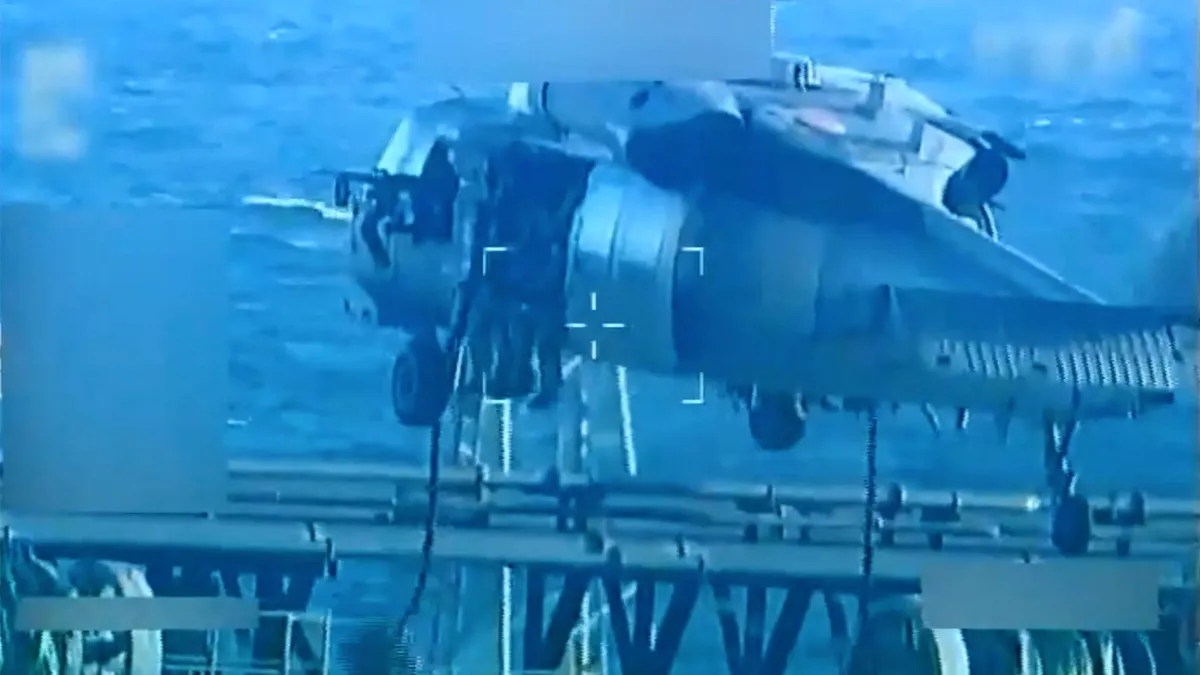
In a bold move to intensify pressure on President Nicolás Maduro, the Trump administration is set to target additional oil tankers off the coast of Venezuela. A White House official disclosed this information to CNBC on Thursday, following the seizure of a tanker on Wednesday that was reportedly transporting oil from Venezuela to Iran.
The recent seizure involved a Very Large Crude Carrier (VLCC) named the Skipper, which was discovered loaded with approximately 1.1 million barrels of oil. This tanker had covertly set sail in mid-November, seemingly heading towards Cuba. According to Matt Smith, head U.S. analyst at energy consulting firm Kpler, this action underscores the U.S. commitment to enforcing its sanctions against Venezuela. White House Press Secretary Karoline Leavitt confirmed that the seized tanker will be redirected to a U.S. port where the oil will be confiscated, although she noted that a legal process for the seizure will be strictly adhered to.
Despite these developments, the oil market appears to be stable, showing minimal signs of disruption. U.S. crude oil prices fell by 86 cents, or 1.47%, closing at $57.60 a barrel. Meanwhile, the global benchmark, Brent crude, settled at $61.28, down 93 cents, or 1.49%. The market's focus remains on ongoing peace talks in Ukraine, which have not yet indicated any major threats to supply chains.
Reports from Reuters suggest that the U.S. government plans to target more ships involved in the transportation of Venezuelan crude in the upcoming weeks. To bolster these efforts, the Treasury Department updated its sanctions list on Thursday, adding over a dozen individuals, companies, and tankers associated with the Venezuelan oil sector. This is part of a broader strategy to curb Maduro's influence and disrupt the flow of Venezuelan oil to countries like China, which currently receives at least half of the oil exported by Venezuela.
The tanker seizures coincide with a significant military buildup in the Caribbean, where the Trump administration has conducted a series of military strikes targeting vessels allegedly involved in drug trafficking towards the U.S. These operations have drawn intense scrutiny from Congress regarding their legality, further complicating the geopolitical landscape surrounding Venezuela.
As a founding member of OPEC, Venezuela possesses the largest proven oil reserves globally. However, its production has drastically declined, currently exporting about 749,000 barrels per day this year. The majority of this oil is directed towards China, raising concerns about the country's reliance on foreign markets amidst ongoing sanctions and political instability.
The situation continues to evolve, and the international community is closely monitoring the implications of these U.S. actions on global oil markets and regional stability.