

In West Virginia, a state rich in military history, countless bridges spanning the picturesque mountain valleys and gorges are named after local veterans. The streets of small towns are adorned with banners honoring hometown soldiers, many of whom sacrificed their lives in past conflicts. With one of the nation's highest per-capita populations of veterans, military service is not only viewed as a patriotic duty but also as an essential economic lifeline, particularly in the state’s economically challenged areas.
The recent death of Army Specialist Sarah Beckstrom in a shooting incident in Washington, D.C., along with the wounding of another soldier, Air Force Staff Sergeant Andrew Wolfe, has underscored the gravity of military service in West Virginia. Beckstrom and Wolfe were attacked while performing patrol duties near the White House, part of National Guard deployments initiated by former President Donald Trump in response to rising crime rates. While Trump has defended these deployments, their legality has been called into question by Democratic leaders and federal judges alike.
Beckstrom, who grew up in the small town of Webster Springs, moved to nearby Summersville after graduating high school. This community, with a modest population of just 800, is nestled among mountains and spruce forests. Kenny Kidd, a local school bus driver, fondly remembers Beckstrom as a bright young woman with a cheerful disposition. He notes that job prospects for high school graduates in this region are alarmingly limited, with diminishing opportunities in coal mining and few other options available.
Kidd explains that many young adults see joining the National Guard as a viable financial opportunity. The bonuses provided can help finance college education, while regular monthly drills and annual training offer essential income. This is particularly significant for the West Virginia National Guard, which has one of the highest soldier-to-population ratios in the nation.
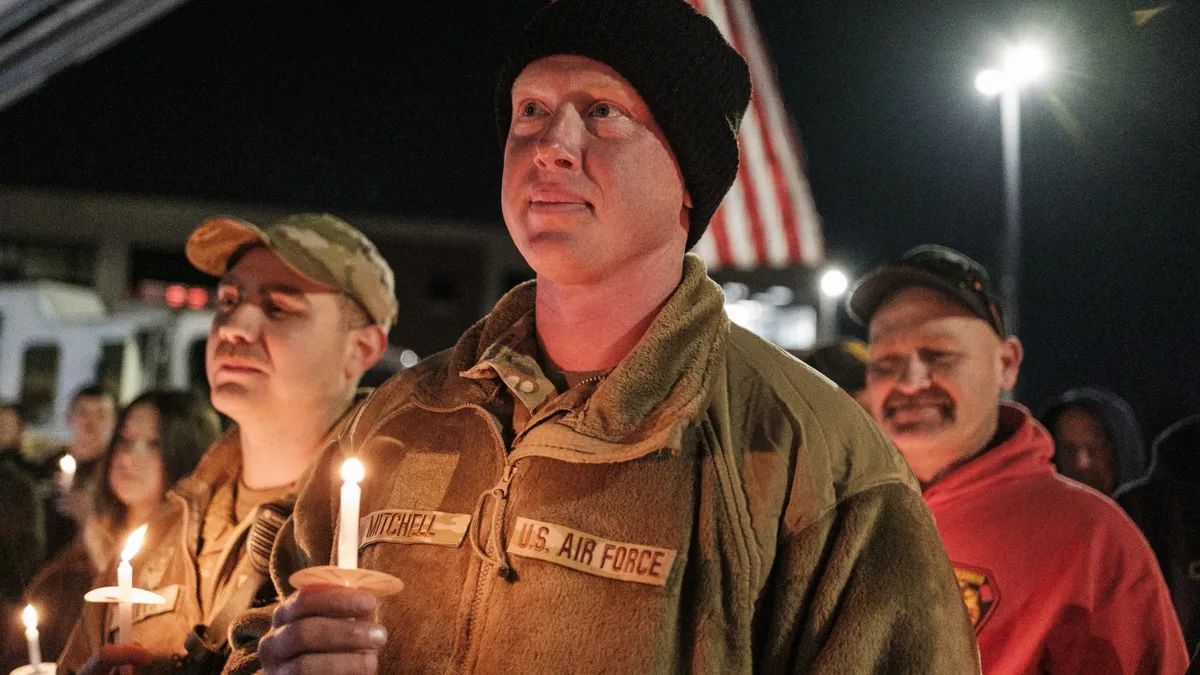
At a prayer vigil for Wolfe in Martinsburg, Air Force Staff Sergeant Jason Mitchell shared that financial necessity drove him to the National Guard, especially the need to pay off his college debt. As a member of the same unit as Wolfe, Mitchell has served for 13 years and plans to continue for another seven years to secure full retirement benefits. He proudly mentions that his stepdaughter recently joined the Guard, seeking similar opportunities to finance her education.
Guidance counselor Charity Powers from Martinsburg High School observes that the motivations behind joining the Guard are diverse. Some students seek financial assistance for college, others are attracted by the chance to travel, and many feel a strong sense of patriotism to follow in their family's military footsteps. In a region where many students face socio-economic disadvantages, the National Guard offers a valuable opportunity for upward mobility.
Despite the state's deep-rooted enthusiasm for military service, Republican Governor Patrick Morrisey has faced criticism regarding the deployment of troops to D.C. Reports surfaced alleging that the National Guard troops were engaged in non-security tasks such as trash collection and landscaping, rather than their intended mission. West Virginia Democratic lawmakers have strongly condemned these actions, with multiple state newspapers echoing their sentiments in editorials.
Mike Pushkin, a member of the West Virginia House of Delegates and chairman of the state's Democratic Party, emphasized that the tragic events surrounding Beckstrom and Wolfe would not have occurred had the President not ordered the National Guard to Washington, viewing it as a political maneuver that unnecessarily endangered the lives of local soldiers.
In a state that has consistently supported Trump in recent elections, many residents are questioning the rationale behind deploying the West Virginia National Guard to Washington. Roseanna Groves, a Webster Springs resident related by marriage to Beckstrom, expressed outrage over the circumstances surrounding the attack, placing blame on the immigration policies that allowed the assailant, an Afghan national who worked with the CIA, to enter the U.S. However, she also criticized the decision to send the Guard to D.C., calling it “crazy.”
Kenny Kidd echoed this sentiment, expressing his discontent with reports that the soldiers were engaged in cleanup activities rather than fulfilling security roles. "It just isn't worth it," he remarked, adding that the deployment seems more politically motivated than necessary for security purposes.
The tragic occurrences involving local National Guard members have reignited discussions about the socioeconomic factors that lead young people in West Virginia to enlist, as well as the political implications of military deployments. As communities grapple with the loss and the ongoing challenges of economic opportunity, the legacy of military service remains a cornerstone of West Virginia's identity.