

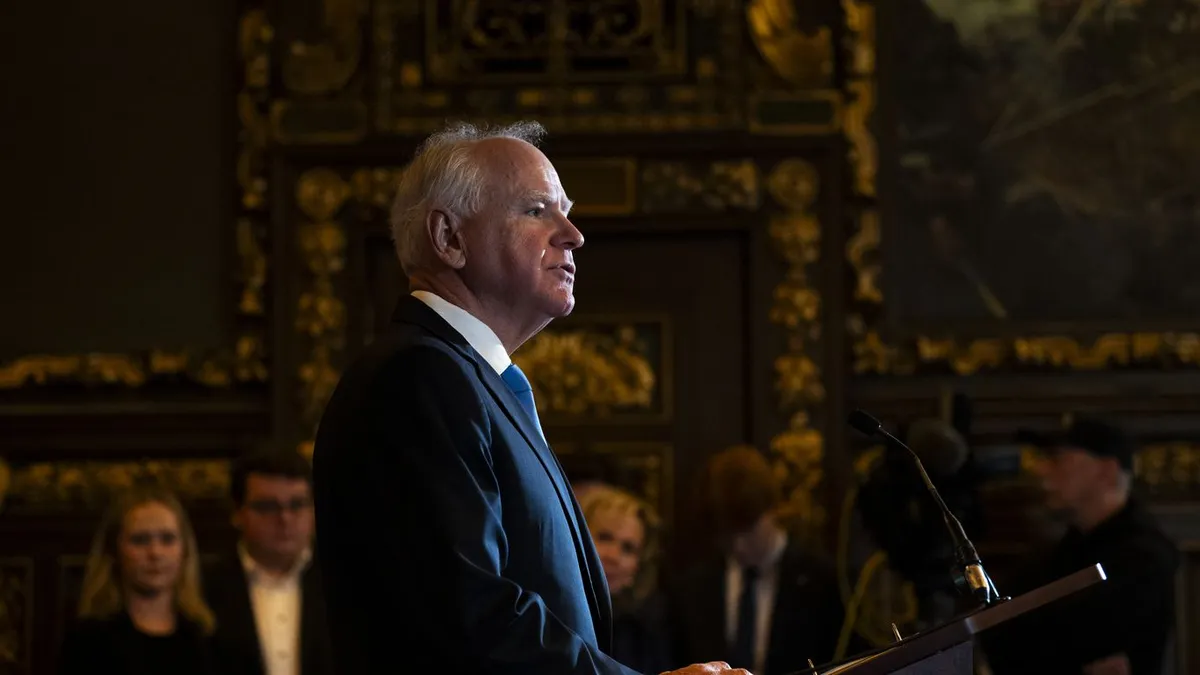
In a stunning turn of events, Tim Walz, the Governor of Minnesota, has announced his decision to end his political career amid a whirlwind of scandals, personal burnout, and feuds with former allies, including Vice President Kamala Harris. Just 14 months after nearly securing the vice presidency in the 2024 elections, Walz's withdrawal from the race for a third term as governor marks a significant and unexpected decline for a politician who once stood on the brink of national prominence.
Walz made his announcement on Monday, citing concerns that a re-election campaign would hinder his effectiveness in his final year in office. This decision comes in the wake of increasing scrutiny surrounding alleged fraud within Minnesota's social services programs, as well as relentless criticism from the Trump administration. The political climate has prompted many anxious Democrats to question Walz's viability in future statewide elections.
Since being chosen by Kamala Harris as a running mate on the Democratic ticket in the summer of 2024, Walz has faced significant challenges, both personally and politically. The sudden national attention brought to light embellishments in his biography, leading him to spend considerable time attempting to rectify these misstatements during the campaign. The tension between Walz and Harris has been palpable, with both subtly blaming each other for the abbreviated campaign's shortcomings. "We shouldn't have been playing this thing so safe," Walz remarked in March.
In her recent book, 107 Days, Harris expressed her frustration with Walz's performance during debates, reflecting on her belief that his extensive political experience should have better prepared him for such challenges. In hindsight, she questioned the decision to select him as a running mate, stating, "In choosing Tim, I thought that as a second-term governor and 12-year congressman he would know what he was getting into. In hindsight, how could anyone?"
Following Walz's announcement, Harris released a statement praising him and noting that they had spoken earlier that day. A source close to Walz disputed the notion that his vice presidential campaign setbacks adversely affected his political future, though they acknowledged that his elevated profile made him a target for right-wing criticism.
Walz's troubles deepened after a fallout with Minnesota Lt. Gov. Peggy Flanagan, a longtime ally, over her intentions to succeed him. Their public appearances have become increasingly rare since their split. Additionally, Walz has been embroiled in a growing scandal related to individuals of Somali descent allegedly defrauding state and federal government programs out of hundreds of millions of dollars. While he has attempted to focus on the administration's efforts to address the issue, the controversy has continued to escalate.
Walz's political challenges have been compounded by personal grief following the tragic assassination of Minnesota House Democratic leader Melissa Hortman and her husband, Mark, last summer. Walz had viewed Hortman as a potential successor, discussing the governorship with her prior to her death. Reflecting on the impact of this loss, Walz stated, "This building feels different. I am still struggling working here." The tragedy has contributed to his ambivalence regarding a re-election bid, despite encouragement from state party leaders to run in order to avoid a contentious primary.
Walz's exit from the governor's race has significant implications for the early jockeying ahead of the 2028 Democratic presidential primary. Senator Amy Klobuchar, who previously ran for president, is now seriously considering a gubernatorial run, which may effectively eliminate her chances for a 2028 campaign. Walz had been preparing for a potential presidential bid, including a national tour, but his decision to withdraw from the re-election campaign likely closes the door on his presidential aspirations as well.
In conclusion, Tim Walz's rapid descent from a political hopeful to a governor stepping away from the race is a striking example of how quickly fortunes can change in politics. The fallout from scandals, personal struggles, and political rivalries have all played a role in shaping this unexpected narrative, leaving many to wonder about the future of Minnesota's leadership and the broader Democratic landscape.