

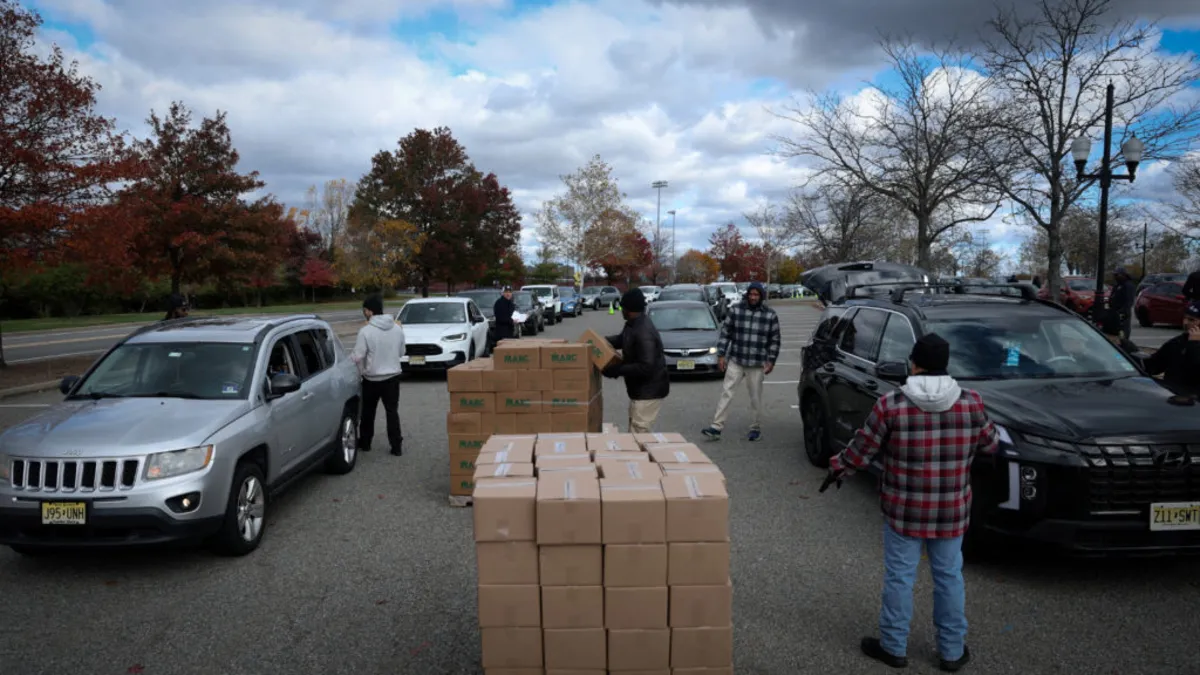
On Monday, the Trump administration returned to the Supreme Court in an effort to maintain the freeze on full payments in the SNAP federal food aid program while the government remains shut down. This legal move comes at a time when many families across the nation are struggling to secure enough food for their households. The ongoing legal battles over the SNAP program, which supports approximately 42 million Americans in purchasing groceries, have intensified amid this historic U.S. government shutdown.
Lower courts have consistently ruled that the government must continue to provide full SNAP payments. Following an appeals court ruling against the administration late Sunday, the Supreme Court has requested a response from the government. The high court is expected to deliver a ruling on the matter by Tuesday.
Brandi Johnson, a 48-year-old resident of St. Louis, exemplifies the struggles many are facing. With only $20 left in her SNAP account, she has resorted to skipping meals over the past two weeks to ensure that her three teenage children have enough to eat. Additionally, she is caring for her infant granddaughter, who has food allergies, and her elderly mother. Johnson expressed her distress, stating, “I think about it 24 hours a day, seven days a week, literally. Because you’ve got to figure out how you’re going to eat.”
Solicitor General D. John Sauer confirmed that the federal government remains intent on halting lower-court orders that demand full SNAP payments. In a letter to the justices, he referred to reports suggesting that Congress may soon reach a compromise to end the shutdown, which would subsequently fund the Supplemental Nutrition Assistance Program. If passed, this funding package would replenish SNAP resources and reimburse states that have utilized their own funds to sustain the program during the shutdown.
Initially, the Trump administration announced that SNAP benefits for November would not be available due to the shutdown. However, after legal action from various states and nonprofit organizations, judges in Massachusetts and Rhode Island ruled that the administration could not eliminate benefits for November entirely. Subsequently, the administration indicated it would tap into an emergency reserve fund to provide 65% of the maximum monthly benefit.
On Thursday, U.S. District Judge John J. McConnell from Rhode Island deemed the administration’s 65% plan inadequate, ordering full funding for SNAP benefits by Friday. Following this order, several states acted quickly, directing their EBT vendors to issue full monthly benefits to SNAP recipients. Many individuals in states with Democratic governors received the complete amount intended for grocery purchases before Justice Ketanji Brown Jackson temporarily halted McConnell’s order pending further review by an appeals court.
Delays in SNAP payments have raised significant concerns, particularly for those who rely on these benefits. As of now, millions have yet to receive their SNAP payments for November, with many states awaiting guidance from the U.S. Department of Agriculture, which oversees the SNAP program. Some states, including Texas, have begun issuing partial payments, but the uncertainty continues to exacerbate the situation for vulnerable populations.
Diane Yentel, President and CEO of the National Council of Nonprofits, emphasized the dire consequences of these delays, stating, “Continued delays deepen suffering for children, seniors, and working families, and force nonprofits to shoulder an even heavier burden.” She urged the administration to prioritize food security for all Americans, highlighting that multiple federal court judges have already deemed its actions unlawful.
The Trump administration has argued that the judicial order mandating full SNAP benefits infringes upon the Constitution by encroaching on the spending authority of the legislative and executive branches. Wisconsin, one of the first states to implement full benefits post-McConnell’s order, has since seen its federal reimbursement frozen, leading to fears that its SNAP account could soon be depleted.
As this legal battle continues, states administering SNAP payments are left in a state of uncertainty regarding their ability to provide full monthly benefits. Over the weekend, the Trump administration directed states to "undo" the full benefits that were disbursed during a brief window after the federal judge's order. A federal appeals court in Boston temporarily upheld the full benefits order late Sunday, but the Supreme Court’s latest action ensures that the government remains unable to disburse payments for at least 48 hours.
Judge Julie Rikleman of the U.S. 1st Circuit Court of Appeals criticized the government for its inaction, noting that it had been unprepared to make partial payments, leaving many without benefits as November progressed. U.S. District Judge Indira Talwani has scheduled a hearing for later Monday to address the USDA’s request to reverse the steps taken by states to issue full SNAP benefits.
As the situation unfolds, it is clear that the ongoing legal disputes and government shutdown are significantly impacting the lives of millions of Americans who rely on SNAP for their nutritional needs. With continued advocacy and legal scrutiny, the future of food assistance programs remains uncertain.