

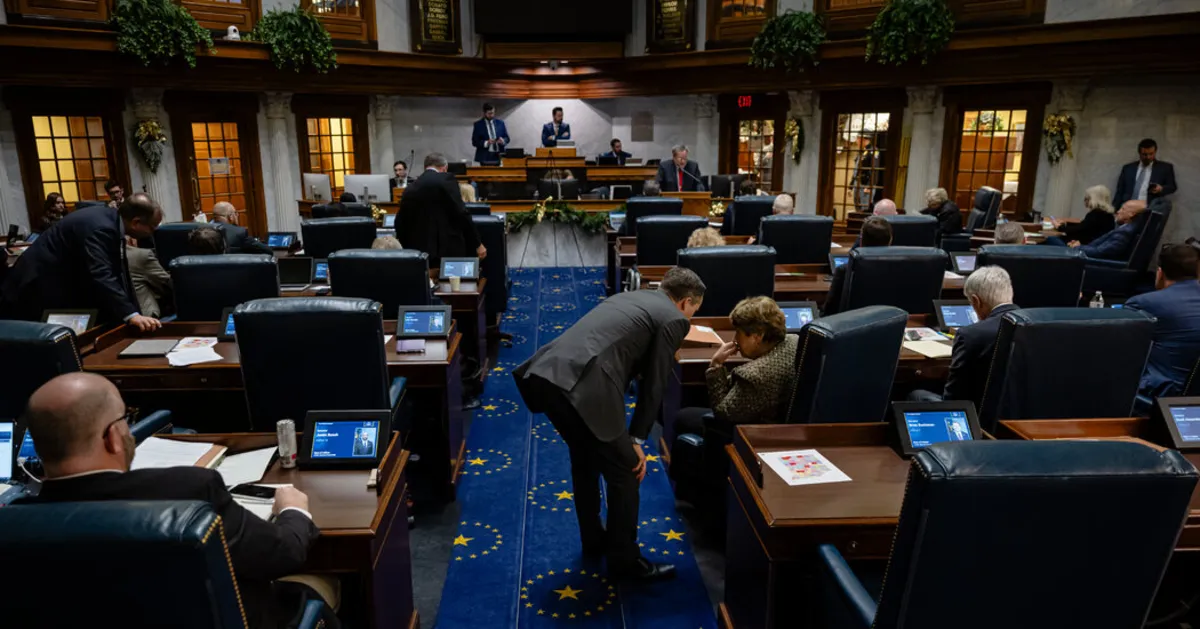
In a surprising turn of events, Republican members of the Indiana Senate defied former President Donald Trump on Thursday by joining forces with Democrats to reject a new congressional map. The vote, which concluded with a tally of 19 to 31, marked a significant defeat for Trump, who has invested considerable political capital in advocating for redrawn maps in Republican-led states. Throughout the process, he issued threats of political repercussions for Indiana Republicans who did not align with his vision.
The rejection of the congressional map highlights the growing rifts within the Republican Party, particularly as Trump faces challenges in maintaining unity among his supporters. Despite holding a commanding majority in the State Senate with 40 out of 50 seats, Indiana Republicans voted against the map after months of intense lobbying from Trump and his allies. The pressure escalated in recent weeks as it became apparent that some senators were steadfast in their opposition.
Trump's public criticism of certain senators, where he called them out by name on social media, raised questions about their loyalty and included threats to support primary challengers against them. This tension led to a fraught atmosphere, with multiple reports of threats and incidents of swatting—an alarming form of harassment where law enforcement is dispatched to an individual’s home under false pretenses. The unfolding drama highlighted the deep ideological and stylistic divides within Indiana's Republican ranks, pitting long-serving institutionalists against Trump-aligned conservatives.
If the proposed map had been approved, it was anticipated that Republicans would have successfully flipped the only two Democratic-held congressional seats among Indiana's nine districts. However, a slim majority of the Senate's Republican caucus ultimately voted against the proposal, demonstrating a significant moment of defiance against Trump's influence.
The fact that the Indiana lawmakers even entertained the debate over the congressional map underscores Trump's enduring clout within the party, yet it also illustrates the limits of his power to compel Republican officials to adhere to his directives. Many lawmakers were initially reluctant to engage in discussions about the map, given that it was proposed outside of the standard once-a-decade redistricting cycle. Legislative leaders only moved forward with the bill after intensified pressure from Trump and his supporters.
Among the dissenting voices was State Senator Greg Walker, a Republican who expressed his belief that the bill was fundamentally unconstitutional. Walker, who has also reported experiencing a swatting incident at his home, exemplifies the heightened tensions within the party. His stance reflects a broader concern among some Republicans regarding the implications of redistricting and the need for a more considered approach to such critical legislative decisions.
This pivotal moment in Indiana politics serves as a reminder of the complex dynamics at play within the Republican Party, where loyalty to Trump is increasingly being tested against individual beliefs and constitutional principles.