

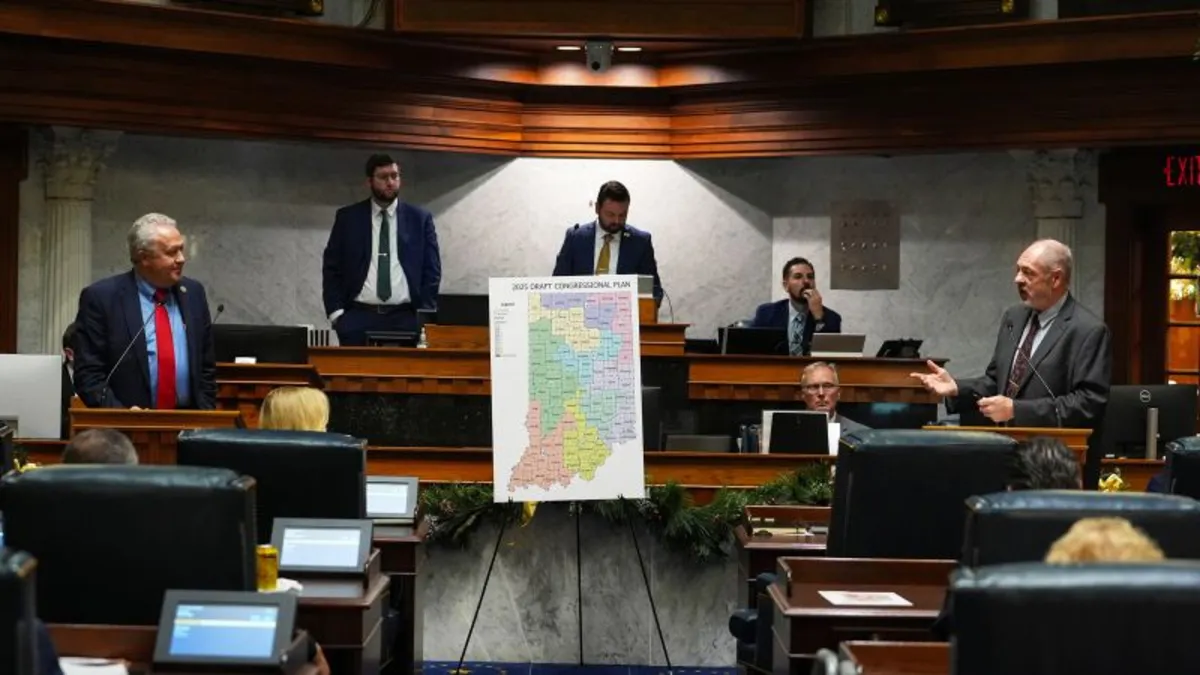
In a recent event this fall, Jean Leising, a seasoned Republican state senator, took to the podium at her 8th-grade grandson’s school for a breakfast talk. This seemingly innocuous gathering took an unexpected turn when her grandson later revealed that his basketball team had received text messages about her — all of them negative. Recalling the incident to CNN, Leising shared how this moment prompted her to rethink her political stance, particularly after she joined 20 other Republican senators in opposing President Donald Trump’s controversial redistricting initiative.
“When I got home that night, that’s when I decided,” said the 76-year-old grandmother of eight, who has been serving in the Senate since 1988. “I was angry. The next day, I thought to myself, ‘I’ve got to talk about this.’ This is over the top. This shouldn’t be the way it was.” Leising’s sentiments echo a broader discontent among Republican senators who felt pressured by the White House to support a redistricting plan aimed at creating two additional GOP-friendly US House seats. However, the backlash against this initiative became evident as the state, which Trump won by nearly 20 points in 2024, rejected the proposal, dealing a significant blow to the president's political agenda.
Several Republican senators expressed their constituents' reluctance regarding a mid-decade redrawing of US House maps. They emphasized the potential implications of joining a national redistricting battle. Senator Mike Bohacek, who has a daughter with Down syndrome, voiced his discontent with Trump's use of derogatory language towards individuals with disabilities. He remarked, “Trump’s choices of words have consequences,” highlighting the personal impact of political rhetoric.
Senator Greg Walker, who hails from the hometown of former Vice President Mike Pence, revealed that he was targeted by swatting attempts before the crucial vote. Although law enforcement did not link these threats to political motives, Walker felt that voting in favor of the redistricting plan would reward unacceptable behavior and set a dangerous precedent. “Violence and intimidation should not dictate our political decisions,” he asserted.
Senator Greg Goode echoed the sentiments of his colleagues, noting that public opposition to mid-decade redistricting was overwhelmingly clear during his town hall meetings. He criticized the pressure from both the Statehouse and external forces, calling the situation “over-the-top.” Goode warned about the dangers of allowing external political pressures to influence local governance, stating, “The forces that define this vitriolic political climate outside of Indiana have infiltrated our political affairs.”
In response to the growing dissent, Trump took to social media, targeting specific senators and threatening primary challenges against those who voted against the redistricting plan. Vice President JD Vance made multiple visits to Indiana to rally lawmakers in support of the redistricting initiative. Political allies of Trump attempted to make the Indiana vote a loyalty test, mobilizing efforts to pressure Republican senators who remained undecided.
Organizations like the Club for Growth and a new group led by Trump campaign veterans aired advertisements threatening to unseat incumbent senators who opposed redistricting. The group Turning Point USA, founded by Charlie Kirk, also pledged support for primary challenges against those who voted no on the proposal.
Senate President Pro Tem Rodric Bray had consistently maintained that the Senate lacked sufficient votes to pass new maps. After the redistricting proposal failed, he announced that, per Indiana Senate rules, the chamber would not revisit the maps during its 2026 session. Leising, who has supported Trump in the past, expressed her frustration with the president’s approach to redistricting, emphasizing the need for a more constructive dialogue. “I wish President Trump would change his tone,” she remarked. “Being mean-spirited isn’t going to change minds.”
Senator Sue Glick, another Republican senator, reinforced Leising’s perspective, highlighting the resilience of Hoosier constituents. “Hoosiers don’t like to be threatened or bullied,” she stated. “Many responded with ‘That isn’t going to work,’ and it didn’t.” Glick further noted that while discussions with Vance and House Speaker Mike Johnson were cordial, the senators would not be swayed by external pressures to vote against their convictions.
As the dust settles on this contentious political battle, Leising, Glick, and other Senate Republicans have made it clear that they will not yield to intimidation tactics. “In Indiana, we’re not going to be intimidated,” Leising asserted confidently. “We’re strong people.” This incident not only highlights the challenges faced by politicians in navigating external pressures but also underscores the importance of staying true to one’s principles amidst a turbulent political landscape.