

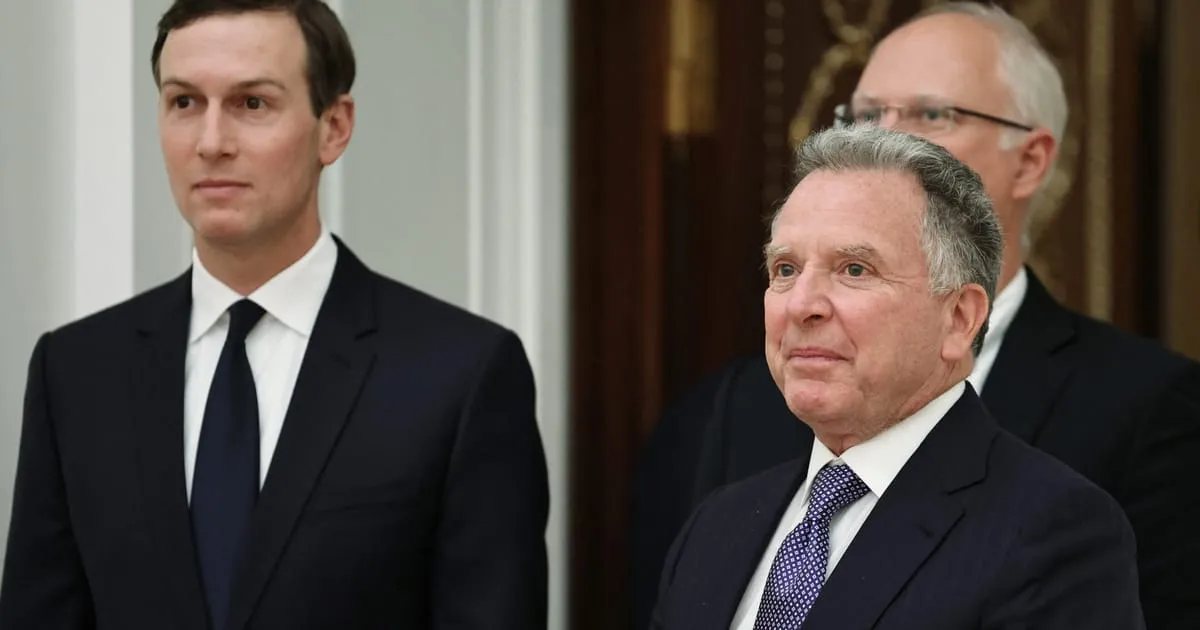
Vladimir Putin utilized a mix of charm, strategic delays, and direct threats to convey Russia's position regarding peace negotiations with Ukraine to U.S. envoys Steve Witkoff and Jared Kushner. On Tuesday, these representatives of former President Donald Trump spent several hours in Moscow, enjoying a leisurely stroll and dining at an upscale restaurant while waiting for their meeting with the Russian president, which was scheduled at the Kremlin to discuss the ongoing conflict in Ukraine.
During their extended wait, Putin took the opportunity to address the press at an investment forum, where he blamed Europe for obstructing the peace process and hinted at possible escalations. “We’re not planning to wage a war with Europe, but if Europe decides to start a war, we’re ready right now,” he stated, indicating the tense geopolitical climate.
In a typical display of his diplomatic style, Putin's meeting with the U.S. envoys commenced nearly three hours later than the anticipated 5 p.m. start time, a common tactic he employs with foreign dignitaries. A Kremlin video showed Putin greeting Witkoff and Kushner, inquiring if they were enjoying their time in Moscow, to which Witkoff responded positively, calling it a “magnificent city.”
The discussions on the nearly four-year-long conflict in Ukraine extended well past midnight local time. Following the meeting, Kirill Dmitriev, Putin’s foreign policy adviser, described the talks as “productive” in a post on X. Another aide, Yuri Ushakov, characterized the conversation as “useful, constructive, and highly substantive,” but acknowledged that there remains a “lot of work” to be done. “We’re not further from peace, that’s for sure,” he added, indicating a complex path ahead.
Ushakov also mentioned Putin's criticism of what he termed “the destructive actions of the European side,” suggesting that Russia may attempt to attribute any failure in achieving peace to the European Union, which notably did not participate in the discussions. Trump’s recent initiative aimed at reviving ceasefire talks, featuring a controversial 28-point plan that predominantly favors Moscow, has intensified pressure on Ukraine and raised concerns among European officials.
Key elements of this plan include demands for Ukraine to relinquish territory in the eastern parts of the country that are not currently occupied by Russian forces and to formally commit to not pursuing NATO membership. Despite the challenging circumstances, Ukrainian President Volodymyr Zelenskyy has indicated a willingness to engage in dialogue, although he described the situation as possibly the “most difficult moment in history.”
What remains unclear is the extent of concessions that Trump might expect from Russia or what Moscow is prepared to offer in return. In the lead-up to the Moscow talks, Putin showed no indication of deviating from his demand for Ukraine's effective capitulation, labeling Zelenskyy as an illegitimate leader unworthy of negotiation.
Historically, previous discussions—including earlier meetings in Istanbul, an August summit in Alaska between Trump and Putin, and five prior visits to Moscow by Witkoff—have not resulted in any softening of the Kremlin's position or rhetoric. State Duma politician Pyotr Tolstoy reaffirmed this rigid stance, asserting that “no decisions will be made that would undermine Russia’s security. This must be clearly understood.”
As of now, there is little indication that the recent talks will lead to a change in Moscow’s approach. “No doubt Putin believes he has laid everything out once again, and now it’s up to the others to decide among themselves whether they want to end the war,” stated Tatiana Stanovaya, founder of the political consultancy R.Politik. She concluded that while Putin may appear ready for peace, it is “just on his terms,” highlighting the ongoing complexity of the situation.