

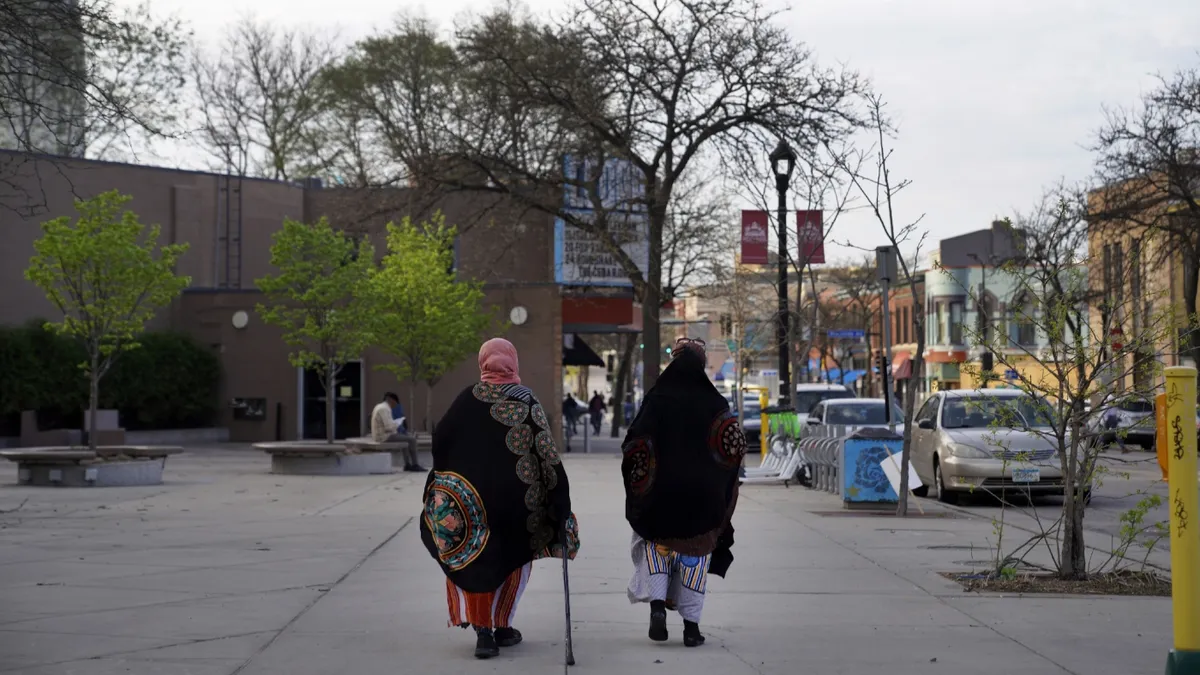
Minnesota is home to the largest population of Somali immigrants in the United States, a vibrant community that has recently faced significant challenges, particularly from political rhetoric. President Trump has made inflammatory statements regarding Somali immigrants, calling them "garbage" and expressing a desire to send them "back to where they came from." This tirade intensified when he claimed that they have "destroyed our country" and only "complain, complain, complain." These remarks come on the heels of threats to strip temporary legal protections from Somali migrants residing in Minnesota.
Trump's comments have been echoed by other conservatives, who have seized on criminal investigations and allegations of fraud within Minnesota's social services system, some of which reportedly involved individuals from the Somali community. As a result, U.S. Immigration and Customs Enforcement (ICE) is set to conduct an immigration enforcement operation targeting Minnesota and its Somali population, as reported by The Associated Press and other media outlets.
Currently, nearly 80,000 individuals of Somali descent live in Minnesota, with about 78% of them residing in the Twin Cities, according to Wilder Research, a St. Paul-based organization. However, the history of Somali immigration to the U.S. in Minnesota did not start in the Twin Cities. In the late 1990s, some of the first Somali immigrants settled in a town called Marshall, located approximately 150 miles west of Minneapolis. Minnesota author Ahmed Ismail Yusuf, who wrote the book Somalis in Minnesota, notes that many fled Somalia amid a devastating civil war that forced hundreds of thousands to seek refuge abroad.
Upon arriving in the U.S., many Somali refugees found employment at a meat-packing plant in Marshall. Word of job opportunities spread, leading to an influx of Somali refugees who also secured positions in the hospitality industry and as taxi drivers. This migration ultimately led to the establishment of a significant Somali community in and around the Twin Cities. Yusuf highlights that these initial workers brought their families, which further solidified the community's growth.
The welcoming nature of Minnesota, known for its martisoor—meaning hospitality in Somali—appealed to many Somali refugees. Yusuf comments that the state's liberal values and social norms mirrored the immigrants' own beliefs, which facilitated their transition.
Despite the community's growth, the transition for some Somali refugees has not been without obstacles. Many religious Somalis have encountered difficulties in practicing their Islamic faith, which includes praying multiple times daily and wearing the hijab for women. According to the Minnesota Historical Society, the Somali population has also struggled against negative stereotypes, particularly their association with Islamic extremism, as the community was targeted for recruitment by ISIS over a decade ago.
Nevertheless, Yusuf emphasizes that the Somali population in Minnesota continues to thrive and contribute positively to the community. "Wherever you go, we're serving the people, we are serving the community, we are serving the state," he states.
In 2018, Rep. Ilhan Omar, who fled Somalia as a child and came to the U.S. as a refugee, made history as the first Somali American elected to Congress. In response to Trump's recent comments suggesting that Omar should not hold her position, she remarked on social media, "His obsession with me is creepy. I hope he gets the help he desperately needs." Omar was one of four congresswomen targeted by Trump in a 2019 tweet, suggesting they should "go back" to their countries.
Yusuf notes that while the Somali community feels somewhat under siege due to the Trump administration's actions, they also enjoy support from local leaders in the Twin Cities, including Minneapolis Mayor Jacob Frey and St. Paul Mayor Melvin Carter. "We are dealing with this, but we are not dealing with it alone," Yusuf affirms.
The Somali community in Minnesota remains resilient in the face of adversity, continuing to contribute to the social fabric of the state despite the challenges posed by political rhetoric and social stigma. As they navigate these difficulties, the support from local leaders and the community's commitment to service highlights the strength and determination of Somali immigrants in Minnesota.