

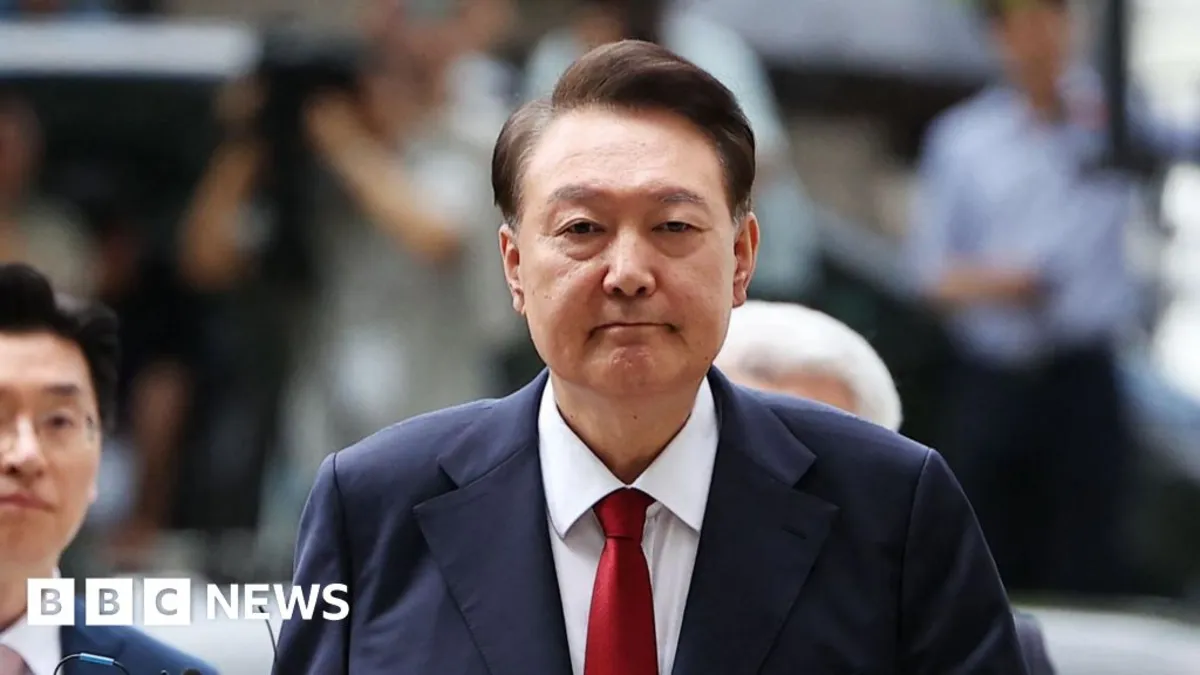
In a dramatic turn of events, prosecutors have requested that Yoon Suk Yeol, the former president of South Korea, receive a death sentence if found guilty of his controversial attempt to impose martial law. This request was presented during the closing arguments of Yoon's trial, where he faces serious allegations of leading an insurrection. The courtroom proceedings took place in Seoul, shedding light on a political crisis that has gripped the nation.
The charges against Yoon stem from an incident in December 2024, when he attempted to implement military rule in South Korea. Although the martial law lasted only a few hours, it created significant political upheaval, leading to Yoon's impeachment by parliament and subsequent detention pending trial. Yoon has vehemently denied the accusations, asserting that his actions were merely a symbolic gesture intended to highlight the alleged wrongdoings of the opposition party.
Leading an insurrection is considered one of the gravest charges under South Korean law, carrying the potential penalties of either the death penalty or life imprisonment. Prosecutors are required to formally request one of these sentences when pursuing insurrection cases. It's important to note that South Korea has not executed anyone in nearly three decades, with the last execution occurring in 1996 when former military dictator Chun Doo-hwan was sentenced to death for seizing power in a military coup in 1979, although his sentence was later commuted to life imprisonment.
Prosecutors in Yoon's case argue that despite the absence of fatalities during his attempt to impose martial law, his intentions were undeniably violent. They called upon a military commander to testify that Yoon had ordered the arrest of lawmakers, which adds weight to their claims. Additionally, they introduced a memo from one of the planners of the martial law, a former military officer, which suggested the potential disposal of hundreds of individuals, including journalists, labor activists, and lawmakers.
Yoon's insurrection trial has been combined with those of two other high-ranking officials from his administration: former defense minister Kim Yong-hyun and former police chief Cho Ji-ho. The verdict and sentencing for Yoon and the other defendants, should they be convicted, are anticipated to be announced in February. Yoon has been in detention for several months, facing multiple criminal trials, and just last month, prosecutors sought a 10-year prison term for him on charges of obstruction of justice related to his martial law attempt.
The unfolding events surrounding Yoon Suk Yeol highlight significant tensions within South Korea's political landscape. As the nation awaits the verdict, the implications of this trial could have lasting effects on the political climate and the future of governance in South Korea.