

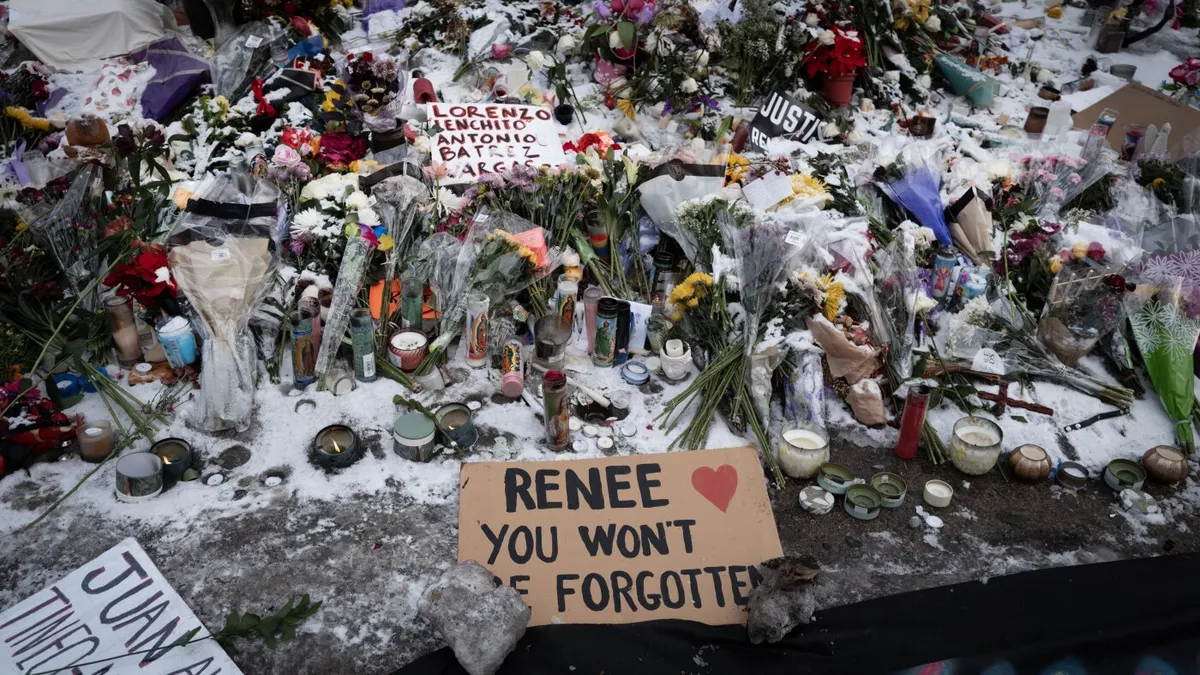
In Minnesota, tensions have escalated amid heated protests and ongoing immigration raids, particularly surrounding the investigation into the tragic killing of Renee Macklin Good by Immigration and Customs Enforcement (ICE) agent Jonathan Ross. In a surprising development, the FBI recently announced that it would take sole responsibility for the inquiry, a decision that has sparked significant concern among Minnesota officials who are advocating for a collaborative investigation to ensure fairness and transparency.
Homeland Security Secretary Kristi Noem has claimed that Minnesota authorities lack the jurisdiction necessary to investigate the shooting, further complicating the situation. Adding fuel to the fire, President Trump has accused the FBI of withholding materials, suggesting that Minnesota officials are corrupt. This dispute highlights the growing rift between the Trump administration and Minnesota officials regarding the handling of this high-profile case.
Legal experts argue that the decision to forego a joint investigation represents a departure from standard practices for handling high-profile criminal cases. Amy Sweasy, a former prosecutor with the Hennepin County Attorney's Office, emphasized that such a division is unprecedented in Minnesota, raising concerns about the implications for both federal and state inquiries.
The situation in Minnesota mirrors events in Portland, Oregon, where two individuals were shot by U.S. Border Patrol officers. In that case, the FBI and Oregon's attorney general are also conducting separate investigations, further underscoring the trend of disjointed inquiries into officer-involved shootings.
Joint investigations are crucial for maintaining public trust and ensuring the credibility of the findings, according to Thaddeus Johnson, a senior fellow at the Council on Criminal Justice. He pointed out that when federal and state investigators fail to cooperate, it can lead to increased public skepticism and distrust in the process. "This is a highly sensitive topic," Johnson noted, as he expressed concern over the implications for community confidence in law enforcement.
Governor Tim Walz of Minnesota has voiced doubts about the fairness of the federal investigation, particularly in light of President Trump's comments regarding Macklin Good. In a recent statement, Trump labeled her a "radical" and criticized her interactions with law enforcement, further complicating the public's perception of the investigation. Minneapolis Mayor Jacob Frey's early remarks, which dismissed the Trump administration's self-defense narrative, have also contributed to the growing mistrust.
Concerns about the integrity of the investigation have led to resignations within the U.S. Attorney's Office in Minnesota, as multiple federal prosecutors expressed dissatisfaction with the handling of the inquiry. Furthermore, state officials have condemned the FBI's decision to exclude the Minnesota Bureau of Criminal Apprehension, which possesses significant experience in investigating officer-involved shootings.
Historically, federal, state, and local authorities in Minnesota have collaborated effectively on investigations, as evidenced by their work on high-profile cases such as the murder of George Floyd and the mass shooting at Annunciation Catholic Church. Deborah Ramirez, a former federal prosecutor, highlighted the efficiency gained from joint investigations, where authorities can share information and conduct interviews collectively, ultimately benefiting the investigation.
Chris Swecker, a former FBI special agent, echoed these sentiments, stating that collaboration between federal and state agencies is essential for serving justice effectively. "It doesn't serve the interest of justice when they refuse to work together," he noted.
As state authorities face exclusion from the federal investigation, they have reported being denied access to crucial evidence, such as shell casings and witness interviews. Hennepin County Attorney Mary Moriarty expressed her disappointment over the lack of transparency, stating that residents deserve better. In response, her office has initiated a joint effort to gather evidence from the community for potential use in a state investigation.
However, experts like Amy Sweasy caution that the absence of key evidence may hinder the potential for criminal charges. She pointed out the inherent difficulties in prosecuting law enforcement officers in use-of-force cases, emphasizing the need for thorough investigations to ensure accountability.
Ramirez suggested that state authorities could pursue subpoenas for the withheld evidence. She also warned that time is of the essence; delaying an official investigation could jeopardize the integrity of witness testimonies and evidence. "You need to begin talking to people before their memories fade," she advised, stressing the critical nature of the current situation in Minnesota.
As the state grapples with these challenges, Ramirez expressed concern that a pattern of sidelining state authorities in federal officer-involved shooting cases could emerge. "We are at a critical juncture in Minnesota," she warned, highlighting the importance of accountability for ICE officers involved in deadly force incidents.